Gold’s rollercoaster ride shows the messy state of the global economy
You have reached your maximum number of saved items.
Remove items from your saved list to add more.
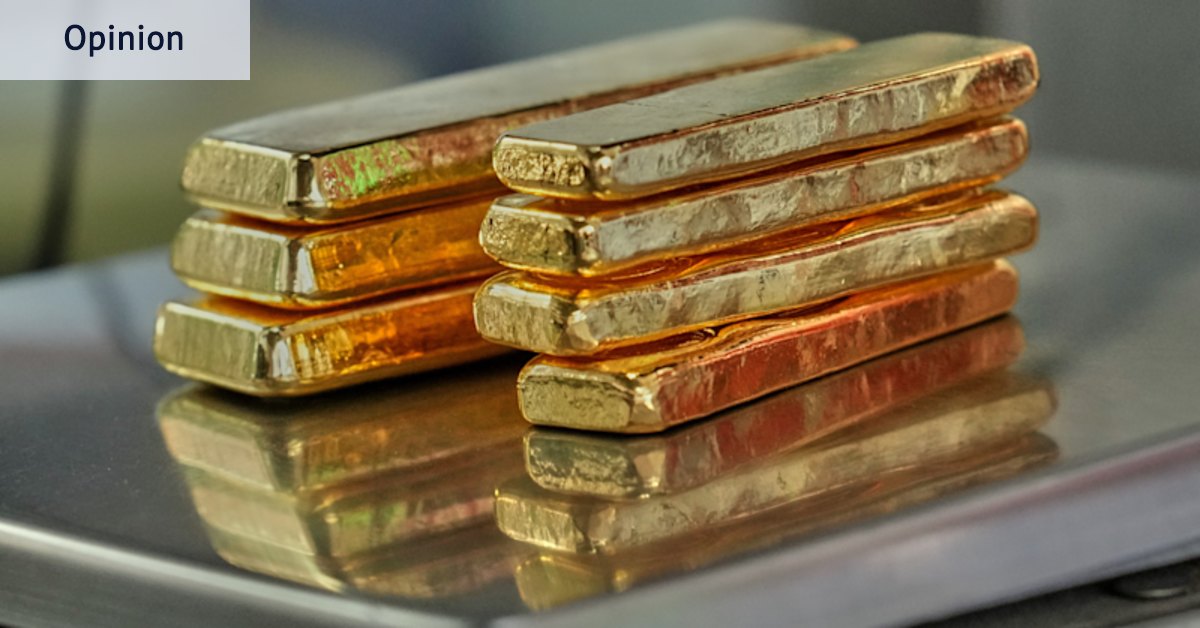
If you were looking for an illustrated view of what’s been happening in the global economy and markets over the course of this year, you’d have to look no further than a chart of the gold price.
The precious metal has had a volatile 2026 so far, hitting a record high of $US5595 ($7970) an ounce in late January, falling to a year low below $US4000 an ounce in July, recovering to just under $US4700 an ounce in late August before tumbling back to about $US4160 this week.
The price has been buffeted by the cross-currents being generated by the war in the Middle East, the fiscal stress in developed economies, particularly in the US, stubborn inflation rates, the turmoil in bond markets, and turbulent currency markets.
2026 has been a rollercoaster for gold investors so far.BloombergMany of those influences are centred in the US and flow from the impact of the war with Iran on the markets for oil and its derivative products, although the boom in artificial intelligence-related investment is also playing a role. There are also some longer-term elements to the shifting tides in the price.
The gold rush that pushed the metal to record highs in January was sparked by the three rate cuts the US Federal Reserve made last year as it shifted its focus from inflation to growth.
Gold has historically been regarded as a hedge against inflation but it also has an inverse correlation with interest rates. Gold generates no income from interest but has holding and opportunity costs, so a lower rate environment makes it more attractive.
With the US flirting with stagflation last year – low growth but relatively high levels of inflation – and unsettling discussions about how the Trump administration might respond to public finances that are spiralling out of control, gold’s “safe haven” status was another factor in the price surge.
China’s record buying activity last year, when it purchased more than 1000 tonnes of gold – a 60 per cent-plus increase on its 2024 purchases – also helped.
After the 2023 freezing of Russia’s dollar-denominated offshore reserves in the wake of its invasion of Ukraine, China’s central bank has, along with other central banks, increasingly shifted its reserves out of the US Treasuries market and into gold.
Donald Trump’s trade wars with the rest of the world may have provided an extra incentive for China – and even America’s traditional allies – to reduce their exposures to the US.
Aided at the margin by a stronger yuan, China has bought gold almost regardless of the price, so the sharp fall in the price over the past few weeks should create an appealing buying opportunity.
It’s not only the central bank that’s plunged into the precious metal.
With China’s property market five years into a seemingly endless downwards spiral, households have, in the absence of property as a viable investment, also been heavy buyers of gold. Although with China’s domestic economy seemingly stressed, that source of buying seems to have shrunk somewhat in recent months.
What changed from the bull market in gold early in the year to its steady price decline as the year progressed, including the steep fall from just under $US4700 in late August to about $US4160 an ounce today, and about $US4135 an ounce on the spot market?
The war and an oil price that has soared from about $US70 a barrel to more than $US100 a barrel, forcing petrol and diesel prices up by far greater amounts, is the obvious culprit. It is feeding into higher inflation and interest rates and slower growth in most of the world.
The US, the key economy for global financial markets, doesn’t have that slower growth, thanks to the extraordinary levels of AI investment and the wealth effects of a sharemarket at near-record levels.
It does, however, have the same challenge, with high levels of inflation that have forced the Fed to reluctantly start raising US interest rates for the first time in more than three years.
America, along with much of the developed world, also has deteriorating public finances, with a deficit of close to 6 per cent, gross government debt of more than $US40 trillion and an annual interest bill of about $US1 trillion that rises every time a longer-dated bond matures.
The combination of continuing high inflation, the competition for capital between the government and AI companies, and the fear that the Trump administration might try to inflate its way out of the fiscal trap that its profligacy has built, has prompted bond investors to take matters into their own hands, forcing yields up to levels not seen for nearly two decades.
Donald Trump’s assault on the post-WWII order and his “America First” approach to geopolitics and geoeconomics have rocked the gold price.APAmerica’s unsustainable public finances and the turbulence in the world’s most important financial market might make the concept of holding more gold appealing. But the surge in yields has increased both the cost of holding gold and the opportunity cost associated with it. Hence the recent tumble in the price.
That inverse relationship between the price of gold and US interest rates is unlikely to disappear for some time.
Having defied those who were sceptical that the Trump-appointed Fed chair Kevin Warsh would risk infuriating Trump with a rate rise, the markets are now pricing in a 70 per cent probability that this month’s 25 basis point increase in the federal funds rate will be followed up with a similar move next month. Indeed, 100 basis points of increases – a full percentage point – is expected over the next 12 months.
That probably adds more pessimism to the outlook for the gold price but it may also accelerate the decline of the US bond market as the most important market in the world.
China, which has cut its holdings of US Treasuries from a peak of $US1.3 trillion in 2013 to $US618 billion, even as it built its gold holdings, isn’t the only country that will see the cheaper gold price as an opportunity. That is, provided the US dollar’s relative strength (it has gained more than 2 per cent against its major trading partners’ currencies this month) doesn’t offset the price decline.
Gold is now the biggest store of central bank reserves. At the end of last year it accounted for about 27 per cent of all central bank reserve assets, up from 20 per cent a year earlier. That proportion has almost certainly increased through this year, widening the lead over US Treasuries, where the holdings fell from 25 per cent of reserves to 22 per cent last year.
The volatile path the gold price has traced this year reflects the messy and risky macro environment, with the US at the epicentre of most of the major issues and factors impacting the price.
Debt, inflation, the war in the Middle East, the Trump-led assault on the post-WWII order and his “America First” approach to geopolitics and geoeconomics, rising interest rates and the diversion of global savings into the risky but potentially transformative AI sector are all reflected in the shifting movements in the price of the shiny metal.
As an indicator of how troubled, messy and confusing the emerging new world order and the debt-laden global economy are, the gold price is providing some appropriately volatile and, at times, paradoxical signals.
You have reached your maximum number of saved items.
Remove items from your saved list to add more.