
Govt decreases petrol by Rs2.27, diesel by Rs3.56 for Sept 29
Direct Source Verification:
This story is aggregated from The Express Tribune (tribune.com.pk). Full reporting rights and copyright belong to the primary publisher.
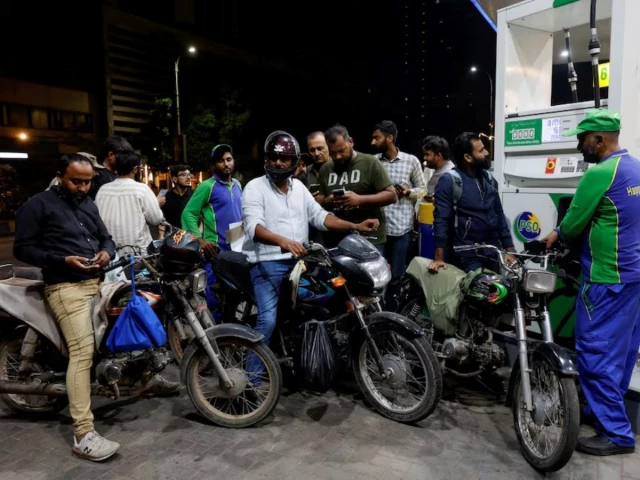
Petrol price decreases to Rs389.03 per litre, while HSD will cost Rs404.97
The federal government on Monday decreased the price of petrol and high-speed diesel (HSD) by Rs2.27 and Rs3.56 per litre, respectively, for September 29.
According to a notification issued by the Petroleum Division, the price of petrol was fixed at Rs389.03 per litre, while HSD would cost Rs404.97 per litre for Tuesday.
The latest revision comes after the government increased the price of petrol by Rs2.02 per litre, while decreasing the price of HSD by Rs3.59 per litre from September 26 to September 28.
Read: Govt increases petrol by Rs2.02, cuts diesel by Rs3.59 till Sept 28
On July 17, the government announced a new pricing mechanism under which petroleum product prices would be reviewed and notified daily, replacing the weekly pricing mechanism, as renewed tensions between the United States and Iran continued to drive volatility in global oil markets and raise concerns over fuel supplies.
Earlier this month, PM Shehbaz announced a special relief scheme offering Rs100 per litre off petrol for motorcycles, three-wheeler rickshaws and cars with engines up to 800cc, in an attempt to shield lower-income consumers from the impact of rising petroleum prices.
Under the proposal, an estimated 11.8 million beneficiaries would be covered. Around 10 million two-wheeler users and 800,000 three-wheeler users would be entitled to relief on 20 litres of fuel per month, translating into a maximum monthly benefit of Rs2,000 per beneficiary.
Another one million users of cars up to 800cc would receive relief on 30 litres per month, providing them with a maximum benefit of Rs3,000 each.
On Sept 17, the government reintroduced austerity and fuel conservation measures amid rising fuel prices, tightening business operating hours and restricting public events.
Under the measures, notified with immediate effect, shops, markets, shopping malls, bazaars, departmental stores, grocery stores, general stores and kiryana shops would close by 9pm throughout the week, according to a notification issued by the Cabinet Division.
Marriage halls, marquees and other commercial venues hosting festive events would close by 10pm, while restaurants, cafes, eateries, food outlets and standalone fruit and vegetable shops would be allowed to operate until 11pm. Takeaway and home delivery services would remain exempt from the timing restrictions.
Global geopolitical developments continue to pose significant risks. International oil prices are influenced by decisions taken by OPEC+, conflicts in the Middle East, sanctions on oil-producing nations, and disruptions in critical shipping routes such as the Strait of Hormuz and the Red Sea. Any interruption in these supply chains can immediately increase crude oil prices and freight costs. Since Pakistan imports the majority of its petroleum requirements, these developments quickly translate into higher domestic fuel prices.
Oil prices climbed about 2% on Monday after US President Donald Trump rejected a peace deal from Iran to resolve their conflict and reopen the Strait of Hormuz.
Brent futures were up $2.28, or 2.2%, at $106.60 a barrel at 10:27 am EDT (1427 GMT), while US West Texas Intermediate (WTI) crude rose $1.70, or 1.8%, to $94.11.
Qatari mediators were expected to hold separate talks with Iranian Foreign Minister Abbas Araqchi in New York and with the US side on Monday or Tuesday, an official briefed on the negotiations told Reuters.
The talks were expected to focus on an amended version of a seven-day proposal that Iran presented last week on the sidelines of the United Nations General Assembly, said the official, who spoke on condition of anonymity.
Saudi Foreign Minister Prince Faisal bin Farhan arrived in Washington on Monday for talks with US Secretary of State Marco Rubio, the Saudi state news agency said, amid escalating hostilities between Riyadh and Yemen's Iran-backed Houthis.
About a fifth of the world's oil supply — roughly 20 million barrels per day — passed through the Strait of Hormuz before the US and Israel attacked Iran in February.
Original Source
https://tribune.com.pk/story/2631911/govt-decreases-petrol-by-rs227-diesel-by-rs356-for-sept-29

