Green Card Update: Map of States Fighting Against Major Trump Change
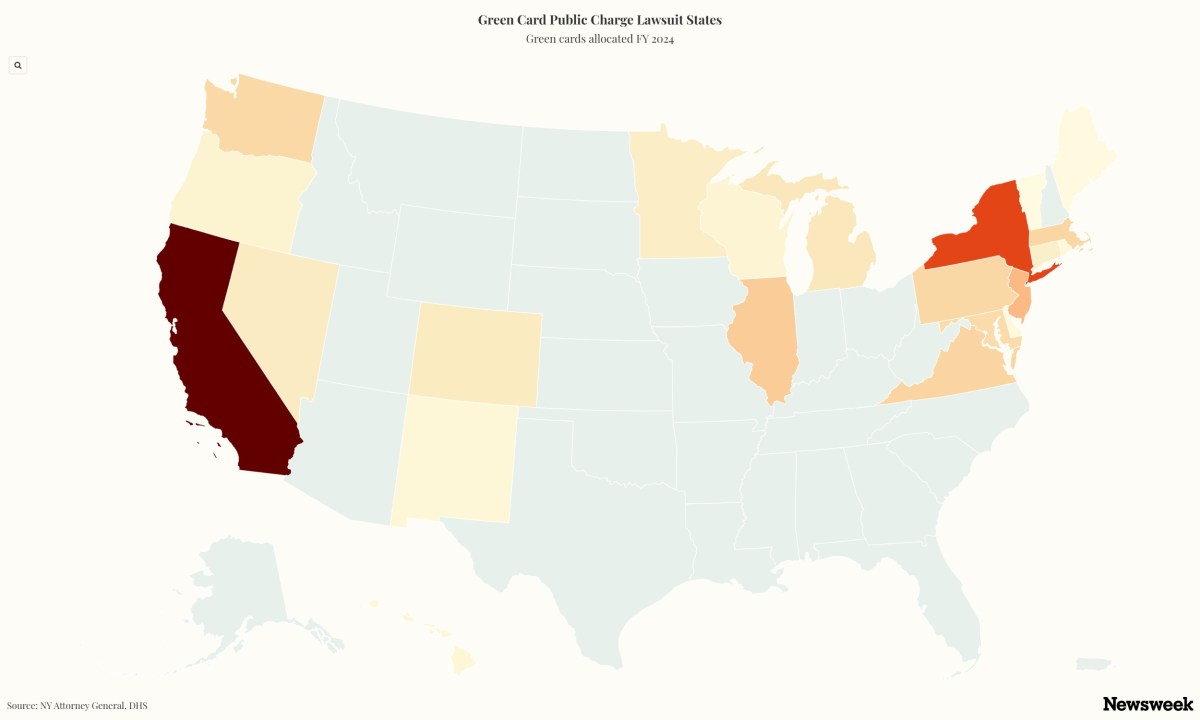
A group of 22 states and the District of Columbia is suing the Trump administration over its new green card rule which could prevent new applicants from achieving permanent residency.
The lawsuit, filed by states including New York, California, and Wisconsin, comes just a few days before the Department of Homeland Security's (DHS) new public charge rule is set to take effect.
Under the Trump administration, DHS has made considerable changes to the legal immigration system, saying it is seeking to crack down on fraud and implement what it frames as more stringent vetting procedures. Advocates and critics have warned that some measures will lead to more immigrants losing legal status, opening them up to deportation.
“Hardworking families should not be forced to go without the support they need because they fear asking for assistance will get them deported,” New York's Democratic Attorney General Letitia James said in a press release announcing the challenge.
"This rule preys on that fear and counts on families forfeiting the food assistance, health care coverage, and other public benefits to which they are legally entitled. My office fought this exact policy once before and won, and we are leading the nation to ensure the Trump administration cannot inflict this harm on families again.”
Responding to the lawsuit, DHS said it amounted to "ideological contortion" by the states involved to continue defrauding American taxpayers.
“Let’s get this straight, sanctuary states are terrified they will lose federal funds because hundreds of thousands of illegals and noncitizens might remove themselves from American welfare programs," a spokesperson told Newsweek. "We’re shaking in our boots over this supposedly terrible outcome."
The rule set to take effect Friday pulls back a 2022 regulation that narrowly defined how "public charge" determinations should be made and limited the public benefits that immigration officers could weigh against immigrants seeking legal permanent residency.
Under the new rule, officers will have greater discretion to examine an applicant's financial circumstances and history of receiving government assistance when determining whether the applicant is likely to become dependent on public support in the future—a move that could impact whether a green card can be issued.
The plaintiffs in the lawsuit are largely Democrat-run states.
In an announcement Monday, James and other attorneys general said they were suing DHS over the measure because it could mean some immigrants are too afraid to seek help from local and federal authorities when they need it.
The states argue that DHS is abandoning long-running public charge definitions and applying a far broader rule which could unfairly target immigrants, adding that the government is doing so without Congressional approval.
One key issue revolves around mixed-status families, like those with a parent who may be a noncitizen but children who are American. If those children receive benefits of some kind, potentially through their immigrant parent applying on their behalf, an immigration officer could penalize the parent when they apply for a green card.
Plaintiffs argue families could avoid seeking Medicaid, SNAP, and other federally funded programs as a result.
“No family should have to choose between accessing healthcare and nutrition assistance today — or protecting their pathway to a green card tomorrow,” California Attorney General Rob Bonta said in a press release. “The Trump Administration is seeking to rewrite more than 100 years of law with its expansive new definition of who is considered a ‘public charge.’
"In doing so, it is providing individual immigration officers with the discretion and power to punish families for lawfully accessing certain public benefits programs during short term periods of need."
When the rule was announced, the department estimated it could reduce federal and state public-benefit transfer payments by roughly $13 billion annually, or about $111 billion over a decade.
DHS attributed much of that decline to immigrants deciding not to apply for benefits or withdrawing from programs they are already using because of concerns that participation could negatively affect future immigration applications.
The department acknowledged that lower participation in programs such as Medicaid, SNAP, and housing assistance could have broader economic effects on health care providers, grocers, landlords and other entities that receive revenue through those programs.
The Trump administration has frequently focused on immigrants' use of these kinds of programs, arguing that the group is a drain on public resources. Studies have shown that immigrants using these programs often contribute to them through taxes.
"The Trump administration is upholding the rule of law and protecting American taxpayers from subsidizing aliens who may become dependent on public benefits. USCIS is committed to safeguarding the safety, security, and financial well-being of Americans," U.S. Citizenship and Immigration Services spokesperson Zach Kahler said in a July press release.
The states are asking a federal judge to intervene quickly and rule the new policy unlawful, preventing its implementation this week.
For now, the new rule is set to take effect Friday.
Contact Newsweek editors on this story: Samantha Beech and Geoffrey Rowland.