Growing school violence puts focus on teacher safety - IOL
The Department of Basic Education has acknowledged growing concerns over violence, intimidation and threats against teachers but says it does not have a stand-alone national strategy specifically focused on educator safety.
The admission comes as teacher unions warn that teachers are increasingly facing verbal abuse, threats, intimidation and physical violence, with some reportedly leaving the profession because of hostile working conditions.
The DBE said teacher safety was instead addressed through its broader school-safety architecture, including the National School Safety Framework (NSSF) and its strengthened Collaborative Implementation Protocol with the South African Police Service (SAPS).
DBE spokesperson Terence Khala said the framework provided a national approach to dealing with threats affecting both learners and educators.
“Teacher safety is addressed within the Department’s broader national school-safety architecture rather than through a stand-alone teacher-safety strategy. The principal policy instrument is the National School Safety Framework, which provides a nationally consistent approach for identifying, preventing, managing and monitoring threats of violence and crime affecting learners, educators and other members of the school community,” Khala said.
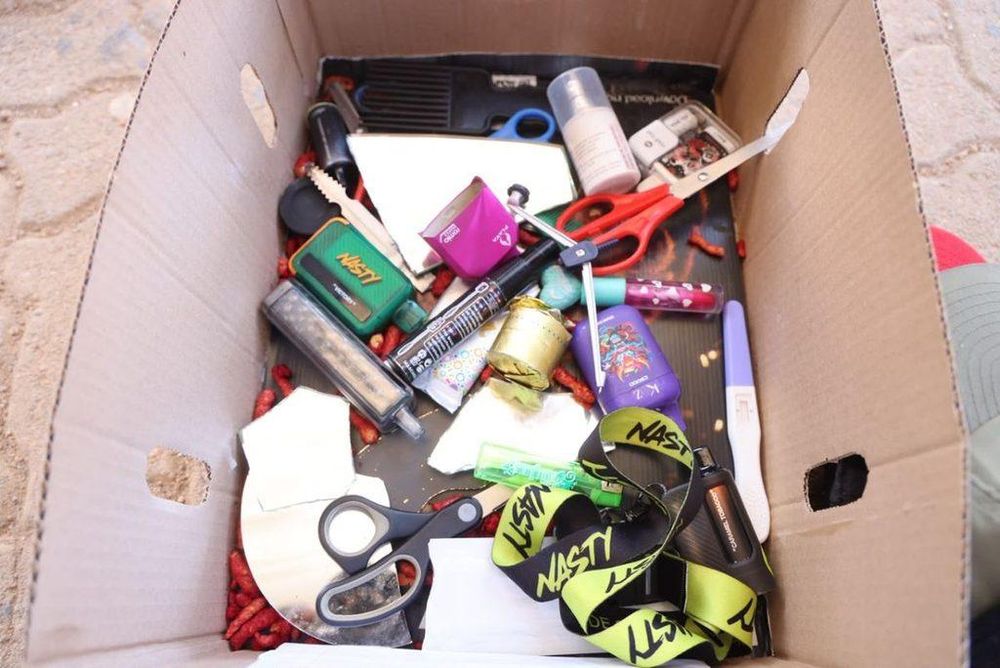
The response follows recent reports on growing concerns over school safety, after police operations in Gauteng recovered dangerous weapons and suspected illegal substances from schools. The items recovered included knives, vapes, cigarettes, broken glass, scissors, grinders, matches and lighters, and suspected substances included nyaope, spice and cannabis.
Gauteng Education MEC Lebogang Maile said some searches had also uncovered learners in possession of multiple packets of cannabis, raising concerns about possible drug distribution within schools. But the threats facing teachers extend beyond what police are finding in school bags.
In the North West, a viral incident at Batlhaping Secondary School in the Dr Ruth Segomotsi Mompati District, where a learner was allegedly recorded insulting and verbally abusing a male teacher, has further highlighted concerns over learner indiscipline and educator safety.
The South African Democratic Teachers’ Union (Sadtu) in the province said the incident was symptomatic of a wider problem.
“An educator cannot be expected to perform their professional responsibilities effectively while being subjected to threats, insults, intimidation or violence,” Sadtu said.
“The safety and dignity of educators must be treated as a fundamental condition for quality education.”
Dems Nel, head of the Legal Department at the SAOU Teachers’ Union Legal Services, said the union had seen a surge in verbal abuse, threats, intimidation and physical violence against teachers.
“The tendency is coupled with inaction from the department, which tends to lead to a further increase in such incidents at schools. This is completely unacceptable, and it is not reasonable to expect educators to work in such hostile environments,” Nel said.
He said the problem was no longer confined to particular provinces or schools.
“Teachers face numerous threats, intimidation and physical bullying by students, their parents, the Department of Education and governing bodies. It is not limited to, or more rampant in, certain provinces or schools. In fact, it has become more prevalent in every single province in our country,” Nel said.
He said the union was increasingly receiving requests from teachers seeking assistance on how to deal with threatening conduct.
“It has reached a point where we are inundated by our members requesting assistance or guidance on how to deal with this conduct daily,” he said.
Nel said some teachers had ultimately decided to leave the profession because of what they regarded as intolerable working conditions.
“Definitely, we have dealt with numerous matters where teachers have decided to leave the profession due to the intolerable working environment,” he said.
Responding to the concerns, Khala said schools were expected to have functional School Safety Committees, conduct safety-risk assessments, identify emerging threats and develop school-specific safety plans. He said schools experiencing elevated levels of violence or criminal activity should receive interventions based on their individual risk profiles.
“The Department’s approach recognises that schools do not experience the same level or type of risk. A school affected by gangsterism, for example, requires a different package of support from a school experiencing sporadic disciplinary incidents. Safety planning must therefore be informed by the school’s own risk profile, incident data and the conditions in the surrounding community,” Khala said.
Measures could include stronger access control, improved incident reporting, closer cooperation with local police stations and community safety structures. Infrastructure interventions such as fencing, burglar proofing and alarms could also form part of the response.