H-1B Visa Crackdown Targets Employers That Cut American Jobs - Newsweek
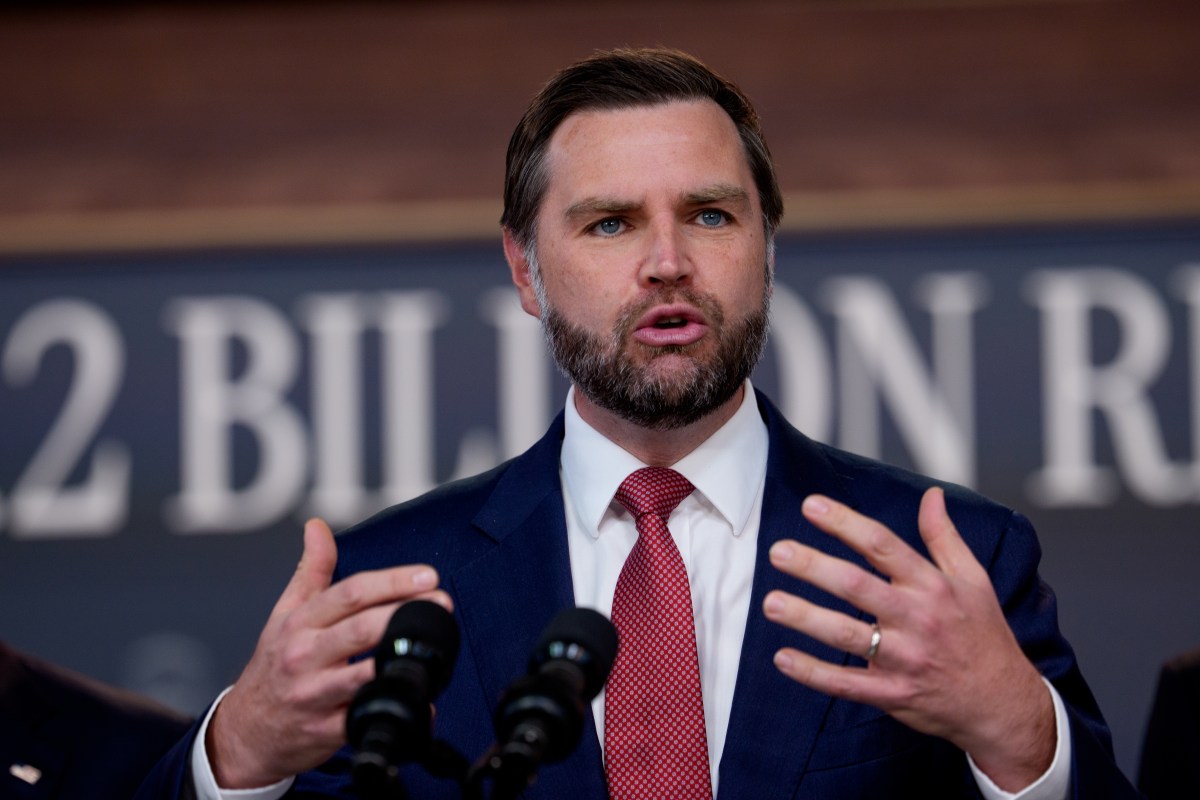
The Trump administration is looking at ways to prevent companies from laying off American workers while using the H-1B visa program to recruit foreign employees, Vice President JD Vance has said, as the White House pushes for tighter restrictions on employment-based immigration.
Vance, whom Trump has dubbed the administration’s "fraud czar," said officials are examining employers’ layoff records as part of an effort to prevent companies from using H-1B visas to replace U.S. workers with lower-paid foreign labor.
"We're also looking at various ways of preventing companies that use H-1B visas from laying off a bunch of American workers," Vance said during an appearance on the "All-In Podcast."
"One of the things that I find just shocking about this is you'll have a company that applies for an H-1B, and they'll say, oh, we're desperate for workers. We can't find the workers," Vance said. "And then you go and look at their history, and they've laid off 5,000 people. Well, that's ridiculous."
The comments come as the Trump administration has implemented a string of changes to the H-1B visa program aimed at tightening control over the legal immigration system. The visa program allows U.S. employers to hire foreign workers in specialty occupations and is widely used in tech, healthcare, and engineering.
The changes include a weighted H-1B selection system that gives greater preference to higher-paid positions, the expansion of certain biometric and security fees to additional H-1B extension filings by large employers, and a proposal to eliminate a rule allowing some foreign workers to remain in the United States for up to 60 days after losing their jobs.
On September 18, President Donald Trump signed an executive order and issued a proclamation directing federal agencies to increase scrutiny of H-1B petitions in cases where U.S. workers could be displaced. The order directs the departments of State, Labor, and Homeland Security to consider an employer’s recent or planned layoffs of similarly situated U.S. workers when reviewing H-1B labor condition applications, petitions, and visas.
As the Trump administration increases scrutiny of employment-based immigration programs, federal officials have taken action against several employers. The Labor Department’s inspector general suspended Cognizant’s ability to file new applications under the PERM employment-based green card program while authorities investigate alleged fraud involving the PERM and H-1B programs, and also suspended H-1B processing for software company Cloudera. Separately, as of September 28, the Labor Department listed five employers as currently debarred or disqualified from participating in the H-1B program: GowraTech LLC, Renotek Group LLC, Seeloz Inc., Sherwood at Mount Dora Inc., and Da Vinci at Hunters Creek Inc.
The Department of Homeland Security has also proposed a $103,265 charge on cap-subject H-1B petitions, on top of existing immigration fees. Under the proposal, DHS assumes employers would continue filing about 85,000 cap-subject petitions annually despite the additional cost and has argued that employers using the program generally have the resources to absorb the expense.
The proposed charge is separate from a $100,000 payment requirement imposed under a September 2025 Trump proclamation for certain H-1B beneficiaries outside the United States who needed to enter the country to activate an approved petition. A federal-district court ruled that requirement unlawful in June, a decision the administration appealed to the 1st U.S. Circuit Court of Appeals. Trump subsequently extended the requirement for another year, with the White House saying it would remain in effect through September 21, 2027.
The administration argues that its changes will move the H-1B program toward its intended purpose of supplementing the domestic workforce with highly skilled foreign employees rather than allowing companies to reduce labor costs by displacing American workers.
Lauren Bis, a spokesperson at the White House, previously told Newsweek, "This fee was about putting the American worker first and protecting them from being replaced by cheap foreign labor."
"There is no shortage of American minds and hands to grow our labor force, and President Trump’s agenda to create jobs for American workers represents this Administration’s commitment to capitalizing on that untapped potential."
Employers' use of the program has long been the subject of competing arguments. Technology companies and other businesses have relied on H-1B visas to recruit specialized foreign workers, while critics of the program have argued that some employers use it in ways that disadvantage U.S. workers.
Adam Klein, a former DHS official and co-founder of Globali.ai, told Newsweek, "If the objective is to cause employers to hire American workers instead, that assumes the alternative to an H-1B worker is necessarily a U.S. worker. For some companies, the alternative may be putting the job somewhere else."
"The more difficult and unpredictable it becomes to bring international talent to the United States, the more companies have reason to consider locating that talent, and potentially the work that goes with it, outside the country."
Vance acknowledged that there are legal limits on what the administration can accomplish without Congress.
"We're doing a lot within the confines, of course, of what we're allowed to do legally," Vance said.
Congress has remained divided over the future of the H-1B program, with some lawmakers pushing reforms aimed at tightening eligibility and preventing abuse, others seeking to sharply restrict or eliminate the visa, and others supporting its continued use as a way for U.S. employers to recruit highly skilled foreign workers.
"The H-1B should not exist to replace American workers with low-wage foreigners," Vance said. "It should exist to enrich the American economy. And that's exactly what we're trying to make sure it does."