Hairdresser wins R2.67 million RAF payout after losing two fingers - IOL
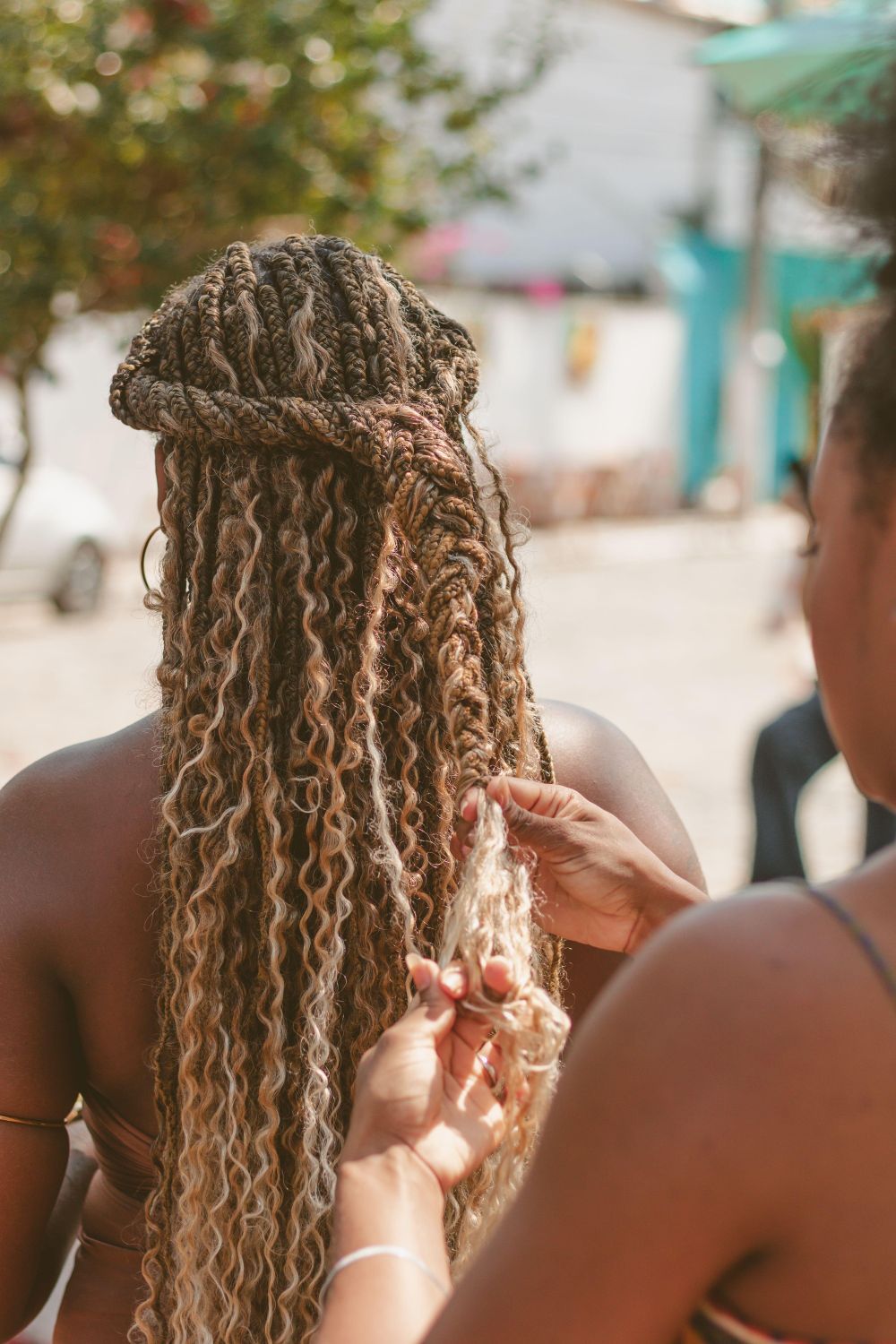
Mpumalanga hairdresser awarded R2.67 million after losing two fingers in crash.
The Mpumalanga High Court in Mbombela has ordered the Road Accident Fund (RAF) to pay a hairdresser who lost two fingers in a crash more than R2.67 million for past and future loss of earnings.
Acting Judge TS Ngwenya found that the woman's injuries had significantly affected her ability to work.
Prudence Dibakoane was a passenger in a vehicle that was involved in a collision with another vehicle in March 2022 in White River, Mpumalanga.
RAF conceded 100% liability for the accident, meaning the dispute before the court was limited to the extent of Prudence's past and future loss of earnings.
Dibakoane told the court that she was admitted to Kiaat Hospital after the accident and that her right middle and ring fingers were amputated.
She was working as a hairdresser at Split-ends salon when the accident occurred and said she was unable to work for about a year afterwards.
Before the accident, she said she earned about R6,200 a month. When she returned to the salon, her earnings dropped to about R3,200 a month.
She later became self-employed and started working from a salon in White River, where she rented a chair. She initially earned about R9,800, although her income subsequently declined to about R8,000.
Dibakoane told the court that her injuries had slowed her down and that she could no longer perform some hairstyles.
RAF challenged aspects of Dibakoane's evidence, including the lack of conventional employment records such as payslips and tax or UIF registration.
She explained that part of her income had been paid into her bank account while the remainder was received in cash.
Judge Ngwenya found that the absence of documentary proof for all of her income did not mean that her claim should fail.
The judge noted that Dibakoane worked in the informal hairdressing sector and that it was not seriously disputed that she received some income in cash.
“I have no reason to doubt this, as cash payments are common in the informal sector,” the judge found.
The court concluded that Dibakoane had provided sufficient evidence to establish both her past and future loss of earnings.
An occupational therapist found that Dibakoane reduced working speed because of the amputation and pain affecting her hand.
Although she retained the ability to perform medium work and her occupation fell within light-work parameters, testing showed below-average grip strength in her right hand.
The occupational therapist found that her limitations would compromise her ability to perform at the same level as uninjured workers, making her a vulnerable competitor in the open labour market.
The report also highlighted that hairdressing requires the use of both hands and all fingers, particularly when braiding hair.
An industrial psychologist similarly found that Dibakoane's work speed had been affected and that she could lose customers because of the additional time needed to complete hairstyles.
The expert concluded that her earnings were likely to remain below what she could have earned without the accident.
RAF disputed the industrial psychologist's projection that Dibakoane could have progressed to higher earnings through self-employment.
However, the court found that the objective evidence supported the projection.
Judge Ngwenya noted that Dibakoane had in fact transitioned into self-employment after the accident and had managed to increase her earnings despite the limitations caused by her injuries.
The court therefore rejected the RAF's contention that she would not have progressed to the upper quartile of earnings for non-corporate semi-skilled workers.
The actuarial calculations placed the total loss of earnings at different amounts depending on the retirement assumptions used.
After considering the evidence and applying a further 5% contingency deduction, the court calculated Dibakoane 's past loss of earnings at R192,119 and her adjusted future loss of earnings at R2,477,215.25.
This resulted in a total award of R2,669,334.25.
The RAF was ordered to pay the amount with interest at 10.25% per annum from the date of judgment until payment.
It was also ordered to provide an undertaking covering 100% of the costs of Prudence's future accident-related medical, hospital and related treatment, subject to proof.
RAF was further ordered to pay her legal costs.
Meanwhile, her claim for general damages remains outstanding and will be determined after the serious injury assessment process is concluded by the Health Professions Council of South Africa.