He slept hungry in Bengaluru. Now he is lifeline for city’s migrant workers - The Indian Express
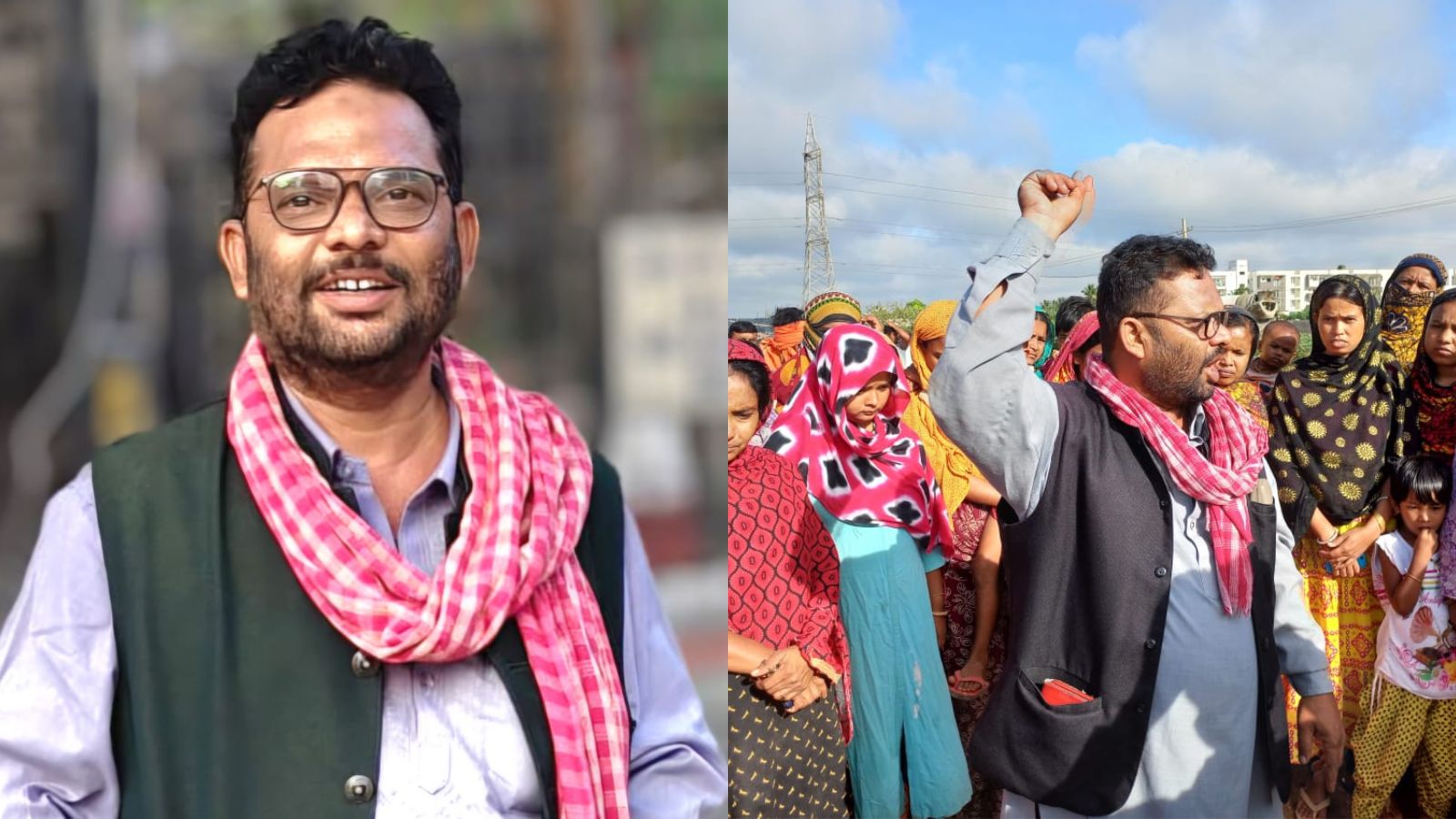
When a migrant worker in Bengaluru hits a wall – an employer refusing to pay months of wages, an eviction notice issued without warning, an unaffordable hospital emergency, or a police complaint that is not taken seriously – one of the first calls they often make is to R Kaleemullah. Migrants across the city reach out to him when they do not know where else to turn. He may not be able to solve every problem himself, but he usually knows someone who can help.
At 51, Kaleemullah is the national vice-president of the labour union All India Shramik Swaraj Kendra. Over more than three decades in Bengaluru, he has built a network of lawyers, trade unionists, social workers and grassroots volunteers who can be called on when a worker needs help. He can be found at police stations, hospital corridors, government offices and in the crowded settlements where migrant workers live.
For the workers who turn to him, his credibility stems not only from his work but also from his own experience of living with uncertainty. “I never planned to become a social worker,” Kaleemullah says. “But when you have lived through extreme vulnerability yourself, you recognise the pain immediately in someone else. You understand what it feels like to be completely helpless.”
Kaleemullah grew up in a small rural hamlet in Andhra Pradesh. Even as a child, he questioned what he felt was unfair. When he was 12, he questioned village elders about funds collected for religious events that he believed had not been accounted for properly. The dispute escalated. A complaint was filed against him, and he was taken to the local police station and beaten, he recalls.
His father, too, challenged what he considered arbitrary decisions by authorities. Around the same time, he objected to a municipal tax of Rs 700 imposed on a computer they had bought. He refused to pay, leading to a legal battle that continued for nearly 12 years. During this period, municipal authorities repeatedly cut the family’s water and power connections, and their small poultry business was also affected.
Around 1990, an illness ended his formal education. After recovering from severe jaundice, Kaleemullah returned to school, but the headmaster demanded an unauthorised re-admission fee of Rs 500. His father refused to pay. Kaleemullah did not return to the classroom.
With only a Class 10 certificate, he left his village in 1991 to look for work. He first went to Hyderabad, where he trained in air-conditioner and refrigerator repair, hoping to find a job in the Gulf eventually. When that plan did not work out, he moved to Mumbai and took up temporary wage jobs. He later boarded a train to Bengaluru, intending to enrol in a technical diploma course.
But survival in the city soon took priority over his studies. He cleaned domestic refrigerators in residential neighbourhoods for Rs 5 a day. Food was often difficult to afford. “A few friends and I would soak cotton cloths in water and tie them tightly around our stomachs to reduce hunger,” he says.
There were also days when he could not afford the bus fare. On one occasion, he says, he bought a bus ticket to learn the route and then walked the same route to work every day.
By the mid-1990s, he found steady work at a garment shop in Shivajinagar. He started on a daily wage of Rs 60, which later rose to Rs 100. The job gave him a close look at the difficulties workers from outside the state faced. He saw workers facing extortion, being picked up by beat constables without explanation and losing wages without recourse. He also saw Dalit and minority workers struggle to speak up, often because they did not know the local language or how to navigate the system.
His involvement began simply: he accompanied workers who needed help. Whenever a worker was assaulted or taken to a police station, Kaleemullah would go with them. He began sitting in on legal consultations, learning procedures and understanding how complaints and documents moved through government offices.
“My education came from living in the streets,” he says. “I have not studied many books, but I have spent years sitting with people during their worst moments. That is where I learnt how the law works, and how easily it can work against those who are poor.”
By 2002, Kaleemullah’s work had moved beyond helping workers with individual problems. He volunteered at relief camps after the Gujarat violence that year, joined campaigns with Dalit rights groups across Karnataka and worked with activists opposing the demolition of slum settlements.
Through Vimochana, a Bengaluru-based women’s rights organisation, he began assisting women in cases involving domestic violence, sexual assault and offences under the Protection of Children from Sexual Offences (POCSO) Act.
During the Covid-19 pandemic, his network expanded significantly as volunteers and helpers reached out to people in need across the state. Many of those seeking assistance were migrant workers from Assam, Manipur, West Bengal, Mumbai, Tamil Nadu and other parts of the country. “Even today, if they face a problem or need help, they call me,” he says.
His work with women has also brought him into conflict with conservative sections of the communities he works with. He says men have threatened him for helping women find jobs, get education, or even open bank accounts.
“I see these women as my sisters,” he says. “When a woman comes to me after being assaulted, I cannot ask her religion or caste. An assault is an assault. If her dignity has been violated, I have to stand by her.”
One case in particular brought him strong opposition from a section of the community. A young woman from Hubballi approached him alleging that she had been sexually abused over a prolonged period by a local Islamic scholar. Kaleemullah and his team worked with the police, leading to the scholar’s arrest, he says. Following the arrest, some members of the community criticised him and called him a “kafir” and “gaddar” (traitor).
Another case that stayed with him involved the alleged sexual assault of a 10-year-old girl by a temple priest in Devanahalli in 2020. The priest was arrested and booked under the POCSO Act and has since been convicted.
For Kaleemullah, the two cases also reflect how his work can be viewed through the religious identity of the people involved. He says his interventions are sometimes questioned or given a communal colour, particularly when he works with Muslim migrant workers.
“A large number of sanitation workers, ragpickers and construction workers in Bengaluru are Bengali Muslims. When I stand up for their legal rights or question arbitrary detentions, people often look at me through their religious identity. But for me, the issue is the same whether the person seeking help is a Muslim, Hindu or from any other community,” he says.
Despite the difficulties he faced when he first arrived in the city, Kaleemullah says Bengaluru has eventually become a place where he has found support and a sense of purpose. “Bengaluru was hard on me in the beginning. But over the years, it has given me a lot of love, trust and purpose,” he says.
Over the past decade, Kaleemullah has also begun training young people who want to work with vulnerable communities. Students of social work, sociology and journalism have interned with him, accompanying him to informal labour settlements, police stations and labour commission hearings.
He tries to teach them how the system works on the ground: how to follow up on a complaint and understand the difficulties faced by workers and victims.
His work also extends to the children of migrant waste-pickers and construction workers. His volunteers identify children who have dropped out of school in informal settlements and help them learn so they can enrol in government schools.
“Without education, their children will go through the same struggles as their parents. Getting a child into school is the first step towards breaking that cycle”, he stresses.
His work has also come with personal risks. Over more than three decades of advocacy, Kaleemullah says he has received several death threats, particularly during wage disputes, anti-encroachment drives and disputes between communities.
His family has often asked him to step away from the work, especially after he suffered health problems and underwent major cardiac surgery. But he still takes calls from workers who need help.
“Even my family tells me to sit at home. But if I do not help them, who else will? When I came here, I had nobody either. I do not want people who have placed their hopes in me to feel betrayed,” he says.
He was recently awarded the Lifetime Achievement Award for the Society Support category by The Khazi India Foundation – 2026. The award recognises his work with migrant labourers, Adivasis and Dalits, victims of injustice and families affected by demolitions, along with his humanitarian work during the Covid-19 pandemic, legal aid and support for vulnerable families, peace-building during communal crises and efforts towards youth education and awareness.