Here's how much more each kilometre, and a full tank, will cost you after October's fuel price increase - IOL
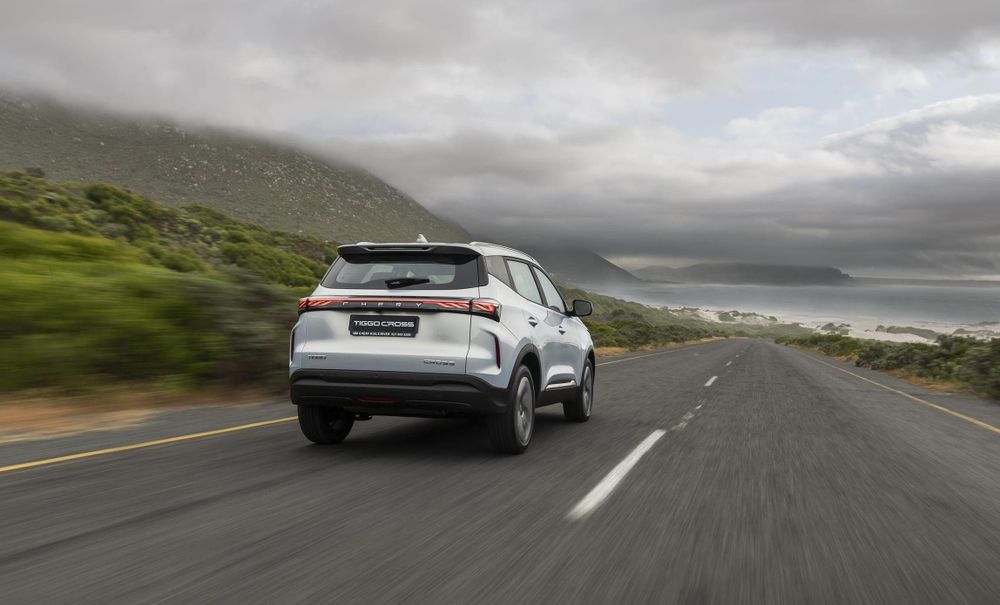
Driving 1,000km in a small-to-medium SUV costs almost R800 more than it did in March.
South African motorists and commuters have been dealt a significant blow, following the official confirmation this week that most fuel types will see price rises exceeding R3.
The Department of Mineral and Petroleum Resources (DMPR) announced on Monday that the price of 95 Unleaded petrol would rise by R3.33, while 93 Unleaded is set to go up by R3.12. 500ppm diesel will see a R2.84 price hike, while the cleaner 50ppm diesel will go up by R3.24.
This follows the significant fuel price hikes of September when petrol increased by R1.34 and diesl by up to R3.15.
Following the increases, which will take effect on Wednesday, October 7, motorists will pay R29.38 for a litre of 95 Unleaded at the coast and R30.25 in Gauteng, where the cheaper 93 Unleaded will rise to R29.00. This is the first time ever that South Africans will be paying more than R30 for petrol.
This has devastating implications for the average budget, with IOL’s calculations showing that even an entry-level car will cost you over R1,000 more to fuel, versus March this year, if you travel around 2,000km per month.
A small car with average consumption of 5.5 litres per 100km would have cost you around R1.07 per kilometre in fuel costs back in March this year, using coastal prices, but by September that would have risen to R1.47 per kilometre, and in October that number swells to R1.62.
A compact SUV that consumes 8.0 l/100km would have risen from R1.55 earlier in the year to R2.08 in September, with a cost of around R2.35 projected for October.
It gets worse if you drive a diesel-powered bakkie, which consumes around 9.0 l/100km. In March, you would have paid R1.83 per kilometre, but by October you would be looking at R3.09 per kilometre, up 28 cents over the previous month alone.
Likewise a tank of fuel will cost anything from R100 more than it did last month, for a small car with a 30 litre tank, to R226 extra if you have a bakkie with a larger tank.
Calculations are based on coastal prices in October. Diesel is based on a retail price estimate.
* Diesel calculations are based on retail price estimates.
It is estimated that the average South African motorist drives around 1,500km to 1,800km per month.
If you are driving 1,500km in a month in a small car such as a Suzuki Swift, that would have cost you R1,606 in fuel bills back in March, but that would have risen to R2,149 by September and will peak at R2,424 in October.
In an SUV such as the Chery Tiggo, assuming consumption of 8.0 l/100km, your fuel costs would have risen from R2,336 (March) to R3,126 (September) to R3,526 (October).
In the Toyota Hilux example, at 9.0 l/100km, 1,500km per month would have risen from R2,746 (March) to R4,212 (September) to R4,637 (October). That’s almost R2,000 in the space of seven months.
Will these catastrophic fuel costs last forever?
Much hinges on the prospects of peace in the Middle East.
Oil prices remain elevated largely because the war in the Middle East has raised fears of disruptions to global crude supplies and shipping. The Strait of Hormuz is a particular concern because a significant share of the world’s oil passes through the narrow waterway, while attacks or heightened tensions in the region can also increase insurance, shipping and supply-risk costs.