Honouring the spirit of Mama Winnie Madikizela-Mandela on her 90th birthday - IOL
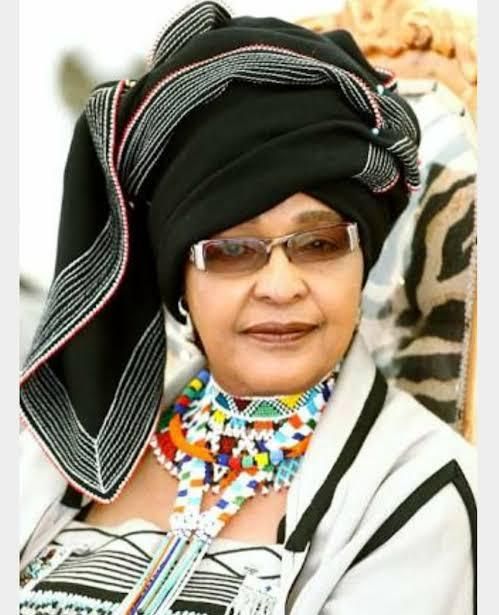
On the 90th birthday of Mama Winnie Madikizela-Mandela, writer Carl Niehaus honours her revolutionary spirit and reflects on the enduring legacy of a woman who defied oppression and demanded true economic freedom for all South Africans.
Yesterday we commemorated what would have been the ninetieth birthday of Mama Nomzamo Winifred Zanyiwe Madikizela-Mandela. I write this not as a ritual of commemoration, and not as another sanitised official tribute that reduces her to a grieving wife or a symbolic "Mother of the Nation" who can safely be wheeled out on anniversaries. I write it as a man who sat with her, late into the night, in her house in Orlando West.
I write it as one of those she mentored, confronted and embraced — and never released from the demand of full liberation, or from the burden of that demand. She never allowed me to escape the burden of my own whiteness.
Mama Winnie was born on 26 September 1936 in Mbhongweni, Bizana, in the Eastern Cape. She came of age under a system that sought to reduce Black people to subjects in their own country. Mama Winnie refused. That refusal defined her life. It still defines the unfinished business of ours.
I met Mama Winnie at her house on Masedi Street, Orlando West, Soweto. That is where we sat and talked, late into the night. That is the house I went to. That is the house whose warmth I still remember. Mama Winnie was never prepared to leave Soweto and go and live, as so many other ANC leaders did, in the leafy, mainly white northern suburbs of Johannesburg. She always insisted that she would continue to stay in Soweto, among her people. And it is outside that property that, yesterday, on her ninetieth birthday, the EFF's mayoral candidate for the Johannesburg Metro, Dr Tlaleng Mofokeng, together with fellow EFF fighters, cleaned the street as an act of respect. I was deeply touched by that. It was not performance. It was the movement that carries her name in its headquarters doing the simple, physical work of honouring her where she lived among her people.
I first published a tribute to Mama Winnie on Mother's Day, 13 May 2007, when she turned seventy. I share the heart of that tribute again now, because the years since her death have only confirmed how right she was, and how costly the betrayal of her was.
Few people made the sacrifices Mama Winnie made for our liberation. She was only twenty-three, with two little girls, when her husband was sentenced to life on Robben Island. It was twenty-six years before any semblance of ordinary contact between them could resume. For those twenty-six years, the struggle was her life.
Mama Winnie never contemplated exile. That fact must be stated without softening. While others left, Mama Winnie stayed inside the country. She stayed among the people. She faced the security police on South African soil, in South African cells, in South African townships. If there was anyone who was the personification of the unyielding spirit of the liberation struggle in South Africa — a backbone of tungsten steel — it was Mama Winnie. That contribution, that dedication, that sacrifice must be honoured. It can never be underestimated.
On a freezing night, a few hours before dawn on 12 May 1969, the security police stormed the house in Orlando West. Zenani and Zindzi, then about nine and ten, clung to her skirt crying, "Mummy, mummy don't go." Mama Winnie was detained under Section 6 of the Terrorism Act as Prisoner Number 1323/69. What followed was 491 days — seventeen months — most of them in solitary confinement in Pretoria Central Prison. For the first two hundred of those days, she had virtually no formal contact with any human being except her interrogator, the notorious Major Theunis "Rooi Rus" Swanepoel.
The cell was about fifteen feet by five. When she stretched out her hands, she touched the walls. The light burned twenty-four hours a day. She lost track of night and day. She was held in a death-row cell with three doors — grille, solid door, grille — so that the sound of the keys alone was designed to break the soul. Two sisal mats, blankets sometimes soaked in another prisoner's blood, a filthy plastic bottle, a sanitary bucket used both as a toilet and for washing. Porridge with maggots. Ten minutes outside, twice a week, if she was lucky. She was interrogated for days on end, kept awake for up to five days at a time under a bright light, until she fainted, hallucinated and passed blood in her urine. She was hospitalised for malnutrition. Clothing was taken from the cell. There were periods when Mama Winnie was left without even a change of underwear. Accounts of that detention record that she was held at times stripped naked, assaulted, reduced to a non-person — "like killing you alive," she wrote. "You are alive because you breathe." The cell stood next to the assault chamber. She heard the screams of other prisoners as they were beaten. She wrote that she felt the lashes on her own flesh.
She was acquitted. Within minutes, before she could leave the court, she was re-detained and sent back into solitary. The second round of charges collapsed. That was the method: not justice, but the breaking of a human being who would not break.
And that was not the end. Banning orders followed banning orders. In thirteen years she lived only about ten months without a ban. In 1976, after the Soweto uprising, Mama Winnie was detained again without trial for about five months. In May 1977 she was banished to Brandfort, a lonely and dusty Free State town, for years of isolation, surveillance and house arrest. The police petrol-bombed her home. They raided her. They assaulted her. A back injury from those assaults stayed with her. Through all of it, Mama Winnie stayed inside the country. Unrepentant. Uncompromising.
The strength of a person should not be measured by the ability to become a robot. It should be measured by the courage of a human being of flesh and blood who feels the pain, suffers the injuries, and still stands, knowing she will carry the scars for the rest of her life. That was Mama Winnie's courage. Her existence was never stainless steel. The wounds were publicly visible. Far too many people — including some who had been part of the struggle and should have known better — were quick to judge a woman they would not have lasted a day beside.
I wrote then, and I repeat now: one of the victories of our struggle was a constitutional democracy in which all are equal before the law. But there is no way that struggle heroes and apartheid apparatchiks can ever be equal in our care and understanding. After her death, it was revealed how Mama Winnie had been vilified and subjected to deliberate character assassination. Those who swallowed the lies about her, and those inside the ANC who humiliated her while she was still alive, should hang their heads in shame.
This year, the seven-part Netflix documentary series The Trials of Winnie Mandela, told through her granddaughters Princess Zaziwe Manaway and Princess Swati Mandela-Dlamini, and drawing on Mama Winnie speaking in her own voice, put those truths back in front of the nation. It did not invent what many of us already knew. It forced a country that had grown comfortable with the smear to look again at how she was broken in public, and by whom.
In that series, Mama Winnie explained Stratcom with the precision of someone who had lived inside its machinery. She recalled Paul Erasmus, the apartheid security policeman who later testified about the campaign against her. Stratcom — Strategic Communications — was designed by the enemy of the day to destroy a person by mixing truth and lies. As Mama Winnie put it: you tell seventy percent truth and thirty percent lies. Human nature being human nature, people read the seventy percent, and then the thirty percent of poison obliterates everything else. That was the method. That was how a woman who had carried the internal struggle was turned, in the minds of the respectable, into a monster.
The deeper wound is not only what apartheid did. It is that so many of her own closest comrades cooperated. They became a lynch mob in suits and party colours. They repeated Stratcom's lines. They treated apartheid disinformation as if it were moral revelation. They sat in the so-called Mandela Crisis Committee and the Soweto Crisis Committee, and helped drive a wedge between Mama Winnie and Madiba when her uncompromising stand on land and full liberation threatened the deals being cooked at the negotiating table.
Then came the Truth and Reconciliation Commission. The TRC, taken as a whole, was a farce. It allowed apartheid apparatchiks, apartheid killers and apartheid torturers to walk away scot-free under the cover of amnesty and Christian theatre. And in that same process, Mama Winnie was hauled before the nation and publicly humiliated. Archbishop Desmond Tutu's conduct towards her in those hearings was shameful. He pleaded with her, pressed her, and staged a moral spectacle that demanded apology from one of the greatest icons of our struggle, while the men who had tortured her, banned her, banished her and tried to destroy her were given a path to walk free.
I must say this plainly. At an earlier stage in my life, I was close to Desmond Tutu. What he did to Mama Winnie in the TRC drove a wedge between him and me, and between him and many others who understood what that moment really was. His action towards Mama Winnie was unconscionable. It was betrayal of one of the greatest icons of our struggle. It was betrayal of the liberation struggle itself. I will never forgive Desmond Tutu for what he did to Mama Winnie in the TRC.
They participated in, or looked away from, the destruction of her name because a strong Black woman who would not be reduced to "Mrs Mandela" was inconvenient to the new elite.
That is the painful truth The Trials of Winnie Mandela puts back on the table: the regime tried to destroy Mama Winnie, and too many in her own movement joined the hunt.
Mama Winnie suffered at the hands of the security police. Mama Winnie suffered at the hands of the betrayal of her own comrades. And yet she never compromised. She never sold out. She never betrayed the struggle.
Mama Winnie was never merely Winnie Mandela, the wife of Nelson Mandela. That reduction was always a political act. It was the way men — and some women who made themselves useful to those men — tried to contain a woman who would not be contained. Mama Winnie organised. She spoke when the leadership was imprisoned, banned or in exile. She kept the name of the ANC alive inside the country. She carried the voice of the oppressed when the machinery of apartheid sought to convince Black South Africans that liberation was impossible.
The Economic Freedom Fighters said it correctly yesterday: Mama Winnie cannot be safely stored in history books, museums and commemorative speeches. She compels us to confront the unfinished business of liberation.
Mama Winnie understood, long before it became fashionable to say so, that political office without economic power is a hollow victory. She told us the truth: "All we fought for is not what's going on right now. It's a tragedy. We can't pretend that SA is not in crisis, anyone who cannot see that is just bluffing themselves."
Mama Winnie quarrelled with Madiba himself over the negotiations. She said later, without ornament, that we had over-negotiated. Our struggle was a struggle for land. In the process of saying "the land belongs to all who live in it," and of accepting the property clause and the willing-seller, willing-buyer logic that followed, we risked losing the land again. Mama Winnie was not interested in driving anyone into the sea. She was interested in the return of stolen land to its rightful owners. She was prepared to stand on that even when it meant standing against her own husband — first while they were still married, and then after they were divorced.
That is why I have said, and will continue to say, that the ANC came into office in 1994 but not into power. The mines, the banks, the land and the industries remained overwhelmingly in the same hands. Millions of Black people remained economically marginalised. Mama Winnie saw it as it was happening. She refused the unpalatable compromises of CODESA and the settlement that followed. She refused the sanitising of her own legacy into that of a grieving wife or a ceremonial mother. She fought for genuine freedom, dignity and self-determination. Mama Winnie was prepared to stand up against all those who were selling the fundamental issues of liberation that the movement had stood for and should have continued to stand for.
I must speak personally, because anything less would be dishonest.
I was a young white Afrikaner man when I entered her life. Mama Helen Joseph introduced me to Mama Winnie. That introduction is one of the great gifts of my life. Mama Helen did not only introduce me to the political persona. She helped me to see the person behind it, and she helped to liberate me from the perpetual attacks on Mama Winnie as a strong woman — attacks that came even from within her own organisation. Mama Helen stood with her without reserve.
Mama Winnie never patronised me. She never tried to make me feel better about what my Afrikaner people had done to the majority of Black people, or about the suffering she herself had been subjected to. She confronted me full out with it. She confronted me about my own whiteness. She required that I search myself about my motives for being part of the liberation struggle. That confrontation was an act of political love. It was also an act of respect. Mama Winnie treated me as someone who could bear the truth, not as a fragile convert who needed to be soothed.
I remember those long conversations at the house on Masedi Street. Mama Winnie uncompromisingly stated the case for full liberation, for the restitution of land without compensation, for the empowerment of women as leaders in their own right. She spoke of the pain of what her own comrades had done to her. I sat with that pain. I held her hand. I watched betrayal eat at a heart that still refused to compromise.
Every visit was special. I remember the warmth and the exuberance with which Mama Winnie received me.
I remember, with particular clarity, the 49th National Conference of the ANC in Bloemfontein — Mangaung — in 1994. I was elected onto the National Executive Committee. When my name was called and I was brought up onto the stage, it was Mama Winnie who jumped up. She embraced me. Yes — Mama Winnie embraced a young white Afrikaans-speaking man. That embrace was not sentimentality. It was recognition of a relationship already forged in struggle, of mentorship given without condescension, of a political bond that lasted until the last days of her life.
Mama Winnie was one of the most important influences in my life.
At the ANC's 50th National Conference in Mahikeng in December 1997, the establishment moved to ensure a smooth succession from Nelson Mandela to Thabo Mbeki, with Jacob Zuma as deputy president. The ANC Women's League had indicated it would nominate its president, Mama Winnie, for the deputy presidency. That nomination was invalidated on a technicality. When her nomination as deputy president was disqualified, I saw Thabo Mbeki and Jacob Zuma whispering to each other and laughing. I will never forget that image.
The conference then changed its own rules, raising the threshold for a floor nomination from 10 per cent of delegates to 25 per cent.
Mama Winnie was nominated from the floor anyway. Hands went up. The count was never formally completed, because the leadership already knew the number was far short — reports spoke of around 125 seconders, nowhere near the new threshold. Thabo Mbeki, chairing, refused her request for time to consult structures. Mama Winnie was made to stand there, in front of the conference, and decline. "Comrade Thabo, I think I do understand what is happening," she said. "To those comrades who nominated my name, I apologise for having to decline."
It was humiliation dressed up as procedure. It was male chauvinism enforcing itself through constitutional technicality. It was an elitist, traditionalist, ageist leadership deciding that a woman who had carried the struggle inside the country while they were in prison or exile would not be allowed to lead.
Thabo Mbeki and Jacob Zuma, together with others — including women in the ANC Women's League who made themselves instruments of that project, among them comrades who later rose high, including the former Minister of Defence Nosiviwe Mapisa-Nqakula, now facing her own charges — participated in or accommodated the suppression of her candidacy. Whenever I see what some of those women later went through, I remind myself of what they and others did to Mama Winnie when it still mattered.
South Africa was robbed of the first woman president we were entitled to. Mama Winnie was standing for deputy president at Mahikeng. Had she been elected deputy president there, as she should have been, she could later have become president of the ANC and of our country. That is how we were robbed of Mama Winnie as president of the ANC and of South Africa. That is not romanticism. It is a political judgement. Mama Winnie would not have settled for office without power. She would not have left the land question in the hands of those who stole it. She would not have allowed the revolutionary content of the struggle to be bargained away for elite inclusion.
Mama Winnie understood young Black leaders when the old men wanted them silenced. She understood Peter Mokaba. She stood with him when the establishment tried to break him. She understood Julius Malema. She encouraged him and his generation to come into their own. Mama Winnie opposed the way an elitist ANC tried to put them down, to discipline the fire out of them, to make them respectable and harmless.
Our EFF Commander in Chief, Julius Malema, has said it himself: he is a product of Mama Winnie and of Peter Mokaba. Mama Winnie stood with COSAS boys when they were arrested. She said "Viva EFF" when others crossed the street. Her spirit lies at the heart of the Economic Freedom Fighters. That is why the headquarters of the EFF could not be called anything else but Winnie Madikizela-Mandela House. It was named on what would have been her eighty-fifth birthday. It is not branding. It is political lineage. Yesterday's cleaning of Masedi Street by Dr Tlaleng Mofokeng and EFF fighters belongs to that same lineage: not words about her, but work in her name, at her door.
The EFF statement issued yesterday is the correct statement of that programme. Political freedom in 1994 did not dismantle the economic foundations of colonialism and apartheid. Mama Winnie did not struggle so that Black people would merely possess the right to vote while remaining economically dispossessed. She fought for genuine freedom. We draw inspiration from her refusal to accept compromises that leave the structures of oppression intact. We reject the sanitisation of her legacy. We recommit ourselves to land expropriation without compensation, economic emancipation, quality education, decent housing, employment, the nationalisation of strategic sectors, and the transfer of ownership and control of the economy to the people.
That is Mama Winnie's unfinished work. It is ours.
Every time I spent with you on Masedi Street was special. You received me with warmth and with fire. You never let me off the hook, and for that I will be grateful until I die. You taught a young white Afrikaner that solidarity that does not confront whiteness is not solidarity. You taught a movement that a woman who leads in her own right will be punished by men who fear her. You taught a country that office without land, without the economy, without the courage to finish the struggle, is not liberation.
You stayed. You stayed in Soweto. You were stripped, detained, banished, smeared and betrayed — and you never sold out. You never compromised. You never betrayed the struggle. You were the president we should have had. We were robbed at Mahikeng of the deputy presidency that should have opened that path. We were robbed by chauvinist, selfish, patriarchal men, and by women who made themselves useful to those men. We were robbed by Stratcom, by the farce of the TRC, by Desmond Tutu's unconscionable treatment of you in those hearings, and by comrades who became amplifiers of the campaign against you.
Your spirit was never buried. It lives in every young person who refuses to be silenced — especially every young woman, especially in this terrible time of wanton violence and femicide against women. It lives in the demand for land without compensation. It lives in the headquarters that bear your name. It lives in fighters who yesterday swept the street outside your home. It lives in those of us who still sit with the memory of your voice in Orlando West and refuse to make peace with a settlement you already named as tragedy.
May you continue to rest in revolutionary peace.
We will not forget. We will not forgive the betrayal. We will not give up until we achieve full economic freedom in our lifetime.
* Ambassador Carl Niehaus is an EFF Member of Parliament.