Housing: Why It Is Now Harder To Rent In Nice Than In Paris - Le Figaro
Pour sauvegarder un article vous devez être connecté, vous pourrez ainsi les consulter sur tous vos appareils.
Nice has quietly overtaken Paris. According to a September 15 ranking, the rental market in the Côte d’Azur city is now more tense than in the French capital — a first. Le Figaro analyzes a shift few saw coming.
Nice’s success shows no signs of slowing down. In the ranking of cities with the highest rental market pressure, the capital of the French Riviera has surpassed Paris for the first time in the barometer compiled by the commercial real estate group Manda for the first half of 2026. During the same period, from January to June 2025, Nice’s score matched that of Paris but remained behind in the ranking, as the French capital recorded more applicants.
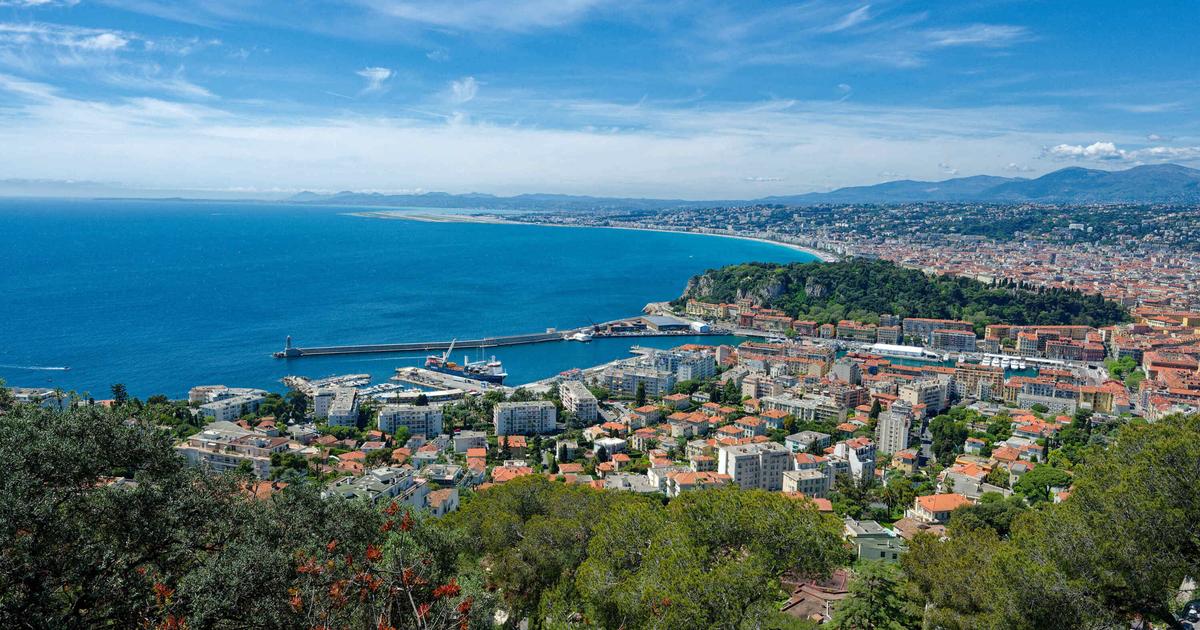
A tourist destination par excellence, straddling the coast and the mountains and situated at the crossroads of several major routes, Nice continues to attract more than just retirees — often associated with the Côte d’Azur and its postcard-perfect scenery.
“The problem is that the city checks all the boxes for domestic and foreign investors — with 28°C [82.4°F] water, sunshine, a high standard of development, a great quality of life, stability tied to France’s political situation despite everything, and cutting-edge healthcare, all of which contribute to taking properties off the market,” said Marc Wyler, director of the National Real Estate Federation (FNAIM) in Nice.
The shortage is further straining a rental market that is heavily shaped by seasonal constraints (demographic pressure, second homes). Many rental applications are unsuccessful, pushing even more students and young professionals — already numerous — to the city’s outskirts along a coastline that is already largely saturated. The numbers speak for themselves. With 43 applicants per listing — up 10% from the same period in 2025 — Nice is doing better (or worse) than Paris, which has 41 applicants per unit, according to the Manda barometer. The national average hovers around 13 applications per listing.
The study shows that Paris is losing ground overall to major regional cities — a long-term trend — but Nice, France’s fifth-largest city by population, now ranks ahead of Lyon and, most notably, Marseille. The country’s second-largest city and the main hub of attraction in the Alpes-Provence-Côte d’Azur region, Marseille ranks third in this classification. It saw a 13% decline in applicants per listing compared to the previous year, while Nice saw a 10% increase. This market tension comes even as rental investment in Nice is slowing across France.
“After the COVID-19 health crisis, we realized that Brittany, Nantes, and other cities in western France had attracted a significant portion of residents from the Île-de-France region. Today, we’re seeing a rise in popularity of southern cities due to climate considerations and the widespread adoption of remote work,” Thomas Alazet, a real estate expert at Manda, told Le Figaro.
After Marseille, which is highly sought after by Parisians, is Nice experiencing a similar trend? That would overlook the constraints of a “very unique” market, where tourism plays a dominant role, Wyler said. The city’s proximity to Nice Côte d’Azur Airport, France’s third-largest airport after Paris’ Charles de Gaulle and Orly, with regular daily flights to North America, already attracts many international buyers with high purchasing power.
Seasonal workers, meanwhile, flock to the city for the summer season, which often begins in the spring. That is not to mention the combined presence of Airbnb and other short-term rental platforms, the regulations for which the new city administration has recently relaxed in the name of private property rights. In a housing market still dominated by older properties and high prices per square meter, new construction remains largely insufficient in Nice, as it does throughout France.
“These combined factors are taking a certain number of housing units off the market,” Wyler said.
“We are seeing that supply in Nice is insufficient relative to the influx of prospective tenants, which is creating heightened tension between supply and demand,” Alazet said. As existing tenants become increasingly reluctant to move due to the difficulty of finding a new place, the majority of new applicants are students or young professionals drawn by the job market in the Sophia Antipolis technology park or Monaco. “These are trends we are used to seeing in Marseille, Lyon, Lille or Montpellier, but in other cities, such as Nice, the situation has also become strained, with about 60% of new tenants coming from the same region and the area around Nice,” Alazet said.
The issue took on political significance amid recent municipal elections in March 2026; all candidates proposed a plan to revitalize housing in this metropolitan area, which spans 51 municipalities and is home to approximately 570,000 residents. The new mayor, Éric Ciotti, recently announced a reduction in property taxes to 2023 levels. “We must create conditions conducive to investment and wealth creation,” he argued during the campaign.
For his part, the former prefect of the Alpes-Maritimes department, Laurent Hottiaux, presented a departmental housing recovery plan last July — an area of state jurisdiction — which his successor has since endorsed.
As for climate change, a concern on everyone’s mind, the Alpes-Maritimes has so far been spared from wildfires, unlike the neighboring Var department, but drought persisted for several weeks. “The coming months will reveal whether the rise in demand is here to stay or whether global warming will alter the housing choices of the French,” the Manda barometer noted.