How an India-China military face-off triggered a $185mn loan freeze by Beijing - The Indian Express
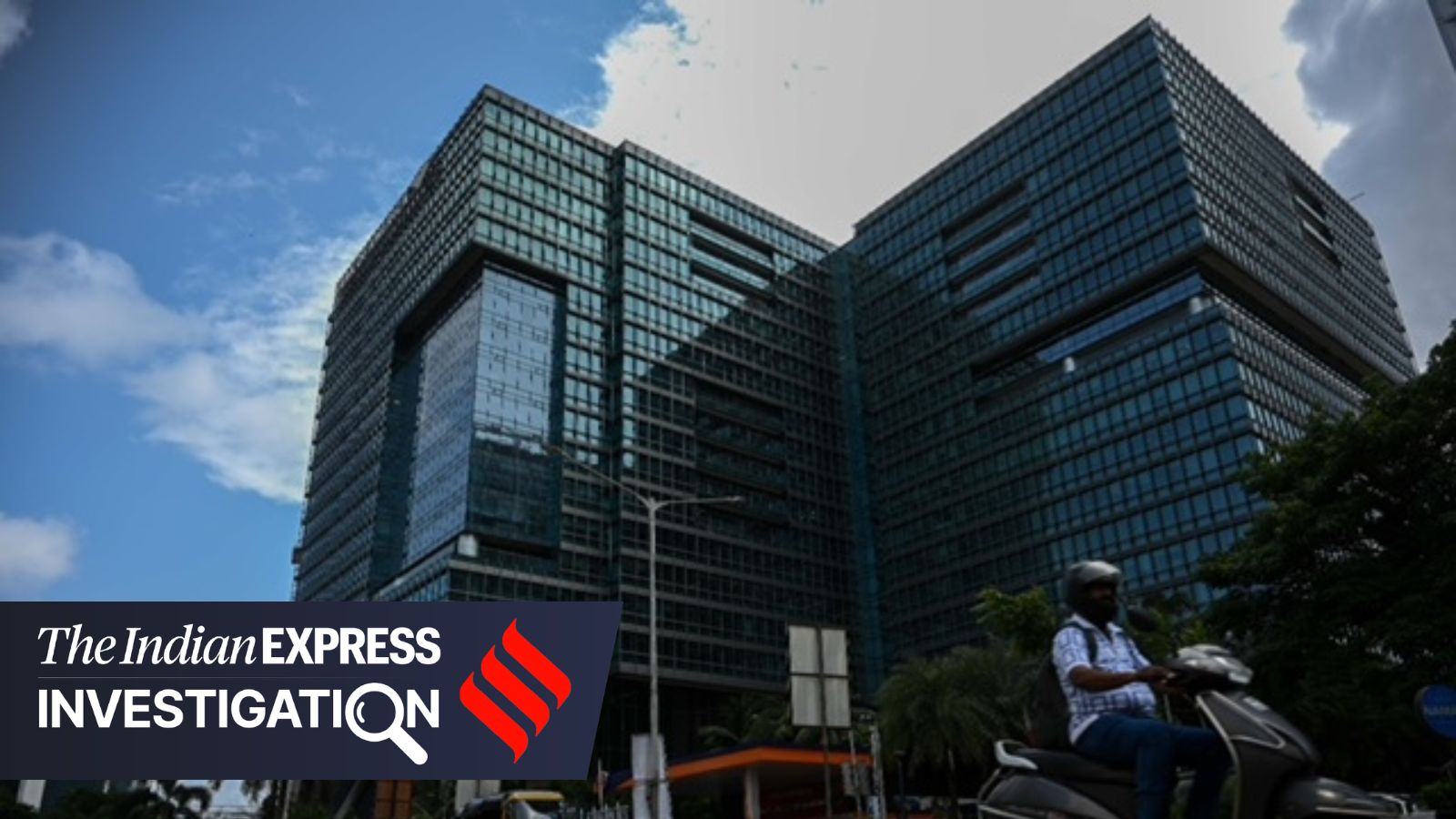
When Indian and Chinese troops were locked in a face-off at Doklam along the northeastern border in 2017, the fallout was felt over 2,000 km down the map – in Mumbai, home to the Industrial and Commercial Bank of China’s only branch in India.
The ICBC branch “proactively reduced its exposure to loan and investment risks and suspended the disbursement of 11 approved but undisbursed loans and bond investments totalling $185 million”. It also “organised” Chinese Communist Party members across every department to stay in constant touch with China’s embassy and consulate.
These are the key revelations from internal documents reviewed by The Indian Express in China Capital – a global investigation led by the International Consortium of Investigative Journalists (ICIJ), which lifts the veil on how state-owned ICBC, the world’s biggest bank by asset size, is a vital cog in China’s geopolitical blueprint.
The investigation lays bare the extent of influence the Chinese state holds in all sections of its economic infrastructure – and offers a rare peek at how China sought to ring-fence its assets in India during the border standoff.
With more than $8 trillion in assets, ICBC is China’s biggest commercial bank, placing it among an elite group of four state-owned financial behemoths that also include Bank of China, Agricultural Bank of China and China Construction Bank.
The China Capital revelations come from a dataset of 4.8 million documents from ICBC’s London branch, including internal reports marked “trade secrets”, confidential dossiers, and lists detailing over 4,000 corporate clients. Collectively, the trove reveals how ICBC used its London operations as a financial hub for companies and conglomerates linked to sanctioned Russian and Belarusian business owners, debt-ridden states and China’s political elite.
The ICBC archives are dated between 2005 and 2024 — a span when China ascended on the world stage and President Xi Jinping rose to power — and were first obtained by a hacking group, Hunters International, before being leaked to the ICIJ.
The consortium shared the records with 24 media partners, including The Indian Express, The Times of London and Der Spiegel in Germany, for the investigation involving 75 journalists from 24 countries.
ICBC did not respond to questionnaires from The Indian Express and ICIJ detailing the findings and seeking its response.
The Doklam references feature in a January 2018 ICBC work summary of overseas branches marked “confidential” and “not for external distribution”. The 178-page report covers the performance of 42 overseas ICBC branches and notes that the Mumbai branch faced “internal and external challenges” that year due to the Indo-China border impasse, but managed to maintain “normal operations”.
Doklam stands at the tri-junction between India, Bhutan and China. The border dispute, which lasted 73 days in 2017, began with troops of the People’s Liberation Army (PLA) occupying territory disputed with Bhutan.
Following attempts by China in June 2017 to construct a new road in the area, Indian troops responded, resulting in injuries on both sides. The standoff ended in August when both sides, after holding diplomatic parleys, agreed to disengage from their aggressive positions.
There are several references to the crisis and the resultant strained relations between the two countries in the ICBC report titled, “The net profit target was not met due to internal and external factors”. It cites the border situation as the reason the Mumbai branch could meet only 57.7% of the target set by its head office in Beijing.
The report states: “The primary reasons were as follows: first, during the period of border crossings, the branch proactively reduced its exposure to loan and investment risks and suspended the disbursement of 11 approved but undisbursed loans and bond investments totalling $185 million, which impacted operating revenue by approximately $6.36 million.”
The admission of CCP members manning desks at the ICBC Mumbai branch during the Doklam crisis comes in a section titled “Strengthening grassroots Party organization building to mitigate the adverse impact of border incursions”.
The crisis, according to the ICBC report, also led the branch to formulate contingency plans. The report reads: “The branch proactively reported to relevant departments at headquarters, comprehensively formulated contingency plans, reduced credit and investment exposures and minimised the adverse impact…”
During what the report calls the “tense period of the border standoff”, the Mumbai branch, it states, took several unusual steps to foster a culture of “transparency, communication and trust”. CEO tea sessions were organised, one-on-one discussions were held with local staff, and social activities were arranged for local colleagues to address their concerns about the situation, the report says.
The work summary is not the only document in the China Capital dataset that points to close ties between ICBC and the CCP. ICBC, like other premier Chinese financial institutions, has a “Party Committee”, and agendas of bank meetings from 2024 show key personnel assigned tasks such as taking on special duties from the Party Committee, or coordinating with the ombudsman of the Party Commission.
The China Capital records also show that while assessing clients, ICBC managers in London weighed the commercial value of deals against the borrowers’ or clients’ ability to advance Beijing’s economic agenda.
According to the dossiers and data, this included policies such as Going Global, aimed at helping Chinese firms access foreign markets, and the Belt and Road Initiative, the massive infrastructure scheme spearheaded by President Xi Jinping – which India stayed away from.
Ritu Sarin is Contributing Editor (Investigations) at The Indian Express group. Her areas of specialisation include internal security, money laundering and corruption. Sarin is one of India’s most renowned reporters and has a career in journalism of over four decades. She is a member of the International Consortium of Investigative Journalists (ICIJ) since 1999 and since early 2023, a member of its Board of Directors. She has also been a founder member of the ICIJ Network Committee (INC). She has, to begin with, alone, and later led teams which have worked on ICIJ’s Offshore Leaks, Swiss Leaks, the Pulitzer Prize winning Panama Papers, Paradise Papers, Implant Files, Fincen Files, Pandora Papers, the Uber Files and Deforestation Inc. She has conducted investigative journalism workshops and addressed investigative journalism conferences with a specialisation on collaborative journalism in several countries. ... Read More