How BJP plans to regain Dalit votes lost to Samajwadi Party in UP in 2024
The BJP’s concern over the shifting Dalit vote in Uttar Pradesh is becoming more evident as the state moves towards the 2027 assembly elections. After benefiting from the movement of a section of Dalit voters away from the Bahujan Samaj Party (BSP) in earlier elections, the BJP now finds the Samajwadi Party (SP) and Congress making inroads into the same social base.
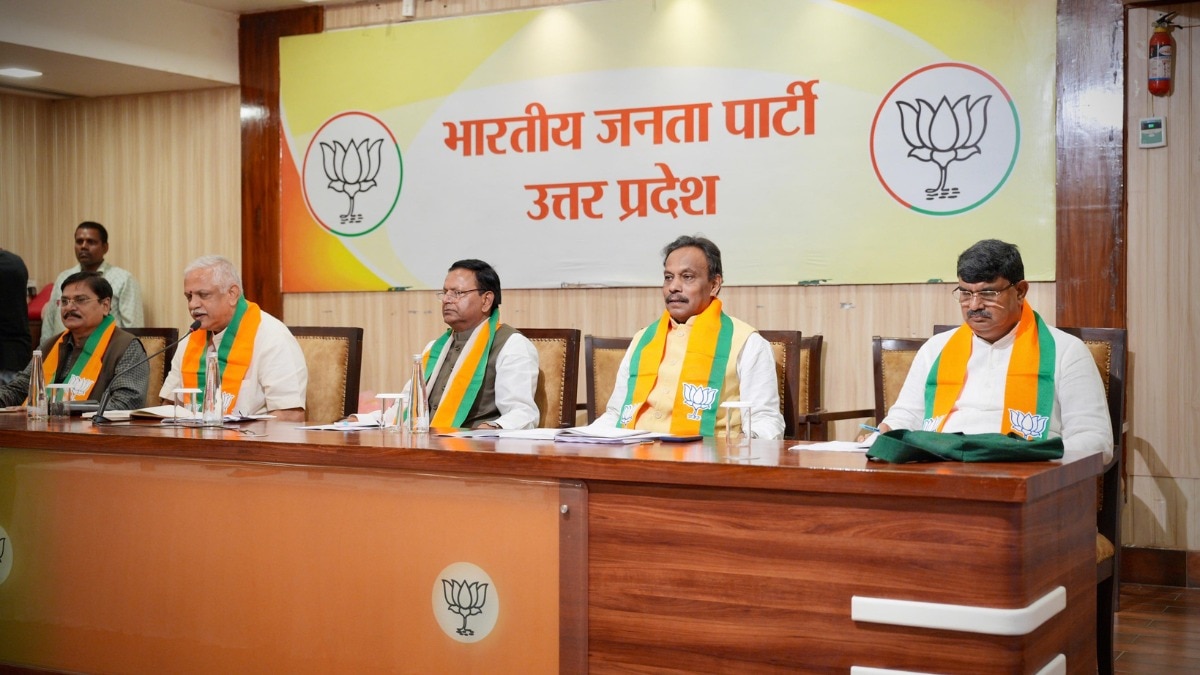
The issue came up during a four-hour-long meeting held in Kanpur last week by BJP national general secretary (organisation) B.L. Santhosh with MPs, MLAs and party district presidents from the Kanpur division. As per sources, Santhosh asked legislators to assess the party’s performance in the 2024 Lok Sabha elections and explain how it could recover lost ground before 2027.
Santhosh questioned how many votes BJP’s 2024 Lok Sabha candidates had received in each assembly segment. Why did the party lose wherever it was defeated? What needs to be done to make up for the losses and how can the BJP win the next assembly election?
According to party leaders, Dalit voters who had moved away from the BSP in the 2017 state polls and 2019 general elections had largely supported the BJP. The party also retained a significant share of Dalit votes in the 2022 assembly elections.
However, according to these leaders, the 2024 Lok Sabha elections marked a change. A section of Dalit voters got concerned owing to an Opposition campaign that the Indian Constitution could be altered and reservations scrapped if the BJP returned to power with a huge majority. Many of these voters may have thus moved towards the SP and the INDIA bloc.
The BJP’s internal assessment suggests this shift has not been fully reversed. Party leaders acknowledged that Dalit voters continue to move towards the SP, creating a serious challenge for the BJP in 2027.
Scheduled Castes account for around 21.1 per cent of UP’s population, making Dalits one of the most important electoral groups. However, the Dalit vote is not a single bloc. It is divided among communities such as Jatavs, Pasis, Valmikis, Dhanuks, Khatiks and Gonds, each with its own political experiences and local priorities. The party that can build a wider coalition among these communities will have a considerable advantage in the UP assembly polls next year.
For years, the BSP and its founder Kanshi Ram and thereafter Mayawati occupied the centre of Dalit politics in UP. The party’s decline has opened the space for several players. The SP is trying to bring Dalit voters into its PDA (Picchda, Dalit, Alpsankhyak) framework. The Congress is invoking the Constitution, B.R. Ambedkar and even Kanshi Ram while demanding a caste census and greater representation for marginalised communities. Meanwhile, Chandrashekhar Azad has emerged as a younger Dalit voice, particularly among sections of politically active youth.
Even the BJP is seeking to strengthen its engagement with Dalit communities through programmes around Ambedkar and Sant Ravidas. The renewed political interest in Kanshi Ram’s legacy is part of this larger contest. His importance goes beyond the BSP. He helped turn Dalit identity into an organised political force and showed that communities long kept outside centres of power could become decisive in elections. For political parties, invoking his legacy is therefore a way of claiming that they understand the demand for representation and dignity.
The BJP’s plan is to launch a campaign aimed at reconnecting with Dalit voters and bringing more Dalit leaders and workers into the party. Santhosh asked party leaders to organise outreach programmes and ensure that the Ambedkar statue scheme of the state government is implemented. The Rs 403 crore scheme aims to beautify, develop and maintain statues of Ambedkar in all 403 assembly constituencies. Santhosh also called for Sant Ravidas Jayanti programmes to be held effectively.
The party’s approach, however, is not limited to symbolic outreach. Santhosh criticised the VIP culture among many elected representatives and party office-bearers. Movement in convoys of vehicles, with sirens and highway toll waivers, he said, sent a wrong message to the public and harmed the image of MPs, MLAs and district presidents.
Santhosh stressed on the need for greater unity within the organisation. Social media was another focus. Santhosh asked party workers not to restrict use of it to photographs and message. He urged them to use digital platforms to communicate the party’s message quickly while warning against misuse.
The discussion also touched upon the Special Intensive Revision of electoral rolls in UP. Santhosh said the names of many voters, including those who supported the BJP’s ideology, had been deleted. He directed workers to help restore the names of those eligible and raised concerns about women whose names had been removed from voter lists in their parental homes after marriage but not added to the rolls at their marital homes.
Santhosh also met candidates who had lost the 2022 assembly elections and asked them to explain their vote counts and margins of defeat. These instructions point to a party trying to combine social outreach, electoral data and organisational discipline. But the larger challenge is political. The BJP is no longer competing only against the BSP for Dalit votes but faces the SP’s wider social coalition, the Congress’s Constitution-centred campaign and the appeal of newer Dalit leaders. The party’s earlier gains among Dalit voters were closely linked to the weakening of the BSP and the BJP’s broader social coalition. Its challenge in 2027 will be to ensure that those voters do not permanently shift towards the SP or other alternatives.