How gangs turn South African prisons into crime hubs - IOL
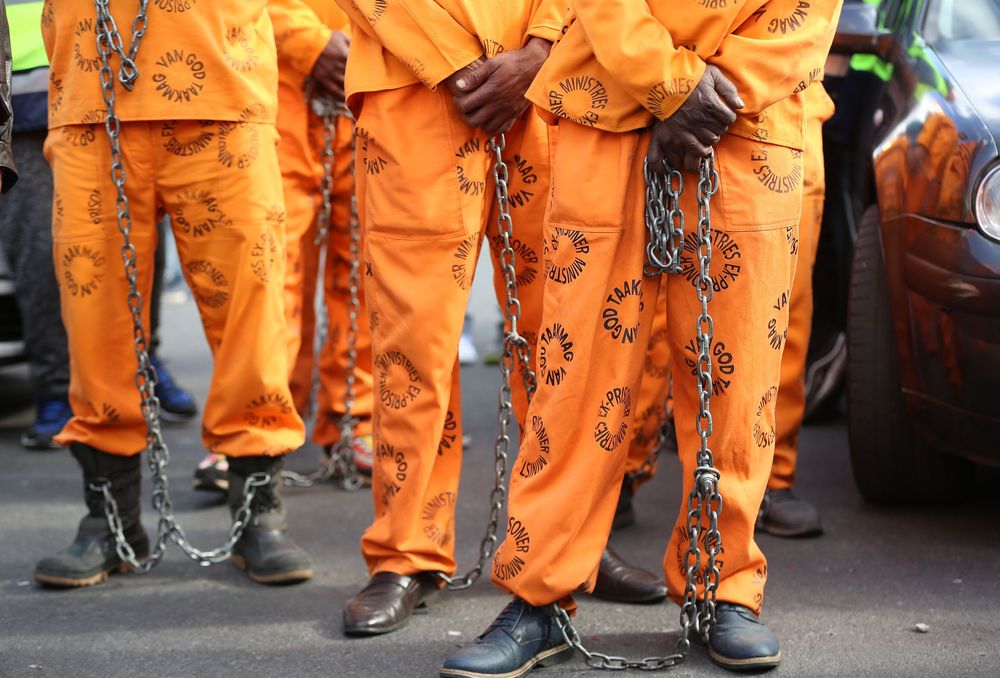
Correctional Services Commissioner Makgothi Thobakgale said prisons are not housing criminals and suspects but have become breeding ground where gangs recruit new members and prepare future leaders of the criminal underworld.
Political parties are calling for the overhaul of the criminal justice system not only to address the overcrowding problem in South Africa’s prisons, but to also deal with court backlogs which they say are a major contributor to the prisons crisis.
Correctional Services National Commissioner Makgothi Thobakgale admitted before the Madlanga Commission recently that prisons are not just housing criminals and suspects but have become a breeding ground where gangs recruit new members and prepare future leaders of the criminal underworld.
The prisons boss warned that imprisonment does not necessarily sever criminals’ links to the outside world or bring their criminal ambitions to an end.
“While incarceration removes offenders from society and seeks to protect the public, it does not automatically extinguish criminal intent or criminal associations or criminal activity for that matter,” he said.
“Consequently, some offenders continue to pursue criminal objectives even while in remand detention or serving their sentences.”
Reacting to Thobakgale’s comments, MPs serving on Parliament’s correctional services oversight committee identified overcrowding as being at the core of the many problems in prisons.
Chairperson of the portfolio committee, Kgomotso Ramolobeng (ANC), said that severe overcrowding, critical understaffing, and outdated security technology create power vacuums that organised gangs exploit.
“Contraband smuggling, enabled by compromised officials, allows criminal syndicates to continue operations behind bars. As an ‘end user ’, the Department of Correctional Services has no control over overcrowding as they must house inmates referred to them via the criminal justice system,” she said.
Ramolobeng also identified vetting backlogs as another problem, saying delays in security clearances left vulnerable staff exposed.
“The solution to this, in our opinion, is to fast-track lifestyle audits and prioritise clearances with state security agencies.”
She also called for the streamlining of internal disciplinary processes and immediate referral of criminal cases to the police, saying delays in disciplinary processes meant implicated officials remained in the system for longer than necessary.
For DA MP Janho Engelbrecht, the entire criminal justice system needs a redesign as it is “hugely dysfunctional”.
“The core of the problem is that they are massively overcrowded, but correctional services is the last link in the entire criminal justice chain, and if something upstream goes wrong, the problem always ends up at correctional services,” said Engelbrecht.
“The overcrowding crisis that we currently experience is because of a tremendous amount of remand detainees – they have not been tried yet, not been found guilty, and these guys, some are there for shoplifting, are not separated from and are sitting there with murderers, rapists, and child molesters in one cell that has 32 beds but with 95 people.”
Engelbrecht also highlighted overspending and budget shortfalls among other challenges, saying the department was sitting “with a lot” of funded vacancies on paper, but there was no money in the bank to pay those officials.
“I myself have been in a centre… in the remand detention section. There are eight cells, terribly overcrowded with approximately 500 and something people, and there is one official. You can just imagine what happens in those cells.”
According to Engelbrecht, correctional services cannot be fixed without first fixing the Department of Justice, which has a case backlog of 52 000.
“The remedy to this is redesign, not reform, the redesign of the entire South African criminal justice system. That's what needs to happen. There are systemic problems that can’t be fixed.”
For EFF’s Carl Niehaus, the collapse of integrity inside correctional centres cannot be separated from the failure of intelligence, policing, and the protection of officials who live in the same communities where gangs operate.
He, too, identified overcrowding as “the first structural failure”.
“When centres are packed beyond design capacity, classification collapses,” said Niehaus.
The mixing of sentenced and unsentenced inmates, which included first-time offenders mixing with hardened gang members, was conducive to the Numbers Gangs not merely surviving incarceration but to organising, recruiting, disciplining, and extending their authority from the cell to the streets.
Niehaus blamed the country’s intelligence services, saying there was not enough intelligence on how gangs operate, on the identities of their imprisoned leadership, or on the precise channels that connect those leaders to street structures.
“Without that picture, raids remain episodic, disciplinary cases remain individual, and the syndicate itself is never dismantled. The significant role that correctional officials play in providing that link — and in becoming part of the criminal activity themselves — is of central importance. Our intelligence services have failed us on this point.”
Like his colleagues, Niehaus decried the failure to hold officials to account, saying implicated officials are often protected by their colleagues, receive a slap on the wrist and remain in the system to continue their corrupt work.
Correctional Services Minister Pieter Groenewald told Parliament last month that the latest overcrowding rate was 62% as correctional facilities accommodated 173 955 people, comprising 63 400 remand detainees, 110 129 sentenced inmates, and 425 state patients. The department had about 107 100 bed spaces.
In 2001, then-president Thabo Mbeki established a commission led by Judge Thabani Jali, which was tasked with investigating allegations of corruption, maladministration, violence, and intimidation within the Department of Correctional Services.
The commission found widespread systemic failures, corruption, and human rights violations inside South African prisons.