
How India’s approach to the Taliban represents a form of principled pragmatism - The Indian Express
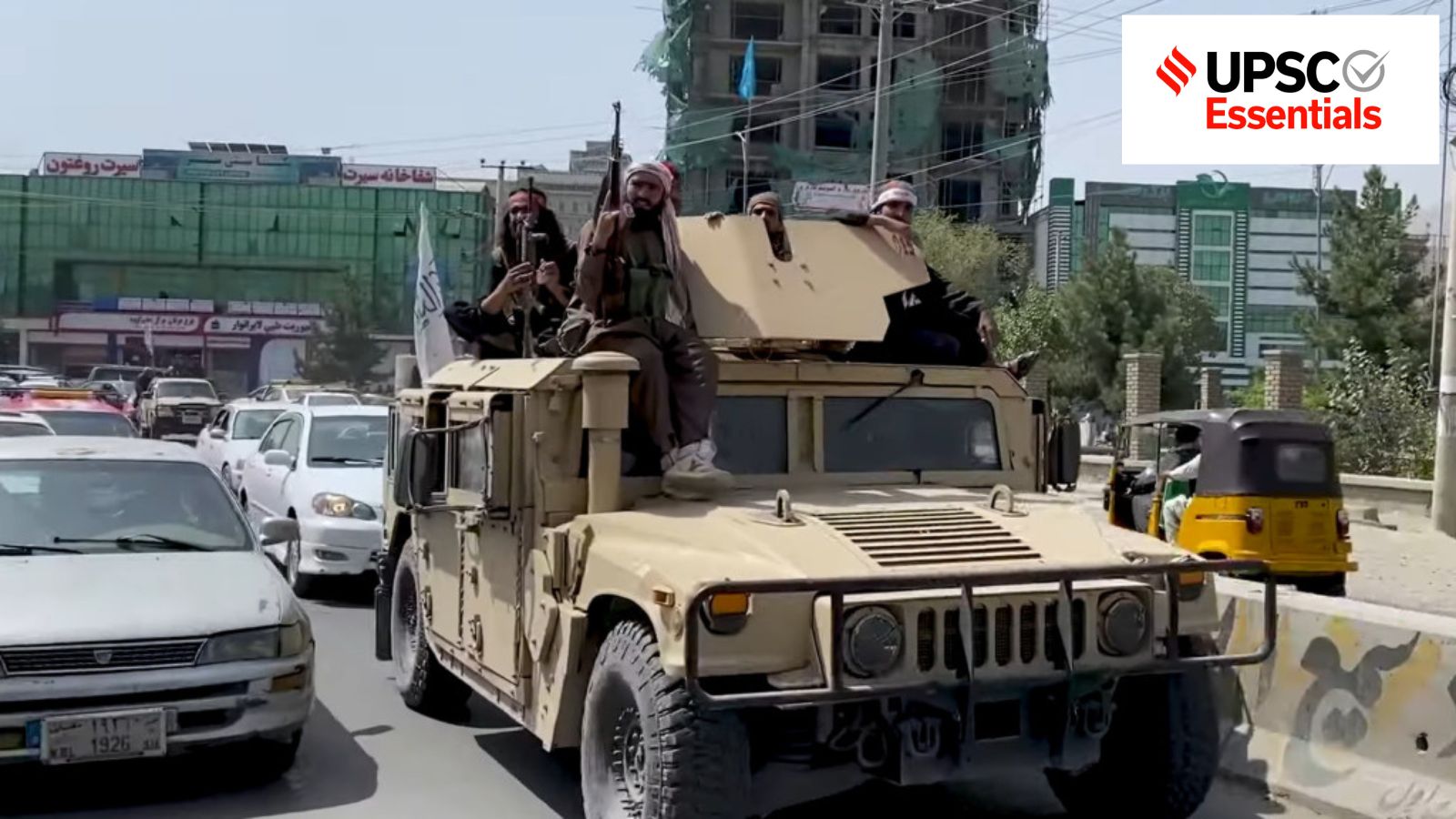
India reiterated its deep concern at the humanitarian plight of the Afghan returnees, reaffirming that returns must be voluntary, safe and dignified, and reintegration should receive sustained international support.
Speaking at a meeting of the United Nations Security Council (UNSC), India’s Permanent Representative, Harish Parvathaneni, cited the Secretary General’s Report on Afghanistan, which mentions that 2.9 million Afghans were returned in 2025, and, until 22 August 2026, another 1.15 million Afghans were returned, most of which were involuntary, PTI reported.
“A forcible return of this nature that is neither safe nor dignified, of over three million individuals, in any other part of the world would have elicited a political outcry in this Council, urgent provision of large-scale humanitarian support and efforts to ensure better re-integration and assimilation. That there is no such reaction is a sad reflection on the times,” he added.
Notably, India’s cooperation with the UN agencies and the Afghan authorities to ease the immense pain and hardship of the returnees points to the evolving ties between the two South Asian neighbours, especially after the Taliban’s takeover of the country five years ago.
India has been investing in Afghanistan’s nation-building for years after the fall of the Taliban in 2001. But the withdrawal of US forces from the country in 2021 brought the Taliban back to power, and India hurriedly withdrew its diplomatic staff and closed its embassy.
Nonetheless, the Indian government sent a small ‘technical team’ to Kabul for humanitarian aid monitoring and to assess the strategic situation in Afghanistan in June 2022. After acknowledging the Taliban’s de facto authority in Afghanistan, India gradually increased its engagement with the Taliban.
On 15 August 2026, the Afghanistan embassy in New Delhi celebrated “victory day”, where Indian diplomats and about two dozen foreign diplomats were present. This is interpreted as the latest sign that the India-Taliban relationship is now increasingly shifting from the shadows to the foreground.
Indian officials have called this a case of “cautious engagement”. India has also stepped up diplomatic exchanges with the Islamic Emirate of Afghanistan (IEA). Taliban Foreign Minister Amir Khan Muttaqi’s visit to New Delhi in October 2025 marked the first high-profile engagement between the two sides. It was followed by visits by other IEA ministers.
For instance, Mawlawi Ataullah Omari, Minister of Agriculture, Irrigation and Livestock of Afghanistan, visited India in July 2026 and pushed for greater bilateral trade and cooperation in agriculture and animal husbandry. This reflects the continued momentum in bilateral engagement.
Moreover, India’s interest in Afghanistan is also interpreted in relation to ‘Pakistan’s terrorism-nexus’. Soon after the Taliban’s return to power, Afghanistan-Pakistan relations deteriorated, culminating in conflicts and kinetic military actions over the Tehrik-e-Taliban Pakistan (TTP). Rupture in Pakistan-Taliban relations enabled a diplomatic opening between India and the Taliban.
India has long accused Pakistan of providing support to terror groups such as Lashkar-e-Taiba and Jaish-e-Mohammed. In his address at the UNSC, Parvathaneni also invoked the history of the 11 September 2001 attacks. He said al-Qaeda leaders Osama bin Laden and Khalid Sheikh Mohammed were eventually found in settled communities rather than remote hideouts, reported PTI.
However, scholars like C Christine Fair, a professor of Security Studies, argue that India’s interest in Afghanistan is not only Pakistan-centric. In her article, India in Afghanistan and Beyond: Opportunities and Constraints (2010), she argues that Delhi’s engagement with Afghanistan is also tied to its ambition to rise as a great power.
The concepts of “civilian power” by Hanns Maull and “principled pragmatism” defined by Abdul Wasi Popalzay and Bawa Singh offer useful frameworks to explain India’s relations with the Taliban 2.0. Maull defines the civilian-power framework as a combination of economic statecraft, normative diplomacy, and multilateral institutionalism without coercive tools.
In the context of non-recognised regimes, engagement also involves material incentives, political leverage, and the strategic use of recognition or non-recognition. India’s approach towards Afghanistan is characterised by elements of these strategies. Without granting official diplomatic recognition, India has pursued economic cooperation, extended humanitarian assistance, and upgraded diplomatic engagement to safeguard its national interests.
Moreover, India’s engagement is also shaped by Afghanistan’s position within South Asia’s wider security structure. Taking the India-Pakistan conflict as a case study, international relations scholars Barry Buzan and Ole Wæver’s Regional Security Complex Theory argues that the security interdependence between India and Pakistan creates a regional security complex in South Asia.
Other South Asian countries either ally with one of the two nations or act as neutral or buffer states in this complex. Notably, Afghanistan is a vital component of this regional security complex, which, according to other scholars, forms a triangle in which two actors are positioned against one.
The India-Pakistan conflict in May 2025 and the prolonged conflict between Afghanistan and Pakistan since October 2025 illustrate the existence of this geopolitical triangle and the nature of the regional security structure in South Asia.
At the same time, Pakistan’s Mutual Defence Agreement with Saudi Arabia in September 2025 and the subsequent Mecca Joint Defence Agreement, involving Saudi Arabia, Pakistan, and Turkey in August 2026, potentially broaden South Asia’s security architecture.
In addition, analysts have long considered China as a “sub-actor” or a significant external actor in South Asia’s regional security complex due to its military and diplomatic support to Pakistan. Afghanistan is also of vital strategic relevance for China’s peripheral diplomacy in South Asia. As a result, China’s non-interventionist diplomacy in Afghanistan combines its economic interests with security concerns, particularly those in Xinjiang and in Central Asia.
China’s interest in Afghanistan’s lithium, copper and iron ore resources shows the economic dimension of its engagement. For India, this appears to be a more complex strategic environment in which it may need to compete with both Pakistan and China for maintaining strategic space and economic influence in Afghanistan.
In addition, Afghanistan’s capacity to either stabilise or destabilise its surroundings makes it a critical component of the South Asian security complex, and its alignment with India or Pakistan could shape the regional balance of power.
In response to these strategic considerations, India has stepped up its diplomatic engagement and trade relations with the Taliban. While major trade activity between Pakistan and Afghanistan remains suspended, India-Afghanistan bilateral trade surged to $907.85 million in 2025-26.
India’s approach in Afghanistan has remained non-interventionist, humanitarian, and development-centric. Even after its diplomatic withdrawal in 2021, India sent a consignment of medicines, tons of wheat, etc., suggesting that the government was essentially choosing to distinguish the Taliban regime from the Afghan people.
India has also focused on capacity building and High-Impact Community Development Projects (HICDPs). Its role as a reliable and development partner has also been reinforced through assistance during natural disasters such as floods and earthquakes. Moreover, India’s engagement has also extended to the domain of soft power.
Cricket, Afghanistan’s most loved sport, offers India an important avenue to cultivate people-to-people ties and generate a positive image of India among Afghans. India’s support for the Shpageeza Cricket League in Khost, Afghanistan, illustrates this.
Similarly, scholarships for Afghan students at India’s premier educational institutions help establish long-term linkages. Many of these students join government institutions and other professional sectors in Afghanistan and potentially contribute to networks of familiarity and goodwill towards India. Such soft power tools help gain influence without formal recognition.
To sum up, the Taliban’s continued engagement with India may be seen partly in the context of India’s credibility as a development partner. India’s approach to the Taliban represents a form of principled pragmatism, as it navigates the space between cautious engagement and diplomatic non-recognition.
1. India’s engagement with Taliban 2.0 involves a delicate balance between diplomatic non-recognition and strategic engagement. Discuss the opportunities and constraints associated with this approach.
2. How do humanitarian assistance, economic cooperation, educational exchanges and sports diplomacy enable India to maintain strategic relevance in Afghanistan despite the absence of formal recognition of the Taliban regime?
3. What are the strategic implications of China’s growing engagement with Afghanistan for India?
4. Afghanistan is not merely a bilateral concern for India but a critical component of the South Asian regional security complex. Examine in the light of India-Pakistan and Afghanistan-Pakistan security dynamics.
(Navneet Khan is a Doctoral candidate at MMAJ Academy of International Studies, Jamia Millia Islamia.)
Share your thoughts and ideas on UPSC Special articles with ashiya.parveen@indianexpress.com.
Click Here to read the UPSC Essentials magazine for September 2026. Subscribe to our UPSC newsletter and stay updated with the news cues from the past week.
Stay updated with the latest UPSC articles by joining our Telegram channel – IndianExpress UPSC Hub, and follow us on Instagram and X.

