
How new SIU boss plans to hunt down political heavyweights and powerful officials one by one - IOL
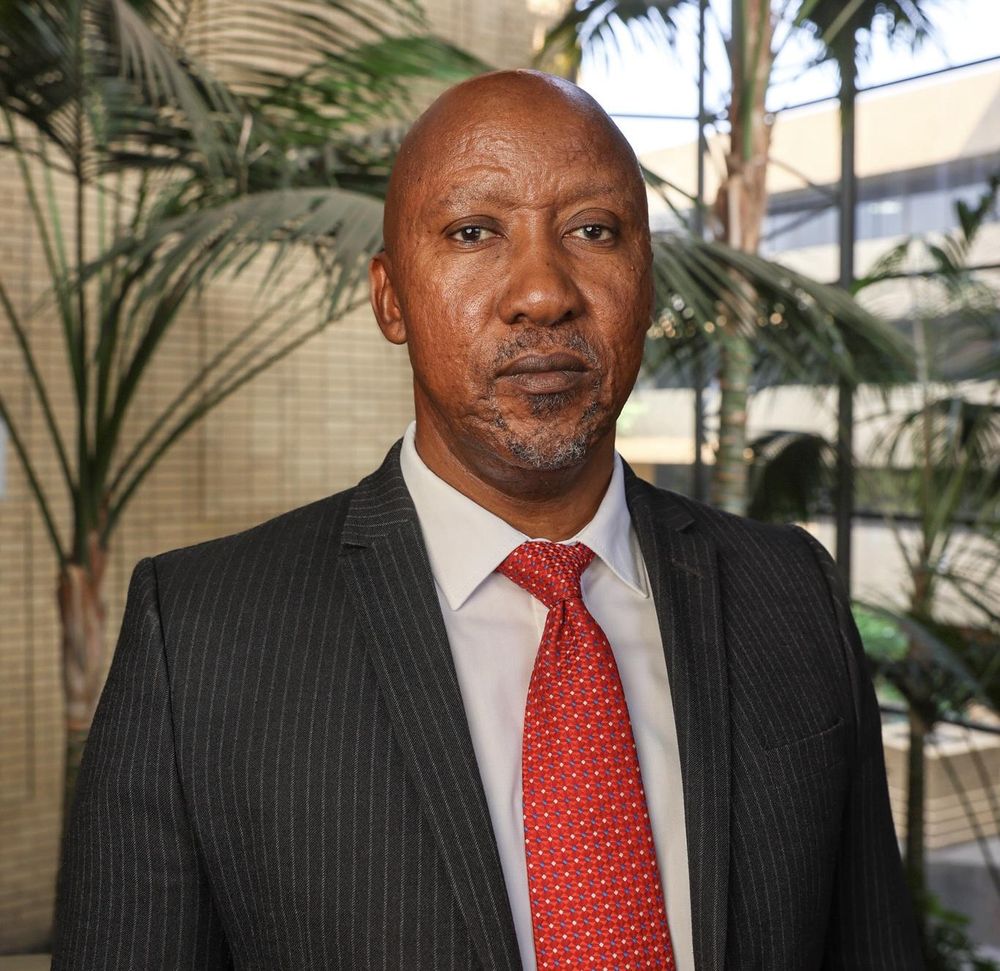
New SIU boss Leonard Lekgetho says the unit will investigate politicians and powerful officials without fear, favour or prejudice.
The newly appointed Special Investigating Unit (SIU) head, Leonard Lekgetho, has issued a stern warning to politicians and powerful officials, that their status or political affiliation will not protect them from investigation, promising that the corruption-busting unit will act “without fear, favour or prejudice”.
Lekgetho issued the warning in an exclusive interview with IOL this week.
President Cyril Ramaphosa appointed him as the new head of the SIU effective September 1.
Lekgetho had been acting head of the unit since February, following the departure of Advocate Andy Mothibi, who was appointed National Director of Public Prosecutions (NDPP).
He has spent more than 19 years at the SIU, having joined the organisation in 2007 and rising through several positions to become chief operations officer.
He also previously worked as an investigator with the now-defunct Directorate of Special Operations, commonly known as the Scorpions.
Lekgetho said his appointment came as a surprise because he had not expected Mothibi to leave the SIU.
“It took me by shock. I think all of us, we were not expecting Advocate Mothibi to leave,” he said.
“But it was a good shock ... because in a way we had prepared the organisation. For me, it was easy for me to say, no, I know everything. I've been involved and I was responsible for the bigger part of this organisation, which is operations, so it's not going to be a train smash.”
Lekgetho said one of his priorities would be protecting the independence and credibility of the SIU, particularly when politically connected people are implicated.
“The independence and credibility of the SIU is very fundamental to its effectiveness,” he said.
“My approach is to anchor on the principle that all investigations must be conducted without fear, favour or prejudice, irrespective of the status of the person, or the politician, or affiliation, or implicated person.”
Lekgetho said investigators should focus on processes rather than individuals, allowing evidence to determine who may ultimately be implicated.
“We don't start with individuals. We start with the processes. Then the process can lead us.”
SIU decisions must be evidence-based and capable of withstanding public scrutiny.
“Whatever decision we make, it must be based on evidence. We can't make a decision because it's somebody who is famous or a politician. And that decision must be able to withstand public scrutiny.”
Asked whether he had encountered political interference, Lekgetho said: “No, no, we haven't. We haven't come across political interference.”
He said the unit had systems in place to protect investigators and ensure decisions were not made by individuals acting alone.
SIU head Leonard Lekgetho says SIU investigations will follow the evidence, regardless of the political status or affiliation of those implicated.
The SIU requires a presidential proclamation before it can investigate a matter.
Lekgetho, however, said he was open to discussions about legislative reforms that could give the unit greater autonomy.
“We are open to that engagement, particularly on legislative reform, if we are to be given that,” he said.
However, he defended the current system, saying it provided legal safeguards and checks and balances.
“The current system has made sure that we do our work in a really defined legal framework.”
Lekgetho said the SIU itself prepares proclamations and proposed investigations are assessed to ensure they fall within the unit's mandate.
“These are people's rights that we are dealing with here,” he said.
Lekgetho acknowledged that SIU investigators sometimes face resistance from government departments, municipalities and other institutions when requesting information.
“Our mandate often requires access to information and sometimes we need the records across different spheres of government. So it's very, very important that there is a form of co-operation,” he said.
The SIU initially attempted to resolve such issues through engagement, but Lekgetho said it would use its legal powers where necessary.
“The approach we have is constructive engagement in a professional way at the first instance. But if that engagement is not working and we don't get co-operation, we have the legal remedy.”
The unit can compel people to provide information and, in cases where officials obstruct investigations, criminal cases can be opened.
“First we are requesting, now we are compelling you. Still you refuse.
“Now we subpoena you to come and appear before us so you can tell us why you are not giving us documents.”
He disclosed that the SIU had recently opened a criminal case against certain officials but declined to identify them.
Lekgetho said improving co-operation between the SIU, the National Prosecuting Authority (NPA) and the Hawks was another priority.
The SIU regularly refers matters to the NPA, but criminal prosecutions can take years to reach court.
“We have started engaging with the NPA,” he said.
“We do have a Memorandum of Understanding (MOU) with the NPA and the Hawks. The issue is, let's really emphasise the implementation of the MOU.”
Lekgetho said the agencies needed to work together earlier in investigations, particularly once evidence of criminality emerged.
“The moment we identify that there's criminality, we make sure that the AFU (Assets Forfeiture Unit) and NPA come on board. They don't come at a later stage.”
He also wants the SIU to monitor referrals after they are handed to prosecutors.
“Let us not refer and look away. We must follow up from our side,” he said, adding that the SIU now asks the NPA to provide an update within 90 days of a referral.
He believes Mothibi's appointment as NDPP could help improve co-operation because of his knowledge of the SIU's challenges.
“He knows the frustration that we had with regard to our referrals to the NPA, that we don't get a quick outcome,” Lekgetho said.
Lekgetho said fighting corruption required co-operation across government and society.
“It's this thing of a whole-of-government, societal approach whereby we need everybody.
“We need all the people in making sure that we fight corruption,” he said, adding that whistleblowers and officials inside the government also had an important role to play in helping investigators uncover wrongdoing.
When he is not tackling corruption, Leonard Lekgetho swaps the office for the soccer field, where he has long enjoyed playing in defence.
Lekgetho is married with two children, a girl and a boy, and is originally from the North West province.
He holds an LLB, degrees in education and science, and postgraduate qualifications in forensic investigation, forensic auditing and cyber law.
He is currently pursuing a master’s degree in forensic auditing.
When he is not at work, Lekgetho spends much of his time exercising and studying.
“Based on the position and the work that I've been doing recently, my hobbies have been diminishing one by one to the extent that I hardly think about them at all.
“I like exercising, working and also lifting by going to the gym.”
His routine largely consisted of working, going to the gym and studying.
“I used to like soccer, where I used to somehow play soccer in the back line. I was playing at the back.”
“Even at the SIU, I was playing soccer. We do have a soccer team.”
Despite the demands of his new position, Lekgetho said he had not completely stopped playing the sport.


