
How Sulawesi Exceeded Its Ecological Capacity: Celios Explains - Tempo.co English
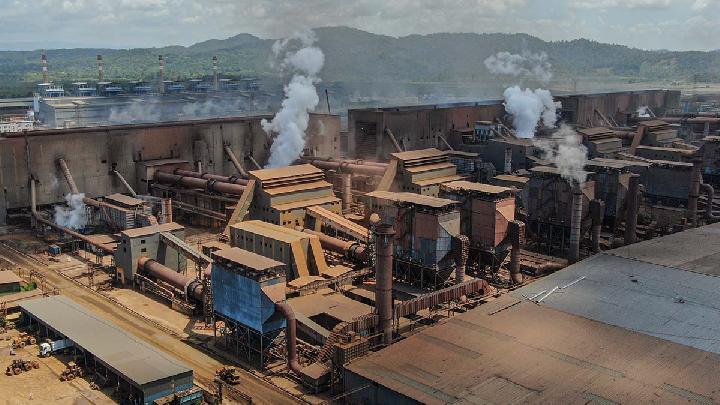
TEMPO.CO, Jakarta - The latest study by the Center of Economic and Law Studies (Celios) reveals that the environmental carrying capacity and ecological boundaries of Sulawesi Island have been breached. Based on evaluations across air, water, land, social, and policy enforcement parameters, Sulawesi recorded an aggregate score of 4.5 out of 5, categorized it as "exceeding limits."
The finding forms part of a report titled Beyond Limits: The Failure of Environmental Carrying and Assimilative Capacity (D3TLH) to Control the Expansion of Extractive Industries in Sulawesi. The research team tracked the footprint of mining, plantations, smelters, captive steam power plants, and industrial estates, alongside their impacts from 2014 to 2024.
Muhamad Saleh, Policy and Strategic Litigation Program Manager at Celios, emphasized that the crisis confronting the central Indonesian island stems not only from environmental pressures, but also from flawed regulatory frameworks. “An ‘exceeding limits’ status does not automatically freeze new concessions, trigger reviews of existing permits, or mandate environmental remediation,” Saleh noted in a written statement on Thursday, September 17, 2026.
He argued that the D3TLH framework ought to be the baseline for determining a region’s capacity to absorb new commercial development. The results of these analyses should ideally shape spatial planning, Environmental Impact Assessments (AMDAL), environmental approvals, and licensing decisions. However, the Celios study indicates these instruments have failed to curb the expansion of extractive industries in Sulawesi.
Between 2014 and 2024, regulatory authorities in Sulawesi granted 574 new mining permits. Roughly 60 percent of those permits were approved in just the final two years, a period when environmental degradation had already intensified. Celios calculates that an average of one hectare of land in Sulawesi was handed over to mining permit holders every six minutes.
Even in ecologically critical zones, the government issued 277 new mining permits covering 440,998 hectares. These findings highlight a breakdown between ecological data, spatial planning, and licensing decisions. In other words, D3TLH has failed to act as a legal buffer against over-exploitation. "If the critical status of a region can still be ignored, D3TLH will only be an administrative document that appears after development decisions have been made," Saleh said.
He emphasized that D3TLH regulations require an overhaul so that an "exceeding limits" status halts new permits, triggers evaluations of existing concessions, mandates public access to ecological data, and enforces environmental restoration.
Celios noted that mining and oil palm plantations accounted for roughly 82.2 percent of deforestation in Sulawesi from 2014 to 2023. Deforestation driven by these two sectors was approximately 18 times greater than that caused by shifting cultivation.
The report traced how deforestation mirrored shifts in the regional economy. Over a decade, the contribution of manufacturing and mining to Central Sulawesi's economy surged from 15.5 percent to 55.8 percent. Conversely, the share of agriculture, forestry, and fisheries plummeted from 34.3 percent to 15.8 percent. "People are increasingly distant from nature and their life's roots, while the social bonds that have been a safety net are slowly fading," Saleh said.
Celios researcher Viky Arthiando added that ecological pressures also stem from the construction of smelters and dedicated power plants servicing industrial estates. "About 78 percent of nickel processing and refining facilities in Sulawesi are concentrated in Central and Southeast Sulawesi," Viky said in the same statement.
These two provinces account for 93.9 percent of the total 9,825-megawatt capacity generated by captive power plants in Sulawesi. Nearly 10,000 megawatts of electricity are generated exclusively for industrial zones rather than the public power grid. Consequently, the industrial sector captures the economic benefits while surrounding communities endure the resulting pollution and health risks.
The nickel industry in Central and Southeast Sulawesi is estimated to generate 32.8 million tons of hazardous and toxic waste annually. Meanwhile, researchers documented 269 sightings of seven endemic species within or near active mining concessions and nickel industrial areas.
Public health burdens have also escalated near industrial hubs. Central industrial districts record an average of 5,353 cases of acute respiratory infections (ARI) and pneumonia each year, nearly double the 2,634 cases recorded in non-industrial areas.
Dengue fever cases in industrial districts average 47.5 cases per year, roughly three times higher than the 15.5 cases recorded in non-extractive zones. Yet, this expanding health crisis stands in sharp contrast to available medical infrastructure.
Industrial hubs average only 85 community health centers (Puskesmas) and 59 hospitals, compared to 90 health centers and 72 hospitals in non-industrial areas. Furthermore, compliance with national standards for healthcare infrastructure and medical equipment stands at 74.35 percent, falling short of the government's 80 percent target.
Industrial expansion has also intensified land and habitat disputes. The Celios study documented 95 agrarian conflicts affecting 90,582 residents across 59 communities. To date, 51 conflicts remain unresolved, while 46 resulted in security clashes that led to 93 arrests, four injuries, and one fatality.
Celios calculated that cumulative ecological losses from extractive industry expansion in Sulawesi have exceeded Rp100 trillion. This figure accounts for the loss of primary forest functions, degradation of coastal and coral reef ecosystems, and the loss of freshwater sources due to sedimentation.
Fiorentina Refani, Director of Socio-Bioeconomics at Celios, stated that the research exposes a severe imbalance in how industrial benefits and burdens are distributed. Economic gains remain concentrated among corporations and supply chain operators, while local populations bear the cost of disease, land disputes, environmental degradation, and recovery efforts.
"Those who enjoy the least benefits actually bear the greatest burden," Fiorentina said.
In light of these findings, Celios urged the government to overhaul D3TLH regulations. An "exceeding limits" designation must carry clear legal consequences, including a freeze on new permits, mandatory reviews of existing concessions, compulsory environmental restoration, and full transparency for ecological and licensing data.
Without these reforms, Fiorentina warned, D3TLH will remain a mere formality. "Meanwhile, the pace of extractive industries is advancing much faster than the country's ability to protect the environment and society," she said.


