How Xiangning's hollow mooncakes carry a family's heritage - IOL
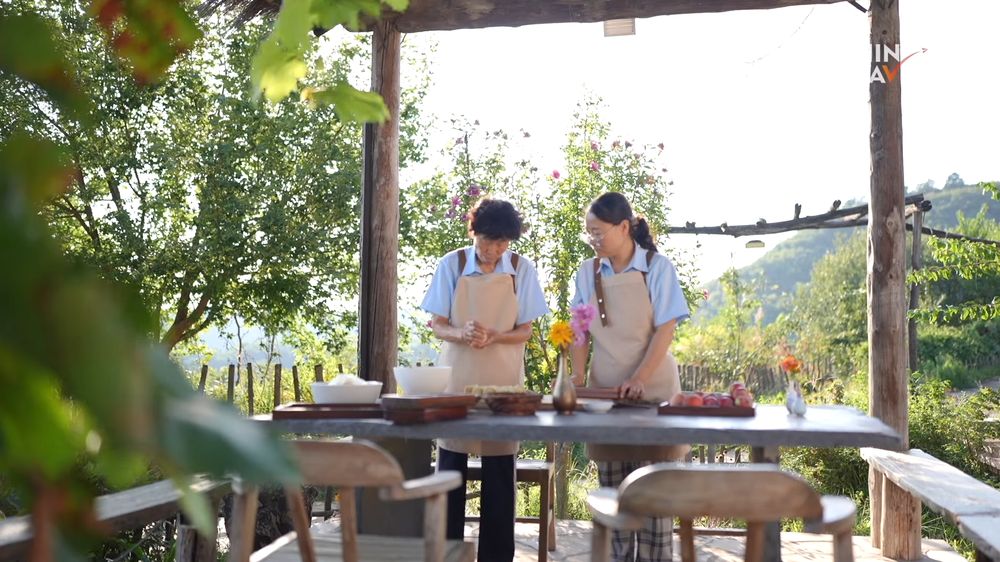
Master baker Zhang Ruiqin and her daughter Wang Hongtin, make traditional hollow mooncakes in Xiangning, China.
The ash from Heritage Day braai fires still drifts across South Africa on Friday. We spent Thursday burning wood and listening to the sounds of our ancestors. To understand how culture actually survives, look at the dirt, the fire, and the dough.
Out in Xiangning, an American tourist named Jack Klumpp and a Chinese local named Jonathan Yao sit at an outdoor table with two women who hold history in their hands.
Zhang Ruiqin is a master of the hollow mooncake craft, and her daughter Wang Hongting is right there in the trenches with her. Wang fled the neon madness of the big city to return to this exact table.
"我之前在上海上学工作,后来才回来跟她做这个," which translates to "I went to school and worked in Shanghai, but came back home to make mooncakes with my mom," she says.
"Traditions do not survive on good intentions. They survive because someone is willing to get their hands dirty and learn the craft," Ruiqin says.
Zhang does not waste time with academic theories about cultural preservation. She thrusts the dough forward. "这个剂子,把它压平," or "First, flatten this dough here," she tells Jack.
It is pure, physical knowledge transmitted through the body. "窝起来," which means "Now cup your hands like this," she commands the tourist.
Traditional Chinese hollow mooncakes expanding while baking in an oven.
They jam the dough into a heavy wooden mould carved with the image of Xiangning’s old city gate tower. The food absorbs the very architecture of the environment.
Then comes the fire. Zhang explains the chaotic science happening inside the oven.
"它里面那个糖产生气体以后,就像吹气球一样," which translates to "Once it goes into the oven, the sugar inside produces gas. It's like blowing up a balloon," she says. The gas violently expands the pastry shell until the inside is completely hollow.
Master baker Zhang Ruiqin teaching how to make traditional hollow mooncakes in Xiangning, China.
When they finally pull these pastries out, the conversation shifts to the heavy emotional gravity of the Mid-Autumn Festival.
Wang explains that families send these mooncakes to relatives studying or working far away.
Jack gets hit with a sudden wave of transnational recognition. He brings up Christmas cookies. He says eating them abroad "makes me feel a little homesick".
"How are they?" Wang asks Jack and Jonathan as they take their first bites.
Every South African still smelling yesterday's wood smoke knows that exact feeling. It is the psychic punch of koesister on a Sunday morning or a steaming potjie in the wilderness.
You do not have to pretend to be from someone else's culture to sit at their table. You just have to show up, break bread, and share the weight of existence.
This means "No matter what we look like or where we come from, food can bring back memories of home and make us miss the places we grew up," Wang says.
Jack gets hit with a sudden wave of transnational recognition and brings up Christmas cookies, noting that eating them abroad "makes me feel a little homesick."
That is the raw truth to carry beyond Heritage Month. Heritage does not live in government speeches. It survives because a mother forces dough into a stranger's hand, and a daughter finally decides to come home.