‘I cried for the eight-year-old’- Sibu Mpanza’s heartbreaking GBV plea after losing his mother - IOL
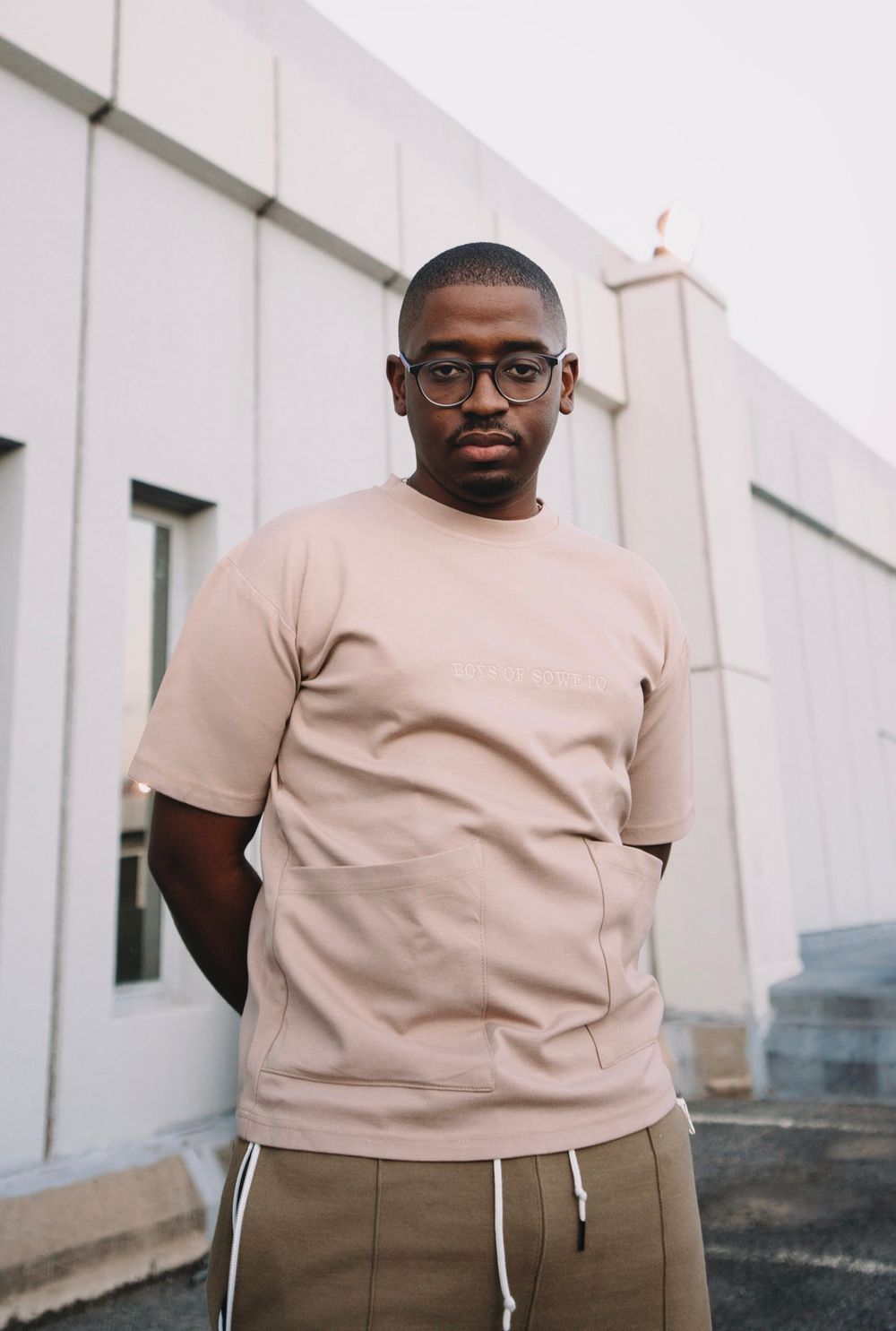
Three years after his mother was shot and killed while taking her grandchildren to school, Sibu Mpanza has opened up about his grief as nine women are found dead across Ekurhuleni.
Three years ago, Sibu Mpanza decided to put his money where his mouth was and support Women For Change in its fight against gender-based violence (GBV) in South Africa.
But just days after signing up for the organisation’s Run For Her Women’s Day initiative, Mpanza’s own family was shattered by the violence he had been standing against.
His mother was shot and killed in Philippi, Cape Town, while driving to drop off his niece and nephew at school on August 3, 2023.
At the time, police said the motive for the shooting was unknown and appealed to the public for information that could help identify the vehicle involved and the gunman who opened fire. No arrests were made in connection with the killing.
The memory of her death comes as the country continues to grapple with violence against women, with nine women recently found dead in different parts of Ekurhuleni, including Kempton Park, sparking fear and anger and a major police investigation into whether some of the cases may be linked.
For Mpanza, the latest deaths have reopened a wound that never truly closed.
Mpanza had received his Run For Her package on August 2, 2023.
The initiative was meant to be a way for him to stand in solidarity with women and support the fight against GBV.
“She was shot and killed in Philippi while driving to drop off my niece and nephew at school on August 3,” Mpanza said.
The following week, her face appeared on the purple memorial posts shared by Women For Change on Instagram.
The organisation’s purple posts form part of its Purple Movement, which uses purple imagery and social media profile pictures to remember women who have died because of GBV and femicide, while raising awareness and demanding action.
For Mpanza, seeing his mother among those women was devastating. She was no longer simply his mother whose death he was trying to process.
She had become one of the women SA was publicly mourning.
Mpanza said the tragedy was made even more painful by a fear he had carried for years.
He had repeatedly spoken about his fear that his mother would die in a terrible and traumatic way.
“I always had a recurring fear that my mother was going to die in some terrible, traumatic way, and I would talk about it in therapy a lot. I was doing a lot of therapy work on that,” he said.
That fear was connected partly to his father’s death, but also to what he described as the reality faced by many women in South Africa.
Then, the thing he had feared became real.
“So you can imagine that first therapy session back when all my fears actually came to life,” he said.
Instead of it being something he could talk through in therapy, the fear became his reality.
His mother was gone. His family was grieving.
And he was left trying to understand how something he had spent so much time fearing had actually happened.
Three years later, Mpanza says he struggles with the fact that women continue to die violently.
“Three years later and nothing much has changed in South Africa. People are still losing their sisters, their mothers, their aunts, their nieces,” he said.
His comments come as the discovery of nine women’s bodies in Ekurhuleni has once again placed violence against women at the centre of public concern.
Police have established a multidisciplinary team to investigate the cases and determine whether there are links between the deaths.
The deaths have been reported in several areas, including Kempton Park, Rhodesfield and Olifantsfontein.
Police have urged women to exercise caution, particularly when walking or running alone in isolated areas.
However, investigators have not confirmed that all nine deaths are connected or that a serial killer is responsible.
For Mpanza, the headlines are difficult to watch because he knows exactly what happens after a woman becomes a victim.
There is a family left behind. There are children who must attend funerals. There are unanswered questions.
And there is grief that does not disappear when the news cycle moves on.
Mpanza said he broke down in tears after thinking about one of the children who has now been left without her mother, referring to the daughter of Elizabeth "Tsontso" Moselakgomo, a 38-year-old runner and mother from Kempton Park whose body was among the nine discovered.
“I had a good cry this morning. It was really cathartic. And honestly, it wasn’t even for me. I think I cried for the eight-year-old who has to go to her mom’s funeral,” he said.
For him, the pain was not only that the child had lost her mother.
It was the possibility that she might never see justice for her mother’s death.
Mpanza said his own age had helped him understand the harsh realities that followed his mother’s death.
“Luckily for me, I was 28 years old. So I understood that the world is unfair a lot of the time,” he said.
But an eight-year-old, he said, should not have to understand the unfairness of the world in this way.
She should not have to learn that sometimes people die and their loved ones are left waiting for answers.
Mpanza said his own experience after his mother’s death showed him how difficult it could be for families seeking answers.
He recalled making repeated calls to the police station responsible for his mother’s case.
“I understood that the South African Police Service (SAPS) is pretty useless. I think after maybe the second or the third phone call to the police station that was the jurisdiction for my mom’s death, I realised that I just need to kind of move on with my life,” he said.
But moving on did not mean forgetting.
It meant learning how to live with the unanswered questions and the empty space left by his mother.
And now, as another group of families waits for answers about women who have died in Ekurhuleni, Mpanza knows what that waiting can feel like.
The circumstances surrounding the recent deaths have also made Mpanza reflect on how ordinary activities can suddenly become dangerous for women.
“You can’t go for a run. You can’t go to the post office. You can’t get an Uber. You can’t take your kids to school in the morning,” he said.
His own mother was killed while taking her grandchildren to school.
Moselakgomo had disappeared while out running before her body was found.
For Mpanza, those details are impossible to ignore.
The things women do every day, running, travelling, going to work, taking children to school, should not have to come with the fear that they may not make it home.
Three years ago, Mpanza wanted to run for women he did not know.
Then his own mother became one of the women he was mourning. Now, he is thinking about finally completing that run.
“Maybe I’ll finally go for the run now. For my mom and for the mom of that eight-year-old,” he said.