‘I thought my brain would explode’: How Ella’s family hike led to painful disease
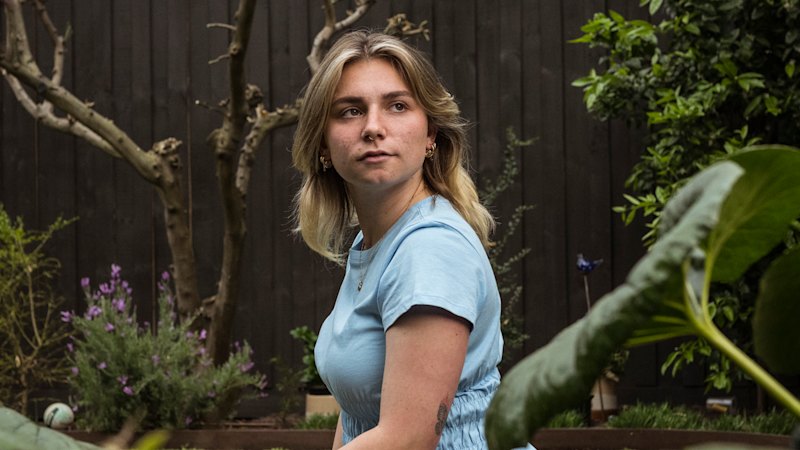
Ella Stiebel’s skull was racked by pain. Days after a family hike through the Balinese jungle she became confined to a hotel room by an illness that made her too sick to eat, too weak to walk and so sensitive to light even looking at a phone screen made her wince.
“The night before we went home, I had a panic attack because I was in full belief that my brain was going to explode from the altitude on the plane,” Stiebel, a student social worker from Melbourne, said.
Ella Stiebel caught the dengue virus alongside her dad in Bali last year.Chris HopkinsAfter 2½ weeks of sickness, a blood test confirmed the malady: she had dengue, a fever caused by a mosquito-borne virus that is spiking across popular tropical tourist destinations, and has also sparked a state of emergency in parts of Florida.
A vaccine for dengue is now commercially available after the Australian Technical Advisory Group on Immunisation released new advice recommending the use of the Qdenga vaccine for some travellers, especially those who have contracted the disease before.
While most patients improve after a week or so, some develop a severe form that requires hospitalisation, causes internal bleeding and can be fatal. Catching the haemorrhagic fever a second time can “muck up the workings of the immune system” to catastrophic effect, medical director of the Travel Medicine Alliance, Dr Deb Mills, said.
“People get bleeding into their skin, and basically, their blood pressure drops, and they can die. So it can be really, really bad,” she said.
Some people are at risk without knowing, given an estimated three in four cases of dengue are asymptomatic. The updated advice from ATAGI notes half of Australia’s top 10 most-visited places – Indonesia, Thailand, India, Vietnam and Fiji – have frequent or persistent dengue transmission.
There are four types of dengue, which is how it can re-infect people. The vaccine provides protection against all four.
“The vaccine has been available for a couple of years if you went through a lot of paperwork ... but it was $500 a dose, which is a hefty expense if you’re having two of them,” Mills said.
More supply of the live-attenuated virus is expected to bring down the cost following ATAGI’s updated advice.
Despite lashings of bug spray, long-sleeves and sleeping under mosquito nets, Stiebel and her father both caught the so-called “break-bone fever”, dengue’s nickname due to the intense muscle and joint pain.
“Until now, we’ve just had to say keep away from mosquitoes, which is almost impossible,” Mills said.
“The dengue mosquito is particularly problematic because it likes pot plant saucers and things around houses, so it’s a very urban mosquito,” Mills said of places where water stagnates. “It likes biting in the day when tourists are out and about, not tucked into their hotel rooms at night, like malaria.
“And dengue is surging around the world, the number of cases is just increasing massively.”
The onset of dengue often manifests as pain behind the eyes, and is so sudden and severe people can report the exact minute it came on.
High fever, chills, piercing headaches and muscle and joint pain often follow, although many cases are mild or asymptomatic. Some have months-long effects, including hair loss.
There were 2641 dengue cases reported in Australia in the 12 months to April 2025, almost all caught overseas. Higher temperatures and humidity in tropical areas, urbanisation and the spread of mosquitoes have driven global cases from 505,430 cases in 2000 to at least 14.6 million in 2024.
Some studies have estimated 1 per cent of people visiting the tropics are exposed to dengue. For many who’ve experienced the illness, fear of a severe second bout is enough to keep them from returning to the tropics.
A worker fumigates a slum area to prevent dengue fever outbreak in Jakarta, Indonesia, earlier this year.AP“They think, ‘Maybe I’ll just go to New Zealand’,” Mills said. “It’s impacting people’s decision of travel.”
Qdenga is a live-attenuated vaccine, which means it contains a living, weakened form of the virus.
It requires two doses three months apart, but Mills said having a single dose before travelling to a dengue area would provide protection. A phase 3 clinical trial cited by ATAGI showed 80 per cent efficacy 12 months following vaccination, with protection lasting up to 4.5 years.
Side effects are more common in live viruses, Mills said, with some people experiencing headaches, muscle pain and sometimes a rash, often more than a week after injection. “It’s very important that people don’t have this vaccine and get on the plane the next day. They really need to have it in advance.”
Stiebel, who prepared for her trip with vaccines for rabies and Japanese encephalitis, has now had the dengue vaccine.
Several counties in Florida declared a state of emergency recently after a spate of 392 cases. The majority were acquired locally rather than caught overseas.
The Examine newsletter explains and analyses science with a rigorous focus on the evidence. Sign up to get it each week.
You have reached your maximum number of saved items.
Remove items from your saved list to add more.