I won the Nobel: Wholesome moment as Medicine award winner tells his kids
For most parents, a school morning means getting children ready, making breakfast and packing lunches. For Karl Deisseroth, Monday morning began with news that would change his life forever.
The Stanford University professor had just been told that he had won the 2026 Nobel Prize in Physiology or Medicine. But before the celebrations, interviews and congratulations could begin, Deisseroth had a much more personal moment — telling his children.
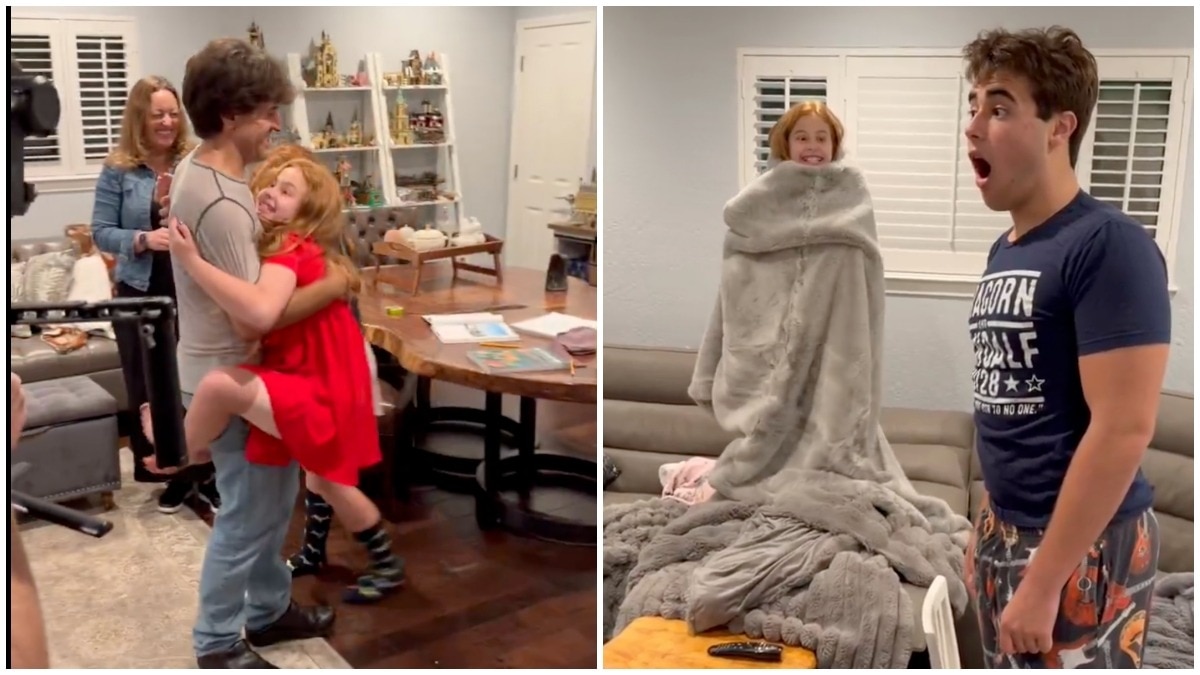
A video shared by Stanford captured the wholesome reaction as Deisseroth woke his daughters and told them about the award. The girls responded with screams of excitement before hugging their father.The most important briefings of the day. Karl Deisseroth, professor of bioengineering and of psychiatry and behavioral sciences, shares the news of his Nobel Prize with his kids. https://t.co/pTzP1A3pHj— Stanford University (@Stanford) October 5, 2026
He later broke the news to his 16-year-old son Hudson.
“I just got a phone call this morning that I won the Nobel Prize,” Deisseroth told him. Hudson's stunned reaction quickly turned into a hug, high-fives and celebration.
His eldest son, Alexander, 18, was already at Stanford University. After receiving a message from his mother, he called home and immediately understood what had happened. He then cycled over to be with his family.
The Nobel recognition came for Deisseroth's pioneering work in optogenetics, a technique that allows scientists to control individual nerve cells using light. He shares the prize with German scientists Peter Hegemann and Georg Nagel, whose discoveries about light-sensitive proteins in algae helped lay the foundation for the technology.
Optogenetics has transformed neuroscience by allowing researchers to switch specific neurons on or off and study how individual brain circuits influence behaviour, emotions and disease. The technique has been used to investigate conditions including Parkinson's disease and depression and is being explored for potential medical applications.
But even on a morning when the world was celebrating his Nobel win, Deisseroth remained a father first.
According to Stanford, he prepared sandwiches for his children that morning, a remarkably ordinary task on an extraordinary day. And when asked how he planned to celebrate his Nobel, his answer was equally understated: “Get back to work. We have a lot of things still to discover, and a lot of people to help.”- Ends