IEC outlines Western Cape readiness for 2026 municipal elections - IOL
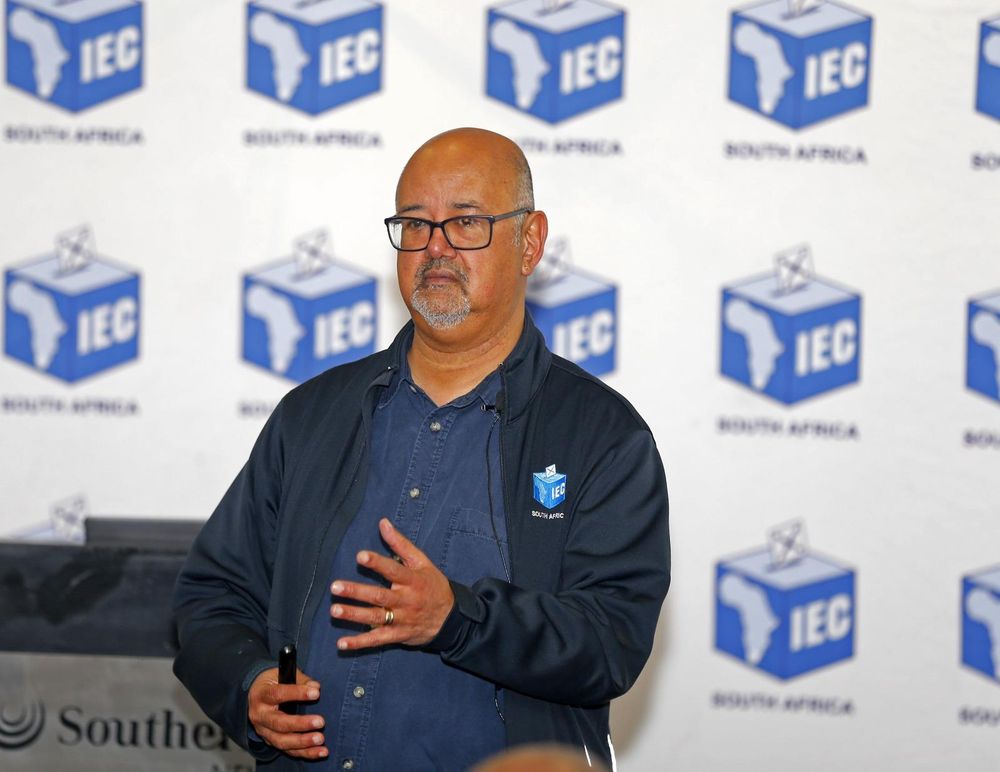
Provincial Electoral Officer Michael Hendrickse speaks during the IEC Western Cape multi-stakeholder engagement at the Southern Sun Hotel in Newlands.
The Independent Electoral Commission (IEC) says it's on track to hold the 2026 Local Government Elections in the Western Cape.
A multi-stakeholder engagement under the theme “Working together for successful and credible 2026 Local Government Elections” took place at the Southern Sun Hotel in Newlands on Tuesday.
Western Cape Electoral Officer Michael Hendrickse said the engagement was more than simply updating stakeholders on the IEC’s preparations.
“We don’t want the IEC to stand alone in preparing for these elections. Election readiness is a collective responsibility, and we all have a role to play in making sure the process is successful,” he said.
The engagement brought together a range of organisations from across the province, including Chapter 9 institutions, faith-based structures and civil society organisations, with representation from the youth and disability sectors.
“We need to work together with our stakeholders, communities and other partners. The success of an election is not only about what happens on voting day. It is about all of us working together beforehand to strengthen the process and ensure that people are ready to participate,” Hendrickse said.
The IEC said it has 1,623 voting districts, and its voting centres increased from 493 to 544 during this period.
A total of 3,456,591 voters are expected to take to the polls in the Western Cape on November 4.
Hendrickse said voters would only be allowed to vote in their voting districts.
"The elections will be tightly run as the Western Cape only has 868 proportional (PR) and ward seats across all municipalities," he said.
Voters in the Cape Metro will receive two ballots, while those outside the metro will receive three ballots when voting during this election: a ward ballot, a proportional representation ballot for the local council, and a proportional representation ballot used to elect the voter-elected portion of the district council.
Hendrickse said that while ward ballots will be alphabetical, the PR ballot list and how it is displayed will be revealed during an upcoming briefing by the IEC to be held in Johannesburg later this month.
The engagement brought together a broad range of organisations from across the province.
Special votes are for those who would not be able to make it to a voting station on November 4.
Registered voters can apply for special votes from September 21, until 5pm on October 12. Voters can apply online, get an application form from an IEC office, or send an SMS.
People needing special votes can also apply at their registered voting stations on November 2 and 3.
Voters are reminded to have their green barcoded ID, Smart ID, or temporary ID at hand.
People who cannot get to voting stations due to their confinement to their residence because of physical infirmity or disability may also apply for special votes. Voters can apply online or get an application form from an IEC office.
Home visits will take place between 8am and 5pm on November 2 and November 3.
The IEC said there will be no appointments or time arrangements for these visits.
Voters should also note that when a home visit is conducted, an IEC official and party agents will be escorted by the police.
Voters are reminded to have their green barcoded ID, Smart ID or temporary ID at hand.
"It's a criminal offence to lie about physical infirmity or disability or to submit an application on behalf of someone without their consent," Hendrickse said.
The IEC’s Conflict Management Co-ordinator, Geoff Mamputa, said they work alongside government sectors and civil society.
While there were areas of concern, such as Mfuleni, Delft, the Cape Flats, Du Noon, and Strand, the IEC said it is focused on a more preventative than a reactive approach. The IEC is working closely with communities, SAPS, and other law enforcement agencies to ensure voting goes ahead without any disruptions.
Voting and counting of the votes will be conducted at the voting stations. Thereafter, result slips will be sent to the local IEC office, where the vetting of result slips will be conducted. From there, the information will be captured, saved, and printed. An audit of the system against the original will be conducted, and only thereafter will the results be filed. An exception check will be conducted, should anything untoward be reported, and only thereafter will the results be made available.
Hendrickse said voting stations will close at 9pm.
"If it is that there are still people in the queue, we will identify the last person and close after that person. Nobody can join the queue after 9pm," he said.
The IEC said it will release a full list of candidates on Wednesday.
Hendrickse also confirmed that despite November 4 being declared a public holiday, the Home Affairs Department had confirmed it would be open for those who need to collect their IDs or receive temporary IDs.