IHC virtually puts brakes on PTI's capital march
Direct Source Verification:
This story is aggregated from The Express Tribune (tribune.com.pk). Full reporting rights and copyright belong to the primary publisher.
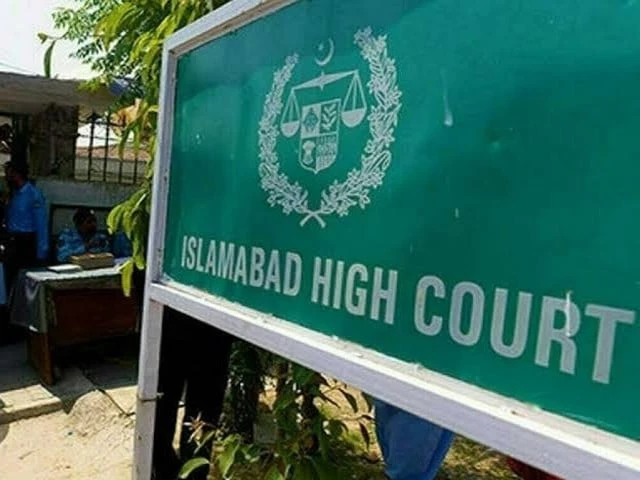
Court bars roadblocks for political allies Provinces stopped from using govt resources Officials protected from
The Islamabad High Court (IHC) has barred political parties, political leaders, provincial governments and public office holders from occupying public roads, highways, interchanges, toll plazas, buildings or other public places within or leading to the federal capital.
The court declared that no one has a lawful right to obstruct the free movement of citizens or interfere with their access to trade, business, education and medical facilities.
A three-member IHC bench led by Chief Justice Sardar Muhammad Sarfraz Dogar issued the directives on Monday while disposing of a petition filed by citizen Waqas Ahmed.
The petitioner sought directions to stop the PTI from organising a protest march in Islamabad on September 27. The court disposed of the petition, stating detailed reasons would be recorded later, subject to any amplification or elucidation deemed appropriate.
In its written order, the court directed all provincial governments, including chief ministers, to ensure that government resources, public funds, officials, vehicles, machinery and other equipment were not used directly or indirectly to facilitate any march, procession or rally heading towards Islamabad.
The order came after the court heard arguments from federal and provincial law officers and received affidavits from the Khyber-Pakhtunkhwa (K-P) chief secretary and inspector general of police (IGP).
Attorney General for Pakistan Mansoor Awan, advocate generals of K-P, Punjab and Balochistan, the advocate general Islamabad, prosecutors and assistant attorney generals appeared before the court.
The court also allowed the Islamabad deputy commissioner/district magistrate to present electronic material and play video clips during the hearing.
It noted that, in compliance with its September 11 order, the K-P chief secretary and IGP had submitted their respective affidavits, which were ordered to be placed on the record. The K-P advocate general also submitted a concise statement.
The court said political parties, leaders, provincial governments and public office holders could not obstruct or hinder citizens' free movement, pursuit of trade, business or profession, or access to medical and educational institutions in the Islamabad Capital Territory.
The provincial governments and chief ministers were specifically directed to ensure that no public servant was compelled, coerced, induced or otherwise required to participate in any march, procession or rally leading towards Islamabad.
The court further ordered that no official vehicle, machinery or other government equipment be used to aid or facilitate participants in such political activities.
The IHC also directed the Islamabad administration and the Ministry of Interior to ensure that no person residing in the capital undertook any activity resulting in violation of the rights guaranteed to citizens under Articles 9, 15, 18, 23, 24 and 25A of the Constitution.
The court directed the chief secretaries and IGPs of the provinces, the federal secretary interior, the chief commissioner Islamabad and the IGP Islamabad to immediately issue instructions to officials of the federal and provincial governments performing functions in Islamabad or the provinces.
Under the directions, no official would be required to comply with an order compelling them to aid or facilitate a march, rally or procession leading towards Islamabad. Any official subjected to such pressure would be required to immediately inform the relevant chief secretary, chief commissioner or IGP.
Officials were also directed not to permit participation in any march, rally or procession intended to obstruct or hinder free movement, trade, business or commerce, access to educational institutions or medical facilities, or the peaceful and lawful use of property in Islamabad.
To protect officials from political pressure, the court directed the chief secretaries, chief commissioner and IGPs to establish helplines or other direct communication mechanisms through which officials could report coercion or inducement by any person, including a political leader or public office holder.
The authorities were further directed to promptly take departmental action against any official who violated the court's order or the instructions issued pursuant to it.
In a broader warning, the court declared that any legal or natural person whose activity resulted in violation of citizens' fundamental rights within Islamabad would be deemed to have violated the Constitution and would be liable for consequences under the law.
The court issued a specific warning to public office holders, stating that any such person whose activity resulted in violation of fundamental rights would be deemed to have violated both the Constitution and their oath of office. Such public office holders, it said, would be liable for consequences stipulated under the Constitution and the law.
Original Source
https://tribune.com.pk/story/2629335/ihc-virtually-puts-brakes-on-ptis-capital-march