IIT-B student's suicide reveals unspoken shame of using AI, it is time we talk about it
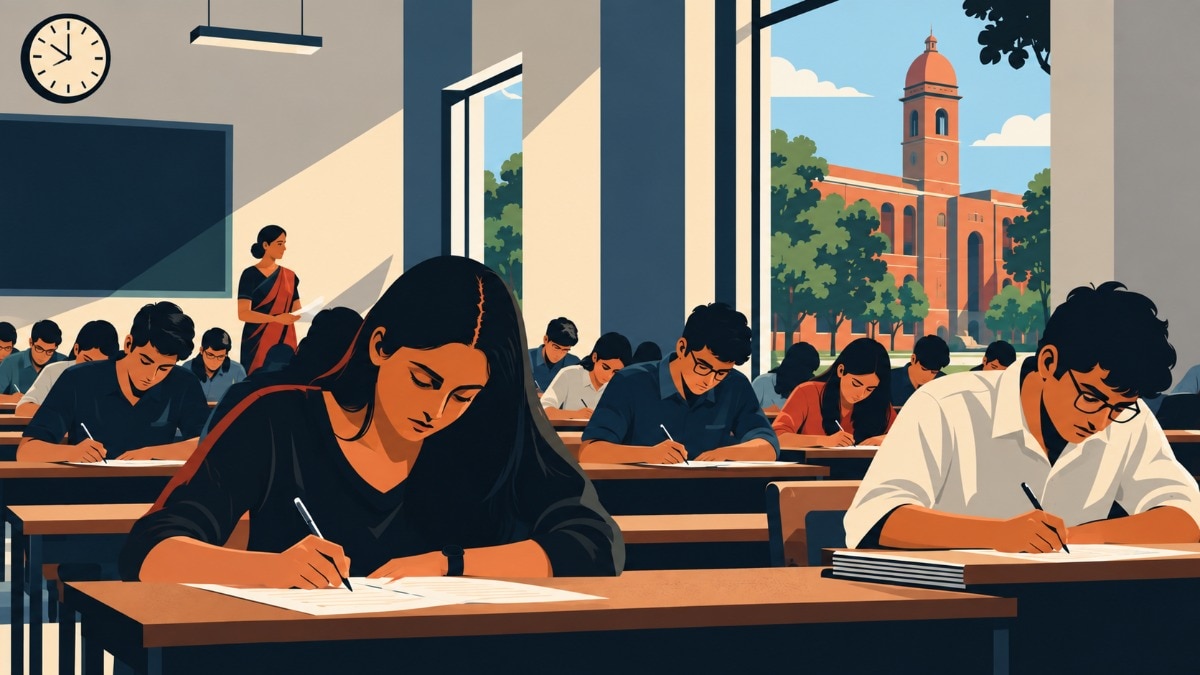
Nearly four years after ChatGPT 3.5 came out, we are still debating when and how much AI should be used. There are different voices, different opinions. But the consensus is missing, which is not unusual because new technologies have always sparked a debate on how and when they should be used and to what degree. This week the debate came into a sharper focus, with some tragic consequences. A 22-year-old IIT Bombay student killed himself, allegedly after he was found using ChatGPT during an examination. Cops are still investigating. So, it would not be a good idea to go into specifics, or even ascertain what is fact and what is hearsay.
The incident, though, highlights a rather unspoken aspect of using AI — the perceived shame of it.
Shame, unlike something fundamental such as sadness and joy and anger, is a constructed emotion. We are not born with shame. Instead, we are born into shame. We feel it because we are taught to feel it. Shame is defined by the society and norms around us.
Of late, as the world still debates how AI should be used and where, there is a growing army of extremely vocal purists who have attached shame to AI use. They argue that AI is something less pure, that it is not kosher. Some of these people can be rather zealous, in almost a religious sense, in upholding the virtues of AI-free work or life. The effect that has been created is that AI is anti-brain, and that it is used only by people who lack skills or intellectual capacity to do work on their own.
Personally, I abhor puritanism of any kind. The title of this newsletter says that it is written without any aid of AI. And that is indeed the case. But I am not anti-AI, as evident by the fact that there are often AI-generated images and visuals in this newsletter or by the fact that a lot of code of this page was done using AI. The masthead here is not meant to be a message declaring superiority of this newsletter over something that has been written with AI. Instead, it is simply a matter-of-fact statement to readers and ultimately it is for them to decide the merits of the writing here.
But the world, as it grapples with the arrival of AI, is not this straightforward. There is a growing trend of shaming people who use AI. I see that in many workplaces, where some people tend to scoff at their colleagues who use AI. The same in colleges. A few months ago I spoke to some journalism students at one of the top colleges in the country. They repeatedly asked questions about AI use in newsrooms and when I said it was not just necessary but inevitable, some of them were properly scandalised. They were hoping that I would argue against AI use, that I would put the primacy of human mind and human labour above that of machines.
All of this pushback against the use of AI creates unnecessary acrimony, and sometimes results in a tragedy similar to what happened in IIT Bombay a few days ago.
I believe AI must be treated simply as a technology that is subservient to humans. Just like any other technology. The problem is that when technologies are extremely powerful, they tend to upset the social equilibrium that has been created over decades, sometimes even centuries. And in those cases, there is a pushback.
Often this pushback takes a moral high-ground, and argues for status quo on the basis of purity. Purity of human thought. Purity of human creation. Purity of physical labour. This is not new. Almost all major technologies have seen pushback, and in their desperation to keep the status quo intact, often puritans have resorted to shaming the users of new technologies.
In the fifteenth century when the printing press reached Venice, an influential scribe Filippo de Strata went into an overdrive, arguing against the use of machines to print text. He claimed the primacy of hand and pen, and sought a ban on printing presses. In now famous polemic, he wrote: "Writing indeed, which brings in gold for us, should be respected and held to be nobler than all goods, unless she has suffered degradation in the brothel of the printing presses. She is a maiden with a pen, a harlot in print."
According to Filippo de Strata, hand-written text was nobler, was almost holy. The text was a maiden, a symbol of purity, whereas the text printed using machines was a harlot or a prostitute, degraded and debased.
The argument sounds similar to how many people nowadays look at text written with a keyboard compared to text generated by ChatGPT. Similarly, a more immediate example, and one that has echoes of what the IIT Bombay student reportedly faced, is the use of calculators. In the 1980s, schools, colleges and teachers in many parts of the world revolted against the use of calculators. Many teachers argued that calculators would diminish the mental faculties of students and that it was a technology that ought to be banned.
It is true that technologies do not automatically make societies and people better. In a certain way, the puritans too have been right throughout human history. There is a possibility that AI will indeed impact the human brain in ways we may not like. Yet, the extremes of every kind — in this case of using AI or not using AI — are unwarranted. The world is too big, too complex to be divided in black and white. Most of it exists in grey. Using AI to do subjective writing, such as a short story, and passing it off as your own work should be a matter of shame. But using AI to code an app, or to solve a calculus problem, should be okay and should be even encouraged if it leads to scientific advances that we currently cannot have because of our very human limitations.
In other words, where and how AI should be used should always be a matter of “it depends.” Or else we risk creating an environment where the shame attached with AI use may do us more harm than the good this technology can offer to humanity.