
In table tennis, handshakes and smiles as India beat Pakistan - The Indian Express
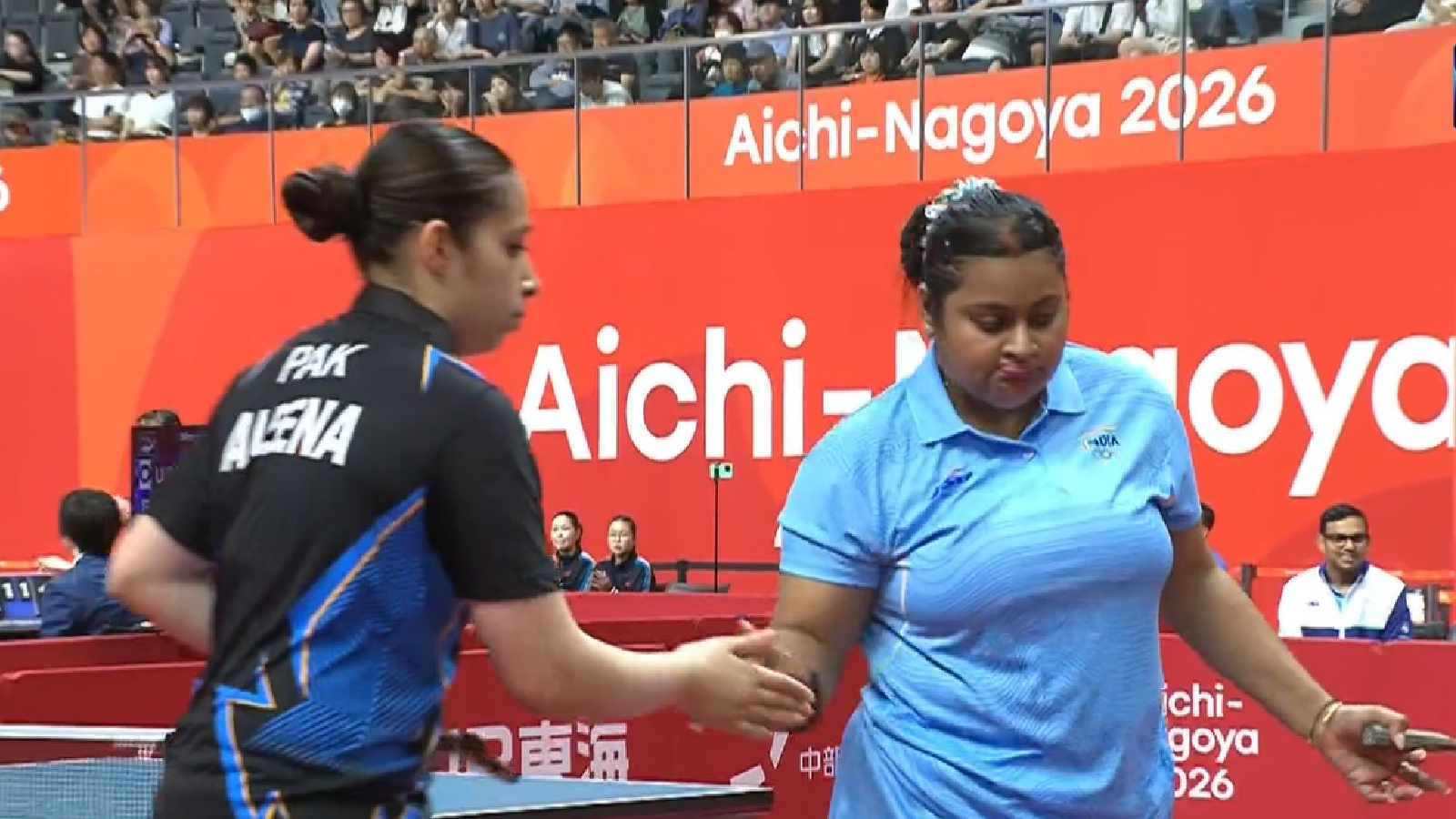
A light nod of the head, followed by tapping of palms with your opponents, their coach and the umpire. Table tennis’ post-match rituals, though subtler than other racket sports, are evident and consistent. The nod symbolises mutual respect and the handshake (or tap) acknowledges fair play.
The nod-tap routine has been part of the game all along. It doesn’t get sacrificed amid personal differences. It didn’t get sacrificed amid political ones too on Monday, when India faced Pakistan in the women’s and men’s team events of the Asian Games.
The Indian women — Sutirtha Mukherjee, Sreeja Akula and Syndrela Das — lined up next to their Pakistani counterparts — Aleena Khan, Fatima Khan and Kalsoom Khan — before the Group F tie began. They shook hands with the match officials as well as the Khan trio, as is customary.
They did it again at the end of each match, concluding with Sreeja’s win against Fatima. After shaking hands with Sreeja and umpires Mari Koda and Sanae Kobayashi, Fatima walked up to the Indian bench. Polite smiles were exchanged. The trend continued in the men’s tie. There were warm handshakes.
Towards the fag end of the first match, Pakistan’s Muhammad Khan attempted a laboured backhand flick against Harmeet Desai’s serve. The shot sank in the net. Muhammad beamed at Harmeet, amused with his over-ambitious stroke. Harmeet smiled back.
Later, once the tie ended, while both camps went on with the post-match formalities, Muhammad patted Payas Jain’s back.
After the Pahalgam attack in April last year, Suryakumar Yadav’s side didn’t shake hands with their Pakistan counterparts during the men’s Asia Cup. Harmanpreet Kaur’s women have continued it, right up till their Asia Cup meeting this month. Like Suryakumar and co. did in 2025, the Indian women’s team also refused to accept the trophy from Asian Cricket Council president Mohsin Naqvi, who’s also Pakistan’s interior minister.
However, the two nations’ hockey players high-fived each other at the World Cup in August. Hockey India had already made its position clear in November last year, saying it would follow the Olympic Charter and International Hockey Federation’s guidelines.
In squash, the Asian Doubles Championships 2026 final saw Abhay Singh and Velavan Senthilkumar rub shoulders with the neighbouring arch-rivals’ Nasir Iqbal and Noor Zaman. Abhay and Velavan, having beaten Nasir and Noor, then shared the podium with them.
In kabaddi, however, Indian youth team captain Ishant Rathee refused a handshake with the Pakistan skipper at the toss for their Asian Youth Games duel last year. But that was a stray, individual act and the teams posed for a group photo on the mat.
The results of the table tennis ties at the Asian Games were a foregone conclusion; the tremendous gulf in class meant the Indian men and women both won 3-0, with neither’s players dropping even a game. For the unheralded Pakistan paddlers, it was an opportunity to learn and evolve. This exposure is a big part of the charm continental competitions, as also the Olympics, hold.
Olympian Neha Aggarwal, while commentating on the India-Pakistan tie, aptly remarked: “I love, especially in table tennis I think, just the camaraderie between all the countries is amazing. Players shake hands, they bow down to each other, talk to each other. They are friends off the court, share a meal or two. (Looking at Sathiyan-Abbas handshake) There you go, a nice handshake. All in the spirit of sports.”
