Independence Day: Nigeria’s situation was darker than ever by 2023 – Tinubu - Vanguard News
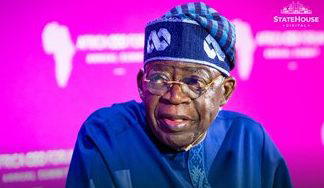
ABUJA — President Bola Ahmed Tinubu has said Nigeria’s economic situation was “darker than ever” by 2023, with rising poverty and dwindling hope forcing his administration to embark on difficult economic reforms.
Tinubu stated this in his Independence Day address to Nigerians on Thursday, marking the country’s 66th anniversary of independence.
The President said successive administrations had postponed difficult economic decisions, allowing deep-seated distortions to worsen and passing the consequences from one generation to another.
“By 2023, poverty was rising, and hope was nearly gone. The country’s situation was darker than ever. We had no choice but to act,” he said.
Tinubu likened the country’s economic situation to that of a patient diagnosed with cancer, saying the treatment could be painful but was necessary to confront the underlying problem.
“For too long, Nigeria’s leaders chose morphine while praying for a miracle that never came,” he said.
He said previous governments focused on the symptoms of the economic crisis while allowing what he described as structural problems to deepen.
According to him, his administration decided to “excise the cancer” through reforms, despite the hardship and “side effects” that followed.
“Our reforms did not create the weaknesses in our economy. They confronted them,” Tinubu said.
He defended the reforms, saying abandoning them and returning to what he described as “addictive subsidies” would undermine the progress already recorded.
The President said three and a half years into his administration, Nigeria’s economic outlook had improved, citing economic growth of more than four per cent, declining oil theft, lower inflation, rebuilt foreign reserves and greater stability in the foreign exchange market.
He also said Nigeria recorded more than $6 billion in non-oil export revenue in 2025, which he described as the highest in the country’s history.
Tinubu said the administration had reached a turning point, with the focus shifting from economic stabilisation to achieving “shared and widespread prosperity.”
He said the immediate priority was to reduce the cost of living by lowering the cost of producing and transporting goods.
According to him, the government is expanding mechanised irrigation and dry-season farming, improving access to seeds and fertiliser, increasing mechanisation and investing in storage and transportation.
He said investments in roads, railways and ports would also help connect farms and factories to markets and reduce the cost of moving goods.
The President said the government was also placing job creation, enterprise and industrial growth at the centre of its policies.
He said Nigeria would deploy its gas resources to power industries, support the revival of factories, expand digital connectivity and invest in skills required by employers.
Tinubu said the government wanted to see more Nigerian businesses producing locally and exporting their products to international markets.
He, however, acknowledged that millions of Nigerians were still struggling with food, school fees, medical bills and transportation costs.
According to him, the hardship facing vulnerable Nigerians was not solely the consequence of the reforms introduced by his administration, but the accumulated effect of decades of low productivity, inadequate infrastructure and insufficient opportunities.
“We cannot erase in four years what accumulated over generations. But we can change its course,” he said.
Tinubu said the government was strengthening direct support for poor households and improving the National Social Register to ensure that assistance reached those who genuinely needed it.
He also highlighted the Nigerian Education Loan Fund, saying it would help students from low-income families access higher education, while the Consumer Credit Corporation would provide working Nigerians with credit to acquire essential assets.
The President said the Federal Government would continue working with state and local governments to strengthen primary healthcare, basic education and other essential public services.
He added that salaries and pensions had been paid on time and in full since 2023, while reforms had also been introduced to the national pension system.
Tinubu said the government’s social intervention programmes were not intended to substitute for prosperity but to support Nigerians on the path towards it.
“Our objective is not to manage poverty more efficiently. We will defeat it,” he said.
He acknowledged that reducing poverty would take time and require sustained economic growth and the creation of millions of productive opportunities.
Tinubu said Nigeria was now pursuing the goal from what he described as a stronger economic position following the reforms undertaken by his administration.
“The age of reform has done its work. Now begins the age of prosperity,” he said.
The President urged Nigerians to remain united and look towards the future with renewed hope, saying the country had “corrected its course.”
“Nigeria has corrected its course. We have passed through our own Red Sea. This is not the time to look back. Let us go forward together, with faith in ourselves, faith in our country, and faith that the sacrifices we have made will yield their reward,” he said.
Tinubu described the country’s “Promised Land” as a Nigeria of abundance and opportunity, where prosperity would be broadly shared and every child could aspire beyond the circumstances of birth.
“Our destination is in sight. Our foundations are strong. Our direction is clear. So let us go forward. No looking back,” he said.
Comments expressed here do not reflect the opinions of Vanguard newspapers or any employee thereof.