India approves $19 billion green grid expansion to ease renewable power bottlenecks
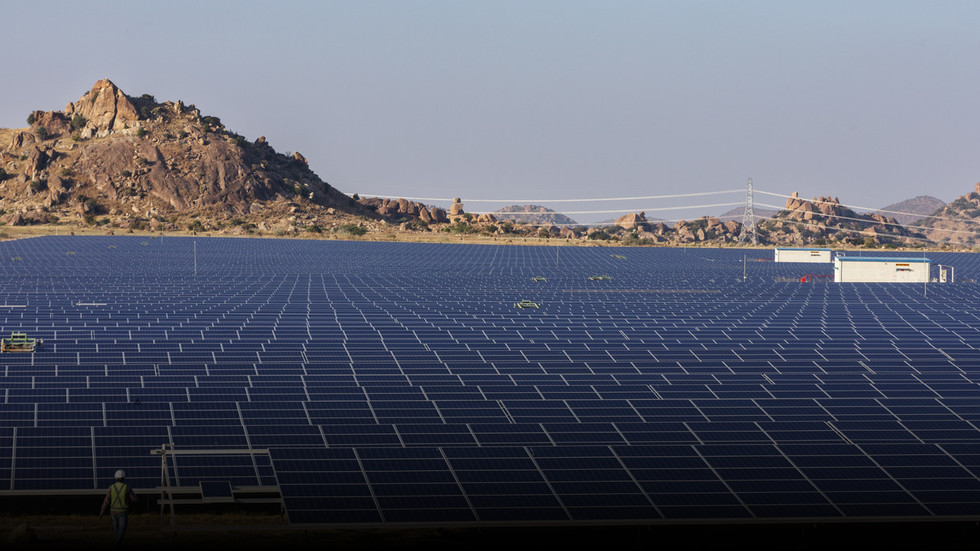
Solar panels at the Fortum solar park in Karnataka state, which is one of India's bigest solar energy producers. © Jonas Gratzer/LightRocket via Getty Images
India has approved a $19 billion expansion of its green-energy grid to remove the transmission constraints that are holding back the country from fully utilizing its fast-growing solar and wind power generation capacity, especially during peak hours.
The Green Energy Corridor Phase III (GEC-III) will enable the country’s green grid to carry up to 135 gigawatts (GW) of renewable power, and deploy 50 gigawatt-hours (GWh) of battery storage. It is targeted for completion by fiscal 2032-33.
GW is a measure of generation capacity, while GWh measures the total amount of energy produced or consumed over time.
Nearly 21GW, or about 9% of India’s installed renewable capacity, is currently connected through temporary grid arrangements while awaiting dedicated transmission infrastructure. This infrastructure gap restrains the transmission of around 12GW of power to users during periods of peak solar generation.
Grid operators had to restrict 8,133GWh of solar electricity during the April-June period, when peak power demand reached a record 270GW, because of these transmission constraints and the need to maintain grid stability, the Ministry of New and Renewable Energy told India’s parliament.
READ MORE: India’s new hydrogen train is a different beast (VIDEO) GEC-III will pair the additional transmission capacity with Battery Energy Storage Systems, enabling the stored renewable electricity to be released during periods of higher demand. This will help to reduce peak-hour power restrictions and meet demand outside solar-generation hours.
New Delhi currently has about 8.66GWh of installed large-scale battery storage, against a projected requirement of 236GWh by 2031-32, according to Power Ministry data.
India crossed 300GW of installed non-fossil power capacity in July, with these now accounting for more than 54% of the country’s installed generation capacity. New Delhi is targeting 500GW of non-fossil power by 2030.
This website uses cookies. Read RT Privacy policy to find out more.