Is technology the missing ingredient in South Africa's national school nutrition programme? - IOL
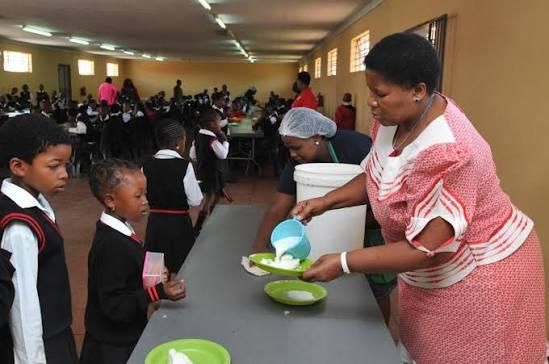
As millions of South African children rely on the National School Nutrition Programme, a critical investigation reveals alarming gaps and potential solutions. Is technology the key to ensuring every child receives the nutrition they deserve?
We are feeding almost 10 million children through the National School Nutrition Programme (NSNP).
That is an enormous responsibility, and it raises a simple but important question: if we are feeding 10 million children, why aren't we using technology to see where things are going wrong? Supported by billions of rands and decades of experience, the NSNP is one of South Africa's most important social programmes.
The issue is not whether inspections, reporting and compliance systems are necessary — they are. The question is whether they are enough for a programme operating at this scale.
If we have the technology to track a parcel across the country, monitor a bank transaction in seconds and manage millions of digital records, surely we can ask whether similar tools could help us understand what is happening in school kitchens and feeding schemes in real time.
Where are meals being prepared? Are kitchens compliant? Are temperatures being maintained? Are meals reaching children on time? Where are the recurring problems? And, critically, can we identify these risks early enough to intervene?
This is where technology should enter the conversation, not as a replacement for people, kitchen staff, inspectors or programme managers, but as a tool to give them better information, earlier warning and greater visibility.
A recent investigation reported that 8,504 schools across seven provinces participating in the National School Nutrition Programme were operating without Certificates of Acceptability, which are intended to confirm that food preparation facilities meet basic health, hygiene and safety standards.
The issue is not simply that schools are missing certificates. It is what the absence of those certificates tells us about how we monitor a programme of this size.
When you are feeding almost 10 million children every school day, you cannot afford to know only what happened at the end of the month, or after a complaint has been made, or after an inspection has identified a problem. At this scale, we need systems that allow government and programme managers to see what is happening while it is happening. We need to move from being reactive to being proactive.
That means being able to look across the programme and, almost at a glance, understand where food stocks are running low, where kitchens are struggling with infrastructure, where menus are not being followed, where portions are changing, where food-safety requirements are not being met, and where complaints are increasing. It means being able to identify patterns rather than treating every problem as an isolated incident.
The scale and longevity of the NSNP demand nothing less. A programme like this should have increasingly sophisticated ways of understanding whether it is delivering what it is supposed to deliver.
Technology cannot solve every problem, but it can help us see problems earlier. And there is a very good reason why seeing those problems early matters: the consequences are felt by children.
Research conducted through the Centre for Social Development in Africa (CSDA) and the Food Evolution Research Centre (FERC) at the University of Johannesburg, involving 182 children aged between 10 and 12 years across four provinces, gives us a glimpse of what happens when we look beyond programme statistics and listen to the children themselves. The research was conducted during the COVID-19 period and explored children's experiences of school nutrition during and after the pandemic.
The children spoke about school meals giving them energy, helping them concentrate in class, and, for some, providing an important source of food when they could not rely on having enough to eat at home. But they also described where the programme was falling short. Some reported smaller portions, reduced variety and changes in food quality, while others described feeling hungry, tired and unable to concentrate properly when they had not eaten enough.
The nutritional analysis was equally revealing. Most of the NSNP lunch meals assessed were not meeting the intended 25–30% contribution to children's recommended daily intake for most macro- and micronutrients.
At the same time, the research found important positive outcomes associated with the programme, including improved attendance, punctuality and alertness. That distinction matters, because it tells us something important about school feeding: a programme can be enormously valuable to children and still not be delivering its full nutritional potential.
The answer cannot simply be to declare the programme a success or a failure. The more useful question is: where is it working, where is it falling short, and what can we do to improve it? That requires information, and it requires us to think differently about what information we collect and how we use it.
What could better monitoring look like? There are examples elsewhere in the world showing that this is possible.
At a recent UJ CSDA learning forum on technological advances in school nutrition monitoring and evaluation, the Brazilian experience offered an important example of what a more integrated approach can look like. Brazil has one of the largest and oldest school nutrition programmes. Known as the PNAE, the programme dates back to 1955 and currently serves over 40 million children across 150,000 public schools.
At the forum, Edenliza Costa de Souza Carvalho from Brazil's National Fund for Educational Development presented aspects of the country's National School Feeding Programme, which brings together information about schools, financial transfers, nutritionists, school-feeding councils, accountability and on-site monitoring.
The value of this approach lies not simply in Brazil having more information. It is that different kinds of information can be brought together to create a much clearer picture of what is happening on the ground. Its assessment framework also considers structural conditions, including school infrastructure and the presence of appropriately qualified technical nutritionists.
There is an important lesson here for South Africa. Technology should not simply allow us to count meals faster or produce bigger spreadsheets. It should help us understand the conditions that determine whether those meals are safe, nutritious and reach children in the way they are intended to.
Imagine being able to see, through one system, that a particular cluster of schools is repeatedly reporting problems with refrigeration, that food-safety compliance is declining, that complaints about portions are increasing, and that certain menu items are regularly unavailable. That is a very different kind of information from simply knowing how many meals were served. It allows us to ask why something is going wrong, and, crucially, gives us an opportunity to intervene before the problem becomes a crisis.
This is where the Tiger Brands Foundation comes in. The experience of the Foundation provides one example of how this thinking can be applied in practice. Since it first began its in-school breakfast programme 15 years ago, TBF has invested steadily in its monitoring, evaluation, research and learning systems.
TBF has focused on standardising data collection, strengthening reporting, and using digital tools to make information more accessible and useful to the people responsible for implementing and managing the programme. Its Nutrition Enhancement Platform combines a web-based system with an offline-capable mobile application, allowing information to be captured even where connectivity is unreliable. The Foundation is also using an AI-powered chatbot to provide staff with access to information from its knowledge base and live monitoring data.
These are not technological innovations for their own sake. Their value lies in what they allow people to do with the information. If children are consistently reporting that portions are too small, that information should be visible and should inform decisions. If food quality is declining at a particular site, managers should be able to identify the pattern. If a school is struggling to meet food-safety requirements, the system should help identify not only that there is a problem, but what might be driving it.
This is the difference between collecting data and using evidence. South Africa is not short of data. We are often short of systems and processes that turn that information into timely action.
Of course, technology is not a magic solution. A dashboard cannot build a kitchen. AI cannot train a food handler. A mobile application cannot create refrigeration, running water or proper storage where those things do not exist. Technology also cannot replace the people who make school feeding programmes work every day.
What it can do is shorten the distance between a problem emerging and somebody knowing about it. And that may be its greatest value.
The CSDA and FERC research, for example, did not simply identify nutritional gaps. It pointed toward practical improvements, including more fresh fruit and better protein sources, larger quantities where necessary, improved kitchen and storage infrastructure, stronger adherence to menus, and additional training for food handlers in nutrition, portion control, hygiene and food safety. This is what evidence should enable us to do: move from identifying a problem to understanding what needs to happen next.
So when we hear that thousands of schools are struggling with basic food-safety compliance, the response should be more than outrage and another round of inspections. We should also be asking what information was available, who had access to it, whether different pieces of information were being connected, and whether the people responsible had the resources and authority to act.
Because ultimately, this is not really an argument about technology. It is an argument about whether our investment is translating into impact.
We have invested in school feeding, research, monitoring, digital systems and new technologies. The opportunity now is to connect those investments so we can see the whole picture rather than isolated pieces. Brazil shows us what is possible when information about finance, infrastructure, nutrition, accountability and implementation is brought together. The Tiger Brands Foundation shows how digital tools can be designed around the realities of frontline implementation. And the CSDA and FERC research reminds us that all of this ultimately comes back to the child sitting in the classroom.
For that child, a school feeding programme is not a budget, a dashboard or an indicator. It is whether there is enough food on the plate. Whether that food is safe. Whether it is nutritious. Whether it gives them enough energy to concentrate, participate and learn.
If we are serious about ensuring that 10 million children receive nutritious food, then we should be equally serious about knowing where the system is working and where it is not.
Perhaps the real promise of technology is not that it can help us count more meals. It is that it can help us understand, much sooner, when those meals are not doing what we intended them to do.
Oliver Meth is Strategic Communications Consultant at the Centre for Social Development in Africa, University of Johannesburg.
Sadiyya Haffejee is Associate Professor and Director at the Centre for Social Development in Africa, University of Johannesburg.
Hema Kesa is Associate Professor and Director at the Food Evolution Research Centre, University of Johannesburg.