Israel had names before flydubai FZ1073 took off, failed to flag Omani co-pilot: Report - The Indian Express
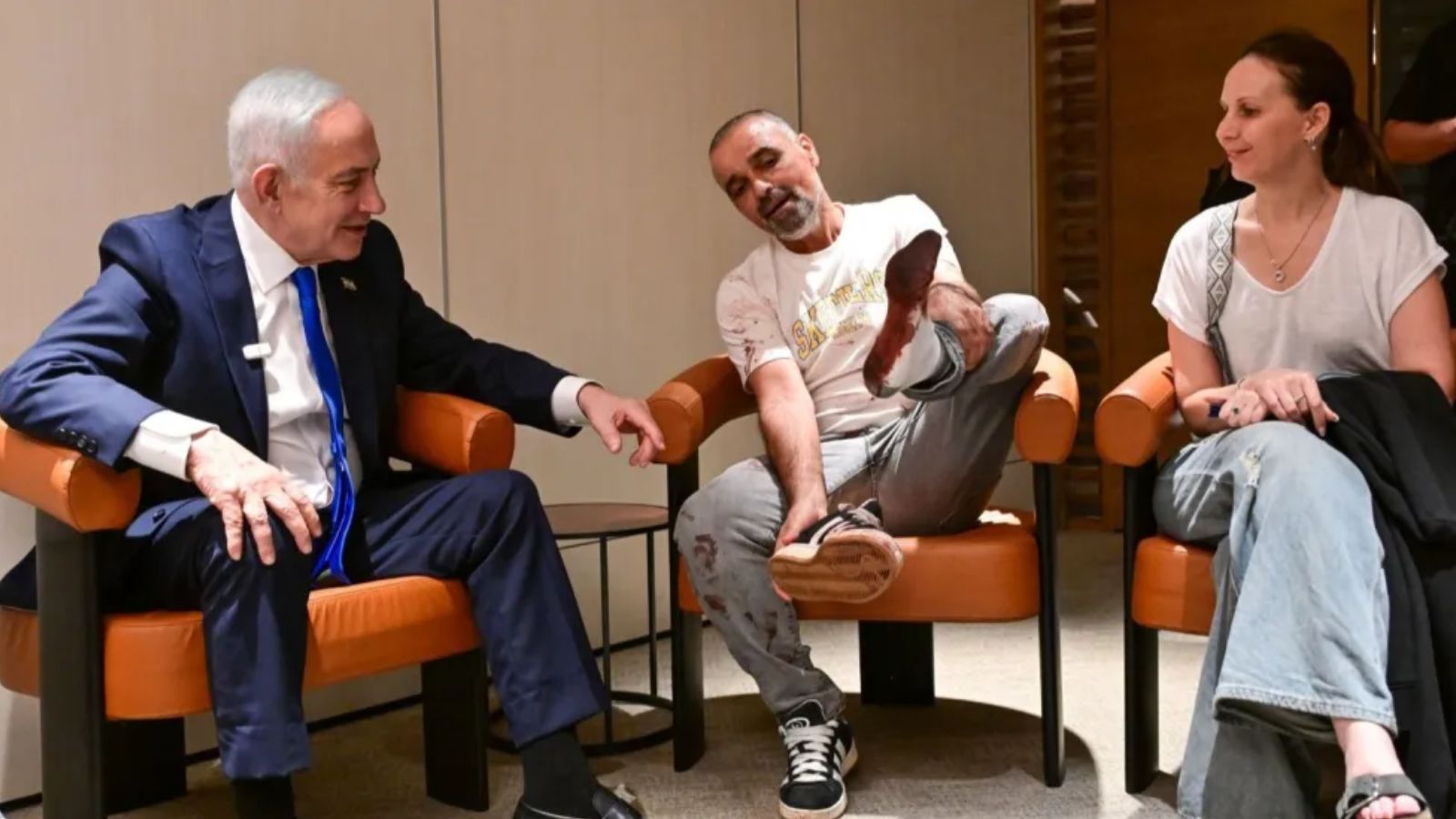
Before Flydubai flight FZ1073 left Dubai for Tel Aviv on Wednesday, Israeli officials already had the names of everyone on board. The list of crew and passengers had been sent to them in advance, according to Israeli newspaper Haaretz. Yet the Omani co-pilot, who is now accused of attacking Indian Captain Smit Machchhar and trying to crash the plane, was not flagged.
Flight data, the captain’s account and passenger footage, in nine chapters.
Flydubai FZ1073, a Boeing 737 MAX 8 with 182 people on board, takes off for Tel Aviv. Watch the route rise into 3D: the height of the red line is the aircraft’s altitude.
Based on AP and Flightradar24 data. Altitude is exaggerated; the point where the plunge began is approximate.
Cruising altitude. Everything appears normal
For more than two hours, nothing looks unusual. Then, in about four minutes, the altitude line collapses.
Source: AP, Flightradar24. Climb and final descent are simplified.
Tap each altitude to feel the drop.
05:21:09 GMT. Cruising. The descent begins.
05:22:40 GMT. In about 90 seconds the jet has lost more than half its cruising altitude.
05:23 GMT. The aircraft climbs back up…
05:24:29 GMT. …then drops again, to the height it holds until landing.
The aircraft lost more than half its cruising altitude in the first descent. Source: AP, Flightradar24
The co-pilot attacks Captain Machchhar.
The aircraft begins losing altitude.
Machchhar, badly injured, reaches the cockpit door.
The door opens. Passengers and crew intervene and restrain the attacker.
The cockpit door is locked. The captain is on the floor, injured. The aircraft is falling.
Tap the cabin to see what passengers saw and heard.
Hears shouting. People can be heard shouting “he tried to crash the plane” and ordering others to “sit down”.
Passengers and crew rush forward through the open cockpit door and restrain the attacker.
Repeated calls for a doctor ring out through the cabin.
Dr Shota Musayev, an Israeli dentist, moves forward to give emergency care.
Crew and passengers keep the co-pilot under guard. “No one will release him,” one says.
A passenger asks if there is “an additional pilot on the flight”. Two off-duty flydubai pilots take control.
Source: Channel 12 passenger footage, via The Times of Israel. Positions in the cabin are illustrative.
Not independently verified by The Indian Express.
Pilots can signal trouble silently with a four-digit transponder code. Tap a code.
7700 tells air traffic control the aircraft has a general emergency.
7500 signals unlawful interference, including a possible hijacking. FZ1073 held it for about an hour.
Nearly four hours after take-off, FZ1073 lands in Tabuk, Saudi Arabia. The passengers, most of them Israeli, later flew home on a separate plane.
Why did the co-pilot attack? How was he vetted? Did he act alone? Why was an Omani pilot flying to Tel Aviv?
Now the questions are about who knew what before take-off, and why a man who had reportedly been barred from flying in his own country was in the cockpit at all. Haaretz, quoting security sources, reported that Israel’s Transport Ministry and the Mossad were meant to check the crew list. The Israel Tax Authority confirmed it received the list. The Transport Ministry would not say whether it went through it.
According to Haaretz, Israeli government officials received the crew and passenger list ahead of the flight. Here is what is known and what is not:
Three people with knowledge of the matter, including a Gulf diplomat and a Western diplomat, told the AP news agency that the co-pilot is Hamam al-Hammami, an Omani national. They spoke without giving their names.
The Wall Street Journal, citing unnamed sources, said Omani authorities had barred him from flying in Oman over concerns about alleged extremist views. It is not clear what those views were, or whether Oman told other countries or airlines. CNN, citing a source and an Israeli official, said he was born in the UAE to a Syrian mother and spent several years there. CNN also quoted a regional diplomatic source who said he had been removed from flight training over similar concerns and moved to another role.
A LinkedIn profile with his name, seen by CNN, says he spent seven years at Oman Air and left in February 2025. It says he joined Royal Air Maroc in June 2025 and left in January 2026. Buckinghamshire New University has confirmed he finished a distance-learning course in aviation management there, and says he did no pilot training with it.
A Gulf diplomat told AP that investigators are trying to learn whether he acted as a “lone wolf” or had links to extremist groups.
According to Flightradar24, the plane left Dubai at 7:05 am on Wednesday and climbed to 34,000ft. A little over two hours later, it began to descend, and the data showed it fell more than 17,000ft in about two minutes before it climbed and dropped again.
Inside the cockpit, the co-pilot had attacked Indian pilot Machchhar. The UAE says he used the emergency crash axe, a tool kept in cockpits to cut through the aircraft in an emergency. Machchhar later told Prime Minister Narendra Modi, from a hospital in Abu Dhabi, that he was on the floor and could feel the plane dropping. He said he knew it was the “last chance to do something”. He told PM Modi he reached the door and opened it, and people came in.
Passengers and crew overpowered the co-pilot. The plane levelled out at about 15,000ft, and its transponder was set to code 7500, which signals unlawful interference. Two reserve pilots on board took the controls and landed the jet at Tabuk at 9:45 am local time. Saudi authorities said Captain Machchhar was taken to a hospital and then airlifted to Abu Dhabi after medical clearance.
UAE Attorney General Hamad Saif al-Shamsi said on Saturday that investigators found the co-pilot had begun what he called a “terrorist act.” He said the co-pilot attacked the captain with the crash axe and tried to take control of the aircraft. On Thursday, he had ordered investigators to check whether the incident was tied to terrorist activity or intent, or to planning or direction by others.
Abu Dhabi is leading the case because the plane is registered in the UAE and flies under its flag. Al-Shamsi said UAE law covers crimes on board even outside the country. Investigators are looking at the motive, any links to others, and physical and digital evidence. The UAE has not said what the motive was, or whether it thinks al-Hammami acted alone.
UAE presidential adviser Anwar Gargash said on X that the attack shows the region’s fight against extremism is not over. Flydubai flights to Israel remain suspended while the investigation is ongoing.
The questions about the Flydubai crew list come at a bad time for Israeli Prime Minister Benjamin Netanyahu, who faces a close election on 27 October. He is also dealing with a second security question, this one about the Hamas-led attacks of 7 October 2023.
On Sunday, the Wall Street Journal published a report saying Netanyahu had been warned of that attack by Egypt’s intelligence chief, Abbas Kamel. According to the report, Kamel phoned the prime minister a few days before the attack. It adds to earlier claims that Kamel flew to Israel in September 2023 to tell security officials in person that Hamas was planning an attack. Netanyahu is alleged to have received warnings before 7 October, and the claim has followed him since.
The Express Global Desk at indianexpress.com which delivers authoritative, verified, and context-driven coverage of key international developments shaping global politics, policy, and migration trends. The desk focuses on stories with direct relevance for Indian and global audiences, combining breaking news with in-depth explainers and analysis. A major focus area of the desk is US immigration and visa policy, including developments related to student visas, work permits, permanent residency pathways, executive actions, and court rulings. The Global Desk also closely tracks Canada’s immigration, visa, and study policies, covering changes to study permits, post-study work options, permanent residence programmes, and regulatory updates affecting migrants and international students. All reporting from the Global Desk adheres to The Indian Express’ editorial standards, relying on official data, government notifications, court documents, and on-record sources. The desk prioritises clarity, accuracy, and accountability, ensuring readers can navigate complex global systems with confidence. Core Team The Express Global Desk is led by a team of experienced journalists and editors with deep expertise in international affairs and migration policy: Aniruddha Dhar – Senior Assistant Editor with extensive experience in global affairs, international politics, and editorial leadership. Nischai Vats – Deputy Copy Editor specialising in US politics, US visa and immigration policy, and policy-driven international coverage. Mashkoora Khan – Sub-editor focusing on global developments, with a strong emphasis on Canada visa, immigration, and study-related policy coverage. ... Read More