
Italy to Cap Foreign Students, Ban Burqas and Niqabs in Schools
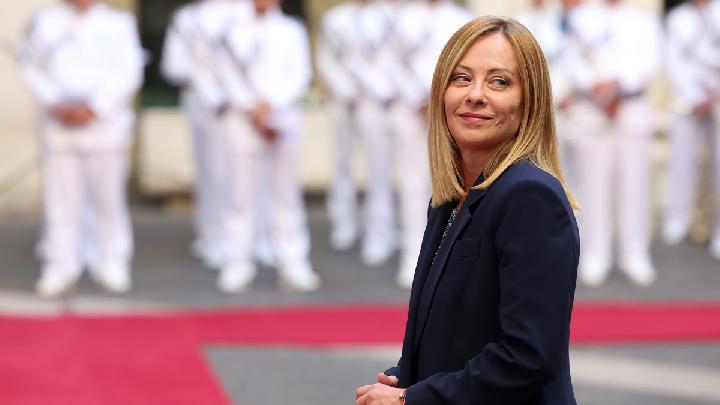
TEMPO.CO, Jakarta - Italian Prime Minister Giorgia Meloni announced on Sunday, September 20, 2026, that her government is preparing legislation to ban face coverings in schools and establish a cap on foreign student enrollment per classroom.
Speaking at Fenix, an annual national youth festival organized by her party's youth wing, Brothers of Italy (FdI), Meloni outlined the upcoming policy package aimed at reforming school integration and language standards.
Under the proposed measure, the government plans to legally restrict the maximum percentage of non-Italian students in individual classrooms. Meloni stated that the policy will soon be submitted to the Council of Ministers for formal review.
"A measure will soon be presented to a Cabinet meeting to legally establish a maximum number of foreign students per class," Meloni said during her address, as reported by NBC News. "It also requires parents of foreign students facing serious difficulties integrating into the school system to learn Italian and bans burqas and niqabs in schools."
However, she stopped short of revealing the exact enrollment quota, arguing that large ratios of non-Italian speakers hinder educational outcomes.
"If there is only one child in a class who doesn’t understand Italian, that child will likely be able to learn the language and integrate quickly with the help of classmates and teachers," Meloni explained. "However, if the number of children who don’t understand the language becomes large—or even the majority—that is no longer integration; it is neglect."
Meloni also emphasized national identity during her speech, telling attendees, "Italian children cannot feel like a minority in the classroom," as quoted by Italy's ANSA news agency and reported by Anadolu Agency.
Alongside classroom quotas, the legislation includes a prohibition on full-face veils, specifically targeting the burqa and niqab within educational institutions.
Addressing cultural integration and religious garments, Meloni rejected traditions that mandate face coverings for young women in academic settings.
"You must go to school with your face uncovered, and in Italy no one, in the name of a real or supposed tradition, can decide that a young woman must hide herself," Meloni stated as reported by CNN.
The proposed policies arrive amid ongoing national debates surrounding migration and integration. Due to its position in the central Mediterranean, Italy remains one of the primary entry points for sea-bound migrants entering Europe, making immigration policy a major focal point for successive governments.
According to data from Fondazione ISMU, an Italian research foundation cited by NBC News, non-Italian citizens currently represent approximately 11.6 percent of total school enrollments nationwide, which is equivalent to nearly 12 out of every 100 students.
The draft bill is expected to undergo formal cabinet deliberations in the coming weeks before heading to the Italian parliament.
