It’s a Medical Miracle movie review: Sangeeth, Sharaf U Dheen’s film is ambitious, engaging - The Indian Express
It’s a Medical Miracle movie review: What others perceive as “super” powers may not feel the same to superhumans all the time. This is not just in a moral, “with great power comes great responsibility” way. The very powers that define them may also permanently crush their possibility of leading a normal life. So while these powers can be “super” at times, they are a double-edged sword as well, and Hulk/Bruce Banner’s story is the best example.
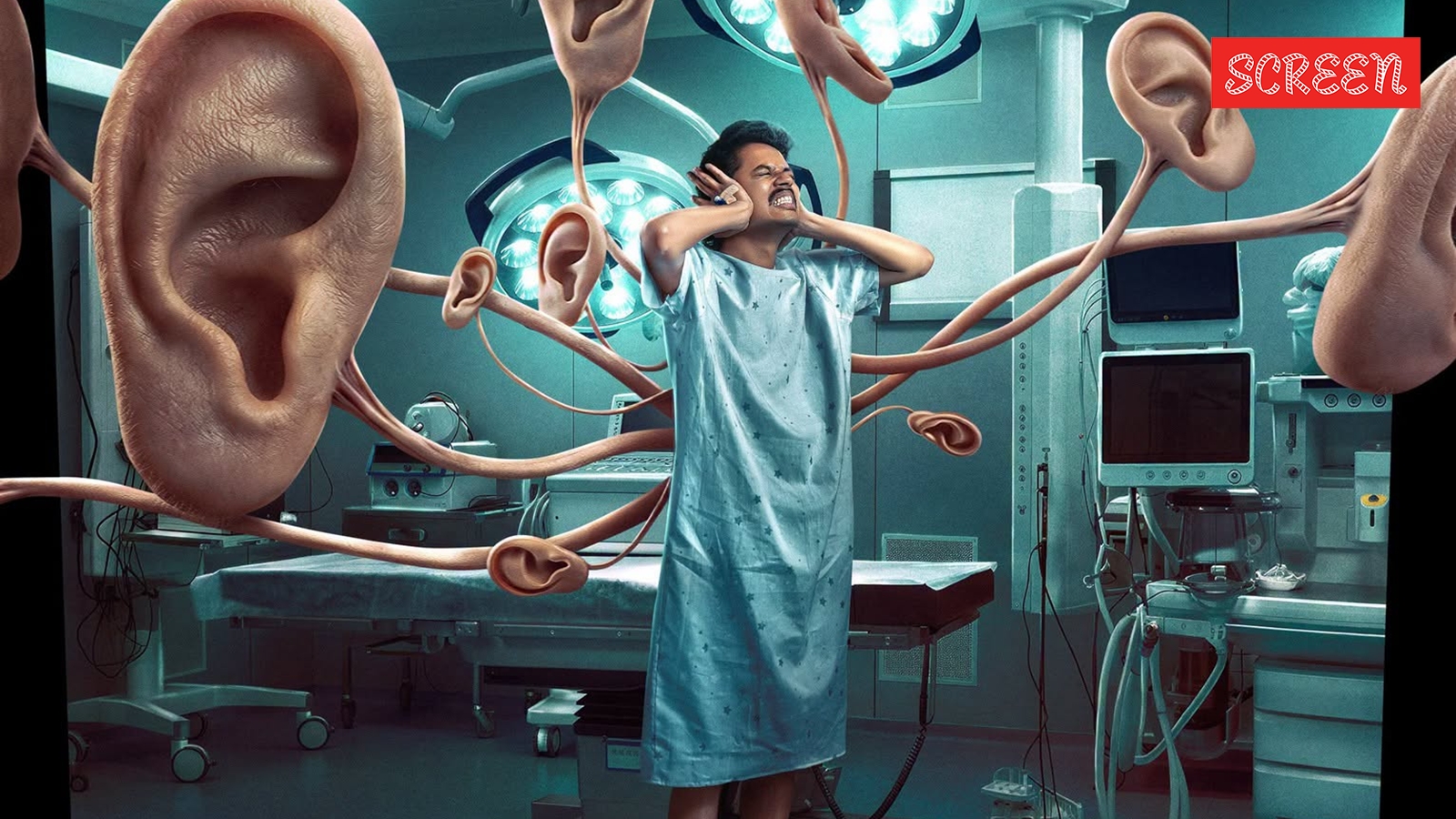
While his extraordinary auditory acuity may seem fascinating to others, it’s skull-splitting for Ruben (Sangeeth Prathap) in It’s a Medical Miracle, as it’s hard for him to tune out unwanted sounds. His super-hearing is so intense that not a single sound within a large radius escapes his ears, overwhelming his brain. As the decibels go up, the sounds can even bring him to his knees, as if that’s his kryptonite. Even though some call his super-hearing a superpower, Ruben will never agree with it, and the reasons he lists for maintaining his stance make total sense. But how did he end up like this?
Following a road accident, Ruben goes into a coma. Two years later, his family consents to his euthanasia. However, an unexpected incident wakes him up, from that moment on, he has super-hearing. Although he is discharged from the hospital, he can no longer stay with his family and flees his home, mainly in search of Susanna (an impressive Akhila Bhargavan), the nurse who looked after him in the hospital. He finds her and grows close to her and her elder sister, Ancy (Nileen Sandra), thus rebuilding his life. Slowly, romance blooms between Ruben and Susanna.
Meanwhile, he befriends a police constable, Sooraj (Sharaf U Dheen), and learns from him that a psychopath who has been targeting random people is on the loose. Sooraj is part of the police team hunting him. One day, the psychopath targets Susanna, although she is saved by Ruben. But why did he attack her?
One of the beauties of It’s a Medical Miracle is its filmmaking, which is impressively in tune with the script’s core idea and the fascinating element. Unlike similar fantasy dramas that rely solely on VFX and CGI to create the fantastic, director Shyamin Gireesh, with the help of his brilliant technicians — particularly cinematographer Akhil Xavier and editor Rakesh Cherumadam — plays with visual language, shaping how we perceive things rather than what we see.
The conviction with which he has handled the subject and choreographed each scene makes it hard to believe Shyamin is a debutant director. The sequence showing Ruben waking up from the coma and struggling to deal with his super-hearing — where Nixon George’s sound design does wonders and offers an immersive experience — is enough to hint at Shyamin’s potential. And happily, that’s not the only moment in the film where it’s visible.
Be it the scenes showing Ruben in public places, trying to zero in on the pieces of sound that he desperately wants to focus on to find some answers, or the sequence leading to the interval where tension slowly builds as a conversation progresses between the main characters, or even the moment Ruben realises who the masked psychopath actually is, Shyamin demonstrates extraordinary command over It’s a Medical Miracle.
What has significantly helped the fantasy drama is the spectacular rapport between the director and writer Nileen Sandra. Years ago, long before they became husband and wife in real life, the two showcased the same chemistry in the web series Samarthya Shastram. The result of their brilliant collaboration was a web series par excellence, and they have managed to recreate that magic in It’s a Medical Miracle too, despite the film’s flaws.
Nileen’s talent as a writer shines at several points throughout the film. Although It’s a Medical Miracle’s USP is its fantastical element, she weaves it into the narrative so skillfully that it never feels convenient or forced, thus allowing her to draw ample drama, too, from it. Both Ruben and Sooraj are well fleshed out and distinct, so at times the movie feels like it’s unfolding itself. The film’s dialogues are also impressive.
Although certain aspects of the antagonistic psychopath’s character and actions bear similarities to director Jeethu Joseph’s Kooman (2022) and Memories (2013), Nileen handles them carefully, thus keeping It’s a Medical Miracle’s novelty intact. Even though the main twist, revealed early on, is fairly predictable, it doesn’t detract from the film’s charm.
However, after brilliantly setting up the world, fleshing out the characters, and setting the stage for impressive conflicts, Nileen’s script suddenly hits a dead end, unsure how or where to proceed. As a result, it starts going in circles. Even when new plot devices and catalysts are introduced, they don’t carry the same impact as the earlier ones, making the narrative progressively weaker.
While the final turning point and the scene leading to the ultimate showdown are solid and tense, the climax falls short, feels rushed, and the ending comes across as convenient. Equally disappointing is the action choreography, which appears too desperate to show that Ruben isn’t a fighter.
Another major issue with the script is that aside from Ruben and Sooraj, pretty much no other characters are well developed. Although Susanna is present throughout the movie, the script doesn’t explore her beyond what’s needed to advance Ruben’s arc.
Worse still, Nileen’s own character, Susanna’s sister Ancy, is so underdeveloped that she comes across as irrelevant to the narrative. The same goes for Chithra (Parvathy R Krishna), the police officer leading the team hunting the masked psychopath.
Besides, it’s baffling that Nileen couldn’t explore Ruben and Susanna’s romance properly, despite the sheer amount of focus the movie’s first act gave it.
It’s strange that Sangeeth Prathap has delivered both his finest and worst performances thus far in the same year. After facing immense ridicule for his unintentionally comical performance in director Arun Varma’s Baby Girl, he has knocked it out of the park in It’s a Medical Miracle, highlighting just how much an actor can achieve when working with a director who knows exactly what he is doing.
Sharaf U Dheen excels as always, shining evenly well in scenes that require him to explore Sooraj’s various shades.
Mujeeb Majeed’s music and Appunni Sajan’s art direction also deserve praise.
Anandu Suresh is a distinguished Deputy Copy Editor at The Indian Express Online, where he serves as a leading voice in cinematic critique and industry analysis. He is a Tomatometer-approved film critic and a Golden Globes voter. With over seven years of rigorous experience in the media landscape, he has established a reputation for incisive, long-form commentary that bridges the gap between commercial cinema and arthouse narratives. Experience & Career Anandu’s professional journey is rooted in a deep academic and practical foundation in the humanities and communication. He holds a Bachelor's degree in English Language and Literature and a PG Diploma in Journalism and Communication. Before ascending to his current editorial leadership role at The Indian Express, he honed his skills on the news desk of The New Indian Express in Hyderabad. His career is marked by a transition from core news operations to specialised cultural journalism, allowing him to bring a structured, news-oriented rigour to the entertainment beat. Expertise & Focus Areas While Anandu’s portfolio spans the global cinematic landscape, he is widely regarded as an expert in Malayalam Cinema. His unique approach to film criticism is defined by: Cinema Anatomy: A dedicated column where he deconstructs the structural layers of films to uncover deeper sociopolitical meanings. Marginalised Narratives: A commitment to on-ground and analytical reporting on how cinema represents or fails marginalised communities. Critiquing "Performative Wokeness": Rigorous analysis of modern filmmaking trends, identifying the difference between authentic representation and superficial social commentary. Multimedia Discourse: Actively fostering continuous public dialogue on cinema through digital platforms and archival research. Authoritativeness & Trust Anandu Suresh is a trusted authority in the film journalism circuit, frequently providing exclusive coverage from major international festivals like the International Film Festival of Kerala (IFFK). His work goes beyond standard reviews; he is known for holding the industry accountable, as seen in his extensive reporting on sensitive issues like the 2017 Kerala actress assault case and the legal complexities surrounding film credits. By prioritising "Journalism of Courage," Anandu ensures his readers receive commentary that is not only intellectually stimulating but also ethically grounded and factually robust. ... Read More