JD Vance Defends Trump’s Taxpayer-Funded Ads as Republicans Push Back - Newsweek
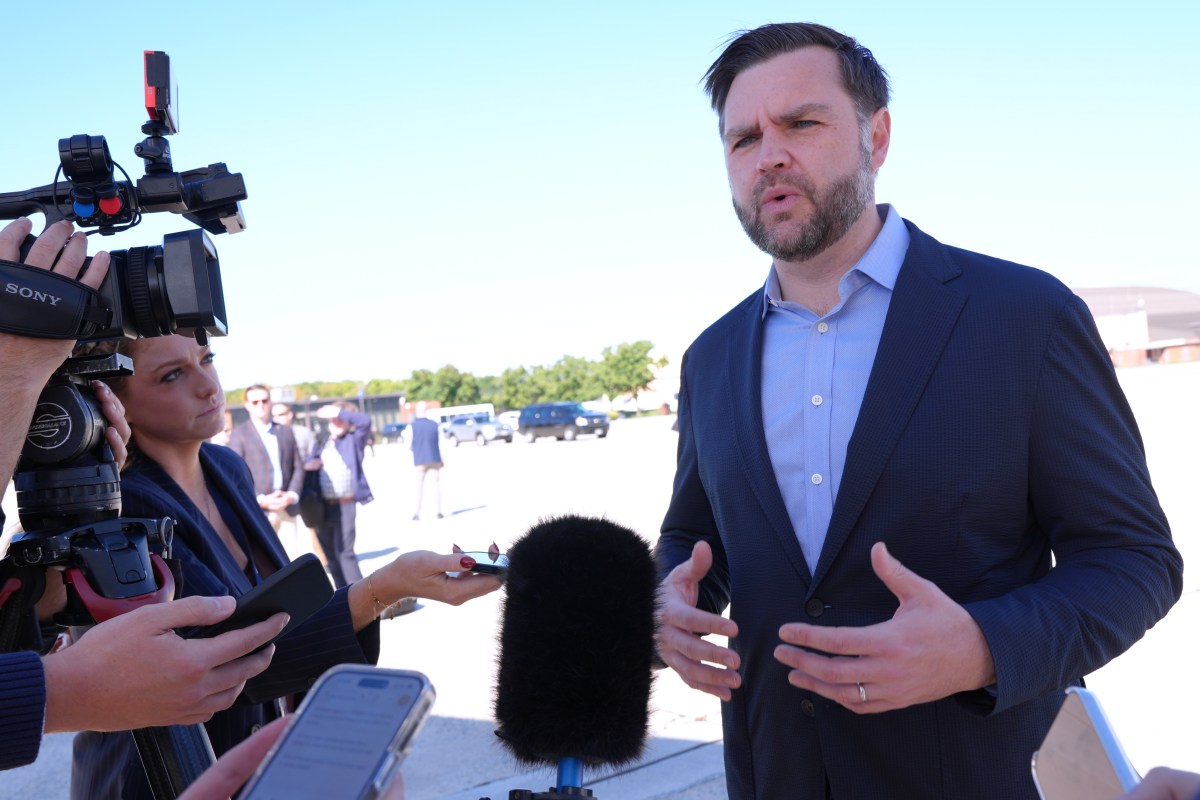
Vice President JD Vance on Monday defended the Trump administration's taxpayer-funded television advertisements after critics questioned whether the commercials amount to political promotion financed by taxpayers. He argued that governments have long used public funds to communicate with Americans about their policies and accomplishments.
Speaking to reporters before departing for Alaska to campaign for Republican Senator Dan Sullivan, Vance pushed back on criticism that the commercials amount to taxpayer-funded political advertising just weeks before the November midterm elections.
Asked whether the ads were a good use of taxpayer dollars ahead of the midterms, Vance said such government-funded messaging has historical precedent.
"Go back to the Obama administration with the Affordable Care Act, you have the people's government using tax dollars to advertise about what the government is doing," Vance said. "It's part of actually, I think, living in a constitutional republic. You have to be honest with the American people about what you're doing, about what's going on."
He added: "Part of that is getting out there and telling the message. So I don't think there's anything unusual or unorthodox about it."
In a statement to Newsweek on Monday, a White House spokesperson said: "These public service announcements are about reminding Americans to love their country and understand what makes it worth defending, at home, at our borders, and abroad. The ad is educational and unapologetically patriotic. We should be proud of our country."
The spokesperson also pointed Newsweek to a White House release arguing that "presidential public service announcements are nothing new," which compares the Trump ads to government-funded messaging campaigns under previous administrations, including those of George W. Bush, Barack Obama and Joe Biden.
The advertisements have become a flashpoint in Washington after the White House began airing a series of commercials featuring Trump ahead of the midterm elections.
One ad features Trump criticizing communism while the song "Love Me" by JMSN plays in the background and concludes with UFC CEO Dana White describing Trump as the "toughest, most resilient person that I've ever met." Another includes Trump's pledge to "demolish the deep state" and remove "warmongers from our government." A third shows Trump speaking about America's "golden age" alongside footage of Mount Rushmore.
The White House has characterized the advertisements as public service announcements rather than campaign material, arguing they are intended to promote patriotism and educate Americans about the administration's policies. Vance echoed that argument on Monday.
"If you look at the message of those advertisements, they're not partisan," he said. "It's not like we're advocating for a particular candidate. We're trying to tell a story, I think, about how great the United States of America is."
While Democrats have led criticism of the advertisements, several prominent Republicans have also publicly objected to using taxpayer funds to pay for the spots.
The highest-profile Republican critic has been Senate Majority Leader John Thune of South Dakota, who told reporters that although he supports the message of the commercials, public money should not be used for them.
"It's a great message. I like the message. But it shouldn't be paid for with taxpayer dollars," Thune said.
Other Republican lawmakers have expressed similar concerns.
Texas Senator John Cornyn told The Hill that government funds should not be used for advertisements promoting the president, saying, "We all know you're not supposed to use taxpayer money for that purpose."
Louisiana Senator John Kennedy said on CBS News' Face the Nation that "no public official, including President Trump or Kristi Noem or John Kennedy, should spend public money on private ads for themselves."
North Carolina Senator Thom Tillis called the advertisements "inappropriate" and compared them to the style of messaging associated with Hungarian Prime Minister Viktor Orbán.
Kentucky Representative Thomas Massie mocked the ads on social media, writing that taxpayer-funded campaign-style advertisements are legal "in banana republics."
Outside Congress, former Representative Justin Amash described the advertisements as "the most shameless administration of our lifetime," while conservative commentator Erick Erickson called them a "waste of taxpayer dollars."
The Trump administration has repeatedly argued that previous presidents used taxpayer-funded public messaging campaigns and that the current advertisements fall within that tradition.
The White House has compared the Trump commercials to public-awareness efforts conducted during World War I and World War II, George W. Bush-era campaigns promoting Medicare changes and anti-drug messages, Obama's outreach efforts tied to the Affordable Care Act, and Biden administration advertisements encouraging Americans to receive COVID-19 vaccines.
"The announcements are very clearly not campaign ads; President Donald Trump is not on the ballot and there is no call to action," the White House said in a previous statement. "Instead, the announcements are a reminder for Americans to love their country and know why it's worth defending."
Critics dispute that comparison, arguing that previous taxpayer-funded campaigns generally promoted specific government programs or public-health initiatives rather than elevating the image of a sitting president.
The controversy has also raised legal and ethical questions about the boundary between legitimate government communications and political promotion. Federal law generally allows agencies to spend money on public service announcements that serve an authorized government purpose but restricts the use of taxpayer funds for unauthorized publicity, propaganda or partisan political activities.
According to the Wall Street Journal, federal funds from U.S. Customs and Border Protection, an arm of the Department of Homeland Security, were used to finance a set of the Trump administration's television advertisements. The newspaper reported that the commercials' broad pro-Trump themes extend beyond the immigration-related messaging CBP typically funds.
Democratic Senators Patty Murray and Chris Murphy have said it appears DHS dedicated $20 million from CBP funding intended for “commemorative events relating to border security” to the advertising campaign. They asked DHS to disclose how much had been spent, provide copies of any related contracts and say whether government lawyers or ethics officials reviewed the arrangement.
In a statement to Newsweek on Monday, a DHS spokesperson said: “DHS follows all applicable rules for contracting decisions and keeps all decision makers informed. All contracting decisions are made in accordance with applicable law.” The department also referred Newsweek to the White House’s defense of the advertisements.
The first of the Trump advertisements reportedly cost at least $443,000 to air, according to figures cited by The Associated Press from media-tracking firm AdImpact. Another ad had reportedly generated more than $300,000 in spending by late September.
Newsweek’s reporters and editors used Martyn, our AI assistant, to produce this story. Learn more about Martyn here.