Kennedy Center Trump Name Change: List of Options Being Considered - Newsweek
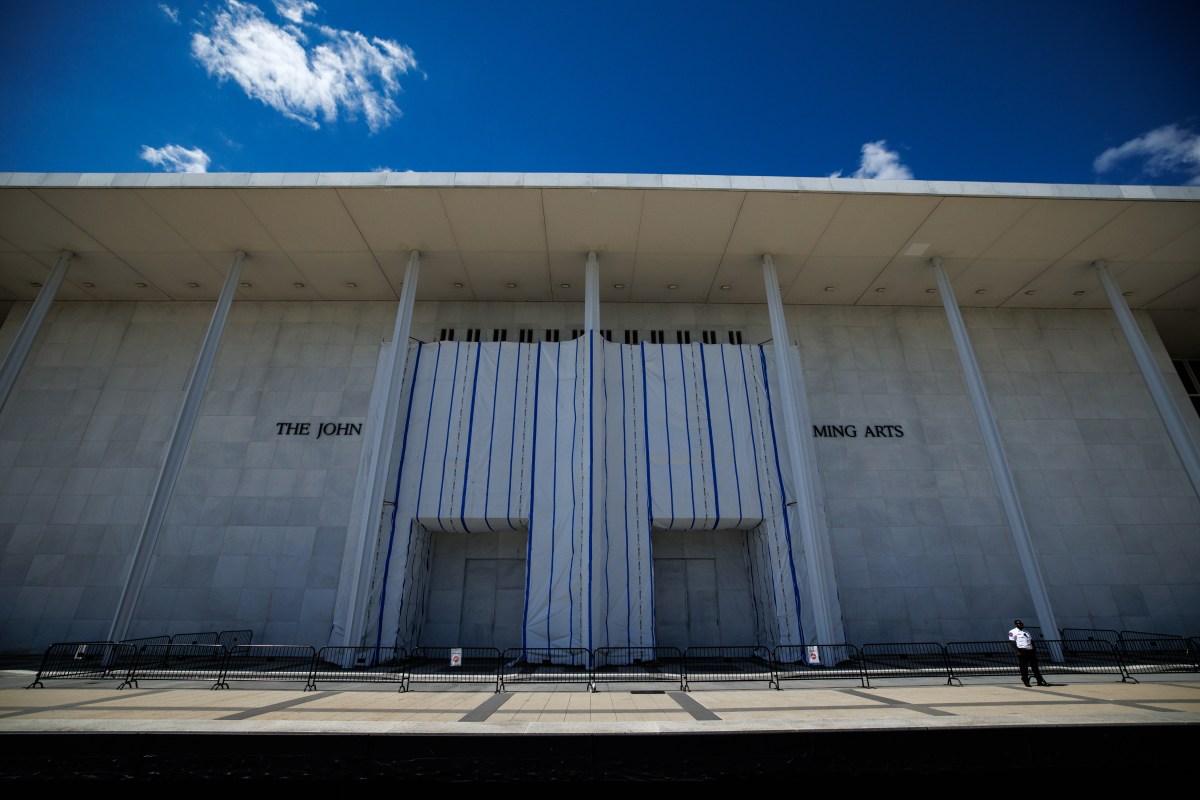
President Donald Trump may get another chance to put his name on the Kennedy Center after the institution’s Trump-appointed leaders warned that it is on the brink of bankruptcy and that adding the president's moniker to the facade, thus ensuring his fundraising efforts, may be the only way to keep it afloat.
The John F. Kennedy Center for the Performing Arts' board is preparing to consider 10 new inscriptions for the building’s exterior, weeks after a federal judge ordered Trump’s name removed and ruled the board lacked authority to rename the institution.
The new proposals would place Trump’s name below the Kennedy Center’s existing name, recasting it as recognition for his role in renovating and raising money for the center.
In a 57-page packet prepared for the board’s Tuesday meeting, center officials warn that they could be unable to meet payroll and routine expenses “within a matter of weeks” and describe the institution as facing “certain fiscal collapse.” They say Trump has offered to raise money to keep the center from bankruptcy but may not provide the same level of oversight or fundraising without “appropriate recognition” of his role.
The board is also considering an immediate closure of the main building, citing serious structural deterioration and the need for a sweeping renovation.
The proposals give Trump and his allies a new path to pursue the recognition that a federal judge previously blocked while tying the fight over his name directly to the Kennedy Center’s financial and physical future.
Newsweek reached out to the White House, the Kennedy Center, and the Department of Justice for comment.
According to a court filing made public Monday by Representative Joyce Beatty, an Ohio Democrat and ex official Kennedy Center trustee who has challenged the renaming, the board has prepared 10 possible ways to put Trump’s name or his associated fund on the building.
The proposals reflect the board’s argument that Trump’s involvement in renovating and financially supporting the Kennedy Center warrants recognition on the building itself.
Earlier proposals approved by the board would have described the building as the “John F. Kennedy Memorial Center for the Performing Arts, Restored and Renovated by President Donald J. Trump," or “Endowed by the Trump Kennedy Center Fund” would be added if that fund reaches $100 million in donations.
The board has also proposed calling the grounds around the building “President Donald J. Trump Plaza.”
The precise wording matters because the Kennedy Center’s board is attempting to characterize the new language not as a formal renaming, but as recognition of Trump’s role in the institution’s restoration and fundraising.
Newsweek reached out to Beatty's office for comment.
The controversy began after Trump took control of the Kennedy Center’s board during his second term.
In February 2025, Trump announced that he was removing members of the existing board and installing new trustees aligned with his administration. He also became chairman of the board.
The move represented an unusually direct intervention by a sitting president in the leadership of the national performing arts center. Trump said he wanted to change the institution’s programming and objected to some of the performances that had taken place there.
Later that year, the newly constituted board voted to add Trump’s name to the Kennedy Center.
In December 2025, the board installed new signage on the building, naming it “The Donald J. Trump and The John F. Kennedy Memorial Center for the Performing Arts.” The move immediately triggered a legal challenge and a wave of artist cancellations.
Beatty, who remained on the board as an ex officio trustee, argued that the board had no authority to make the change. The lawsuit contended that Congress had specifically named the institution and that changing its name required an act of Congress.
This media contains content some readers may find distressing or offensive. Viewer discretion is advised.
The legal battle produced a major setback for the Kennedy Center’s Trump-aligned board. In May 2026, U.S. District Judge Christopher Cooper ruled that the board had acted unlawfully when it formally renamed the institution and placed Trump’s name on the building.
The judge relied heavily on the federal law establishing the Kennedy Center.
The statute originally created the institution as the National Cultural Center. In 1964, after Kennedy’s assassination, Congress amended the law to rename it the John F. Kennedy Center for the Performing Arts and designate it as a memorial to Kennedy.
Cooper concluded that the statute did not give the board authority to unilaterally change that name or create another memorial on the building’s exterior. The court therefore ordered the removal of Trump’s name from the building, as well as from related physical and digital signage and official materials.
The ruling was significant because it rejected the argument that the board could simply characterize the change as something other than a formal renaming.
The judge wrote that Congress had established the Kennedy Center’s name and that the board could not change it without congressional authorization.
Following the ruling, workers removed Trump’s name from the Kennedy Center’s facade in June.
But the fight did not end there. The board subsequently approved another proposal to put Trump’s name on the building, using language that emphasizes renovation rather than a formal change to the institution’s name.
The proposed wording would leave Kennedy in the institution’s principal name while adding a separate acknowledgment of Trump.
The Kennedy Center has argued in court that renaming the institution is distinct from recognizing the president for his role in raising money and overseeing renovations.
Beatty’s attorneys have argued that the distinction does not resolve the problem because the federal statute also limits memorials and commemorative designations on the center’s public spaces.
The Justice Department, representing the administration and the center in the litigation, has also argued that the institution is facing serious structural and financial problems and that Trump's fundraising involvement could be critical to its future.
The latest name proposals come against the backdrop of a much larger crisis. Documents prepared for the board warn that the Kennedy Center could face a severe financial shortfall, including difficulties meeting payroll and maintaining the facility.
The Washington Post reported Monday that the center could be forced to close as early as Tuesday. The newspaper cited a trustee-prepared report that apparently warns of “certain fiscal collapse” and describes the institution as being in a precarious financial position.
The board is also considering shutting the main building for an extended period to undertake major renovations.
A separate resolution prepared for the board would assert that the building is unsafe for continued occupancy. Beatty’s filing disputes that characterization, arguing that the consulting firm's work cited by the board did not actually conclude that the building was unsafe.
The center has separately discussed a lengthy closure for renovations, potentially lasting two years, while moving some major programs to other locations.
The board's proposed resolutions directly link Trump's public recognition to his continued involvement with the Kennedy Center.
According to the documents described in Beatty's filing, the board believes Trump’s support for renovation and fundraising could be jeopardized if he does not receive what it calls “appropriate recognition.” The proposed resolutions therefore present Trump's name as part of a potential financial solution.
The board's position is that Trump can attract donors and oversee a major restoration of the building, and that publicly recognizing that contribution could help secure the funds needed to stabilize the institution.
The dispute over the name is consequently intertwined with a dispute over money.
Beatty and her attorneys take a fundamentally different view. Their argument is not simply that Trump should not have his name on the building, but that the board lacks the legal authority to put another person's name there in the first place.
Congress created the Kennedy Center as a memorial to the late president, who had promoted the arts during his administration, and specifically named it after him in federal law.
The institution was originally conceived as the National Cultural Center. Congress authorized its creation in 1958 to establish a major performing arts institution in the nation's capital. After Kennedy was assassinated in November 1963, Congress moved to transform the project into a national memorial to him.
In 1964, Congress formally renamed the National Cultural Center the John F. Kennedy Center for the Performing Arts. The Kennedy Center describes the institution as established in 1958 and designated a memorial to Kennedy in 1964. Construction began in 1966, and the building opened to the public in 1971.
The statute also restricts memorials and plaques in public areas of the center.
Cooper agreed with Beatty's interpretation in his May ruling, concluding that the board's unilateral effort to rename the institution violated the governing statute.
That creates a potentially important problem for the latest proposals.
The Kennedy Center’s board is scheduled to meet Tuesday to consider two resolutions: one addressing the institution’s worsening finances and another calling for the immediate closure of the main building because of structural concerns. Trustees are also expected to consider 10 proposed inscriptions recognizing Trump’s role in the center’s renovation and fundraising. It remains unclear which, if any, of the options the board will approve.
The proposals are likely to face further legal scrutiny. Cooper is already considering a challenge to the board’s previous plan to put “Restored and Renovated by President Donald J. Trump” on the facade.
Beatty’s latest filing asks the court to consider the new proposals as part of the ongoing dispute.
The court will ultimately have to determine whether the new inscriptions amount to an attempt to circumvent its ruling that only Congress can rename the Kennedy Center, or whether they constitute a form of recognition the board may authorize.
The decisions Tuesday could shape the center’s finances, renovation plans, programming and legal battle over Trump’s name for months to come.
Contact Newsweek editors on this story: Samantha Beech and Sam Wilson.