
Kenya in ‘advanced’ talks with US on critical minerals deal: minister - Semafor
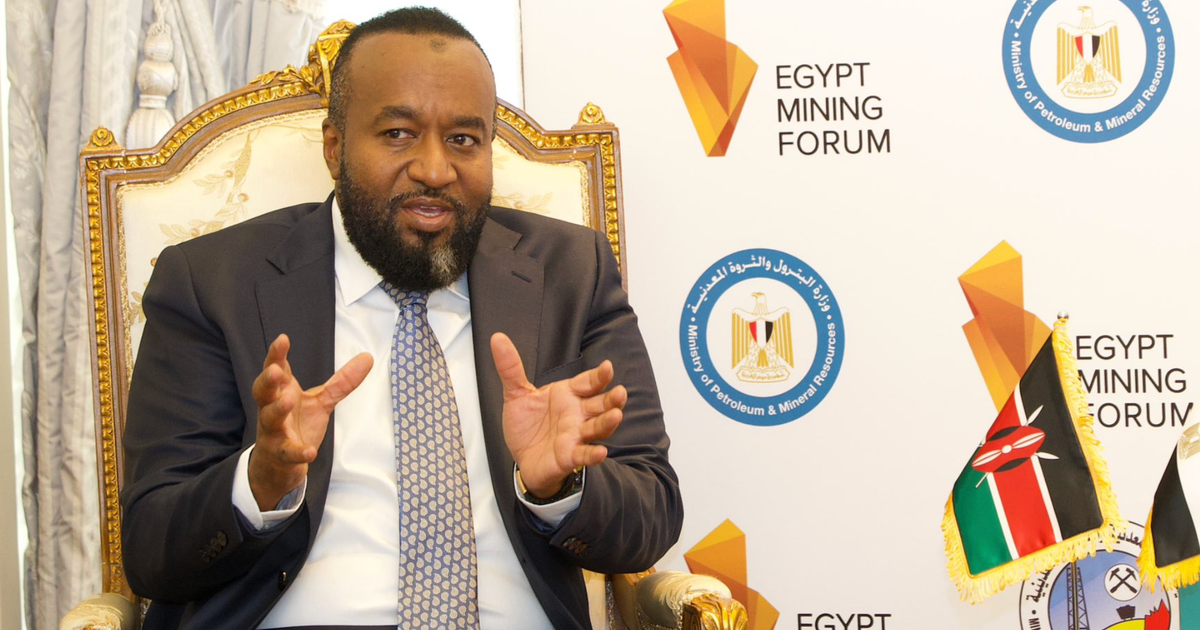
Talks over a deal that would see the US help develop Kenya’s critical minerals processing industry are at a “very advanced” stage, the African country’s mining minister told Semafor, as the nation looks to increase mining’s contribution to its economy.
The talks come against the backdrop of intensifying rivalry between the US and China over access to critical minerals.
Hassan Ali Joho said discussions with US government officials were over the creation of refineries and processing plants in Kenya that partly supply the US. “Several departments of the US [government] are involved in the discussion,” he said in an interview, specifically referencing the US departments of commerce, defense, and state. “Off-taker discussions are ongoing, several products, several markets, several different interests.”
The minister’s comments come weeks after a senior American official said the US was ready to help Kenya to develop its local mineral processing.
Asked about the likely operating environment in Kenya as part of an agreement, Joho — minister for mining, blue economy, and maritime affairs — said: “There has to be all the necessary incentives that the government will provide, such as special economic zones, port access, support infrastructure, and tax concessions.”
Joho said discussions about a critical mineral partnership were “intertwined” with the bidding process to develop Mrima Hill, a coastal deposit that is expected to contain tens of billions of dollars’ worth of rare earth minerals.
He said initial geological studies suggested niobium, a metal used in aerospace manufacturing, is present in Mrima Hill. He added that early stage assessments indicated cobalt, copper, and nickel were also present in Kenya
Joho said six companies were competing in the bidding process for the Mrima Hill project, including American firms and others from Australia and China. He said the bidding process would end in late October, after which the government would hold talks with a preferred company and agree on a deal.
The mining minister said the sector currently contributes around 1% of Kenya’s GDP, but that the government was targeting a 10% contribution within the next decade.
“We are diversifying: we have been a service economy, we have been an agro economy; but now we are keen on opening up the mining sector,” said Joho, adding that the processing materials locally offered the opportunity to drive industrialization and generate wealth among Kenyans.
Washington has announced agreements with several African countries — including DR Congo, Nigeria, and Zambia — aimed at securing access to minerals it deems critical to its economic interests. The move comes amid intensifying rivalry with China, which dominates global supply chains for minerals needed for data center construction, defense equipment, and the energy transition.”
Governments across Africa are prioritizing local value addition instead of raw minerals exports and are focused on improving processing capacity.
Kenya’s President William Ruto has made wealth creation through industrialization a focal point in his pitch to voters ahead of polls next year in which he will seek a second term.
Ruto this month ordered Tata Chemicals to “pack up and leave” the country. He accused the company, which exports soda ash, of failing to process minerals locally to make glass and create jobs. The president’s comments came weeks after Joho ordered the Indian chemicals company to suspend operations at one of its plants due an alleged failure to meet regulatory requirements, which the firm has denied. Joho said the government remained in talks with Tata Chemicals about “compliance issues” that would determine the company’s future in the country. The mining minister said the government was likely to open up a bidding process within the next six months for other companies to operate in Kenya with a focus on processing. “I want to see fine glass produced in-country,” he said. “I want to see the soda ash feed into our industries from our own resources. So the conversation largely is about value addition.


