King Charles' controversial Harry and Meghan letter has unexpected benefit - Newsweek
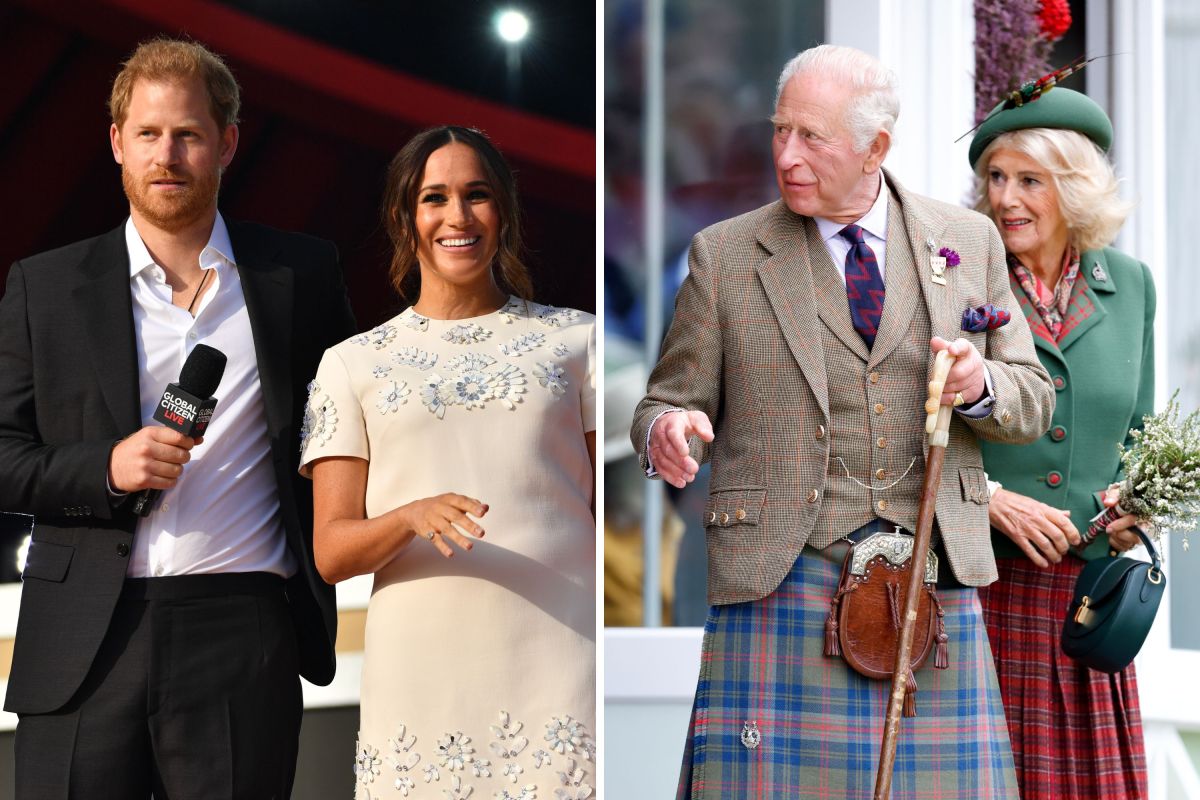
King Charles III's letter describing Prince Harry and Meghan Markle as "private citizens" sparked tension between the two sides, but a security expert told Newsweek the wording could ultimately benefit the couple.
Charles instructed the head of the Royal Household to write to officials, including in government and the military, to confirm the Duke and Duchess of Sussex were not working royals and that their "HRH" titles were not in use.
The letter, whose wording was shared with Newsweek, read: "In short, their position is akin to private citizens with commercial and charitable interests."
Newsweek was told the Sussexes were "surprised" by the timing of the letter, while The Sun reported they wanted "private citizens" changed to "public figures."
Meanwhile, Uganda cited the wording as the reason its armed forces withdrew from Harry's Invictus Games, though the East African country later returned following a call from Charles' private secretary, Sir Clive Alderton.
Alex Bomberg, chief executive of private security firm Intelligent Protection International, told Newsweek there could be a surprise benefit for the couple.
"They have come back to the U.K., but it is made clear that they are private citizens," Bomberg said. "That message from the king that they are private citizens also means they are covered by the same laws as private citizens.
"They have the right to privacy. Yes, there is a public side to them with some of the charity work they do, but they do deserve a private family life," he said.
Newsweek reached out to Prince Harry and Meghan Markle's representatives for comment.
Privacy law in the United Kingdom falls under the Human Rights Act, which does not explicitly exclude working royals, but Harry and Meghan's status as public figures has come up in court before.
In 2019, Meghan filed a privacy and copyright lawsuit against The Mail on Sunday, alleging it breached her privacy by publishing the text of a private letter she sent her father. Meghan ultimately won the case.
While it was being fought, the newspaper defended the coverage on the grounds that it served the public interest by correcting an inaccurate account of the letter put forward by an anonymous friend of Meghan's in an interview with People.
Ted Verity, then editor of the Mail on Sunday and now editor of the Daily Mail, said in a December 2020 witness statement seen by Newsweek: "All members of the royal family enjoy immense wealth and privilege and cost the British taxpayer a significant amount of money.
"It seems to me that there is a legitimate public interest in the behaviour of members of the royal family and their suitability to enjoy those enormous privileges. In addition, there is a proper public interest in the conduct of the royal family as a family, in respect of their relationships with each other."
The king's letter puts on paper that the couple is not to be viewed the same way as royals who, as Verity said, "cost the taxpayer a significant amount of money."
However, the reverse could also be argued. If Harry and Meghan went on the record to argue they are public figures rather than private citizens, that could be used against them in any future privacy lawsuits, should any arise.
Bomberg said: "The press used that message from the palace in quite a negative way but the palace were also saying these are private individuals, so they have got privacy."
Another issue for the couple is whether they get their police protection team reinstated. Newsweek has been told RAVEC, the Home Office committee that decides who gets police protection, met last week to consider the Sussexes' pleas to return the Metropolitan Police bodyguards who were taken away in 2020.
On Sunday, Meghan posted clips of the family's new U.K. life, including walks through the mud in the English countryside and boating on a lake. Social media commentators attempted to identify their location, creating a potential security issue for the couple.
Bomberg said such incidents might help the couple make their case to RAVEC.
"It does enhance the case because the first security breach occurs when the asset is known, or where the asset exists is known," he said.
"For instance, where the children go to school would be a huge breach. Once that becomes public knowledge that becomes a problem."
Harry and Meghan pulled their kids out of an English school this week over concerns about security on the school run. No media outlet had named the school, despite rumors circulating privately among journalists. However, the couple's security team appears to have become concerned about traffic in the area, which reportedly separated the vehicle carrying the family from the vehicle carrying their security team.
A Sussex spokesperson said: “The decision for the children to move school was taken following a discussion with the family’s security team about the practicalities of their current arrangements.
"The parents remain extremely grateful to all the teachers and staff for the love, care and effort they have shown their family. This decision should in no way be interpreted as a reflection on the school or the exceptional care the children have received there."
Bomberg said: "They, as a family, clearly have not sought any publicity about what schools the children are going to or where they are living."
Contact Newsweek editors on this story: Daniel Orton and Sam Wilson.