
Labor’s tough new migration rules target backpackers, foreign students and overstayers
Labor has moved to reset Australia’s two-decade-old migration framework by cutting nearly 40,000 backpackers, tightening the international education system and forcing undocumented migrants to leave, as it stakes its re-election bid on finally reaching its own targets for arrivals and departures.
Home Affairs Minister Tony Burke sparked fights with the Coalition, as well as tourism and hospitality groups, over a working holiday crackdown revealed in his keynote speech. Burke’s plan was designed to “take a higher level of control” of a system that he said had been too loose since the start of the Howard era.
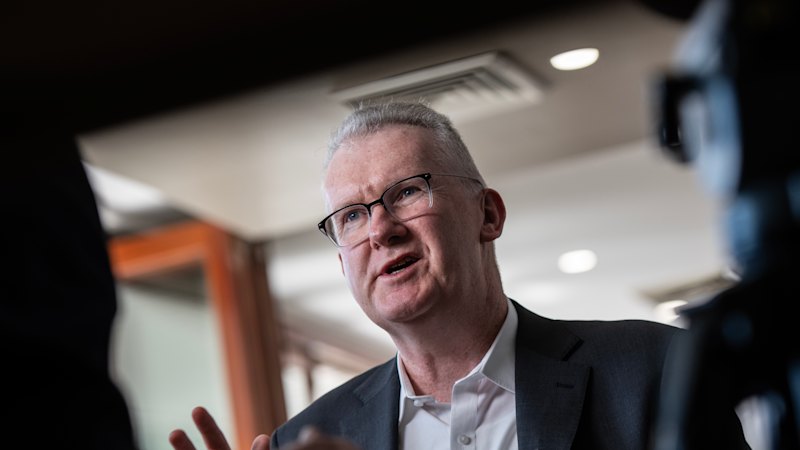
Home Affairs Minister Tony Burke.Steven SiewertAs he tried to neutralise an issue driving support for Pauline Hanson, he revealed that Australia was trying to alter a Coalition-era free trade deal that led to an influx of British tourists without a corresponding flow of Australians to the UK.
He admitted that the migration program needed a shake-up to address hardening public sentiment and said he would not blame the Coalition if Labor failed to hit its target of reducing net migration to 225,000 over two years. The pledge came after the opposition declined to support legislation that would cut students’ right to appeal their rejections and test the legal limits of blocking potentially bogus asylum claims.
“Absolutely not. I won’t say that because that won’t happen,” he said, committing to hitting migration forecasts that will come about around the time of the next election.
Acknowledging that lower migration would help ease the housing crisis, Burke said bringing in more builders would help build homes while reducing overall numbers would put “downward pressure on [rents]”.
“The decision that Australia took when we had a demand-driven program was to say that if employers can get the workers that they need and our educational institutions can get the students … then infrastructure and housing will take care of themselves.
“That is no longer the experience of Australians. Effectively there is now an expectation on us that the pure demand-driven approach to major parts of the immigration system is not what Australians want.”
Six weeks after Burke cancelled his first speech following a cabinet debate about the economic implications of the cuts, he announced Border Force would hire 100 more officers to track down and deport the 77,000 unlawful non-citizens, including by housing them in Melbourne’s mothballed quarantine facility. He said the government would stop students visa hopping for years by applying for a string of lower-tier courses. The skilled migration program will prioritise construction and health workers. Students, except those studying PhDs, will no longer be able to bring in partners or family on secondary visas.
The tough new regulations will not lower the current Labor target but instead spelt out how the government plans to reach net overseas migration of 245,000 by the end of the next financial year and then 225,000 over the next.
The government was buoyed by the release of fresh migration data on Thursday showing net migration moderating from more than 305,000 to 292,000, still well above Labor’s targets but better than expected. One Nation wants negative migration followed by numbers settling at 130,000, while the Coalition wants a figure slightly lower than 170,000. One Nation’s plan has been widely condemned as economically reckless.
Part of the way Labor has started to bring down net migration has been to work behind the scenes to process student applications and backpacker visas much more slowly.
Migration expert Abul Rizvi noted that net migration in the March quarter fell to 101,000, from 107,000 the same time last year. “Lowest since COVID but still very high in historical terms,” he said.
Burke said the government would slightly ease the restrictions on backpacker visas, processing them in 30 days rather than months. But even 30 days is much slower than the usual period of a few days before the recent slowdown, sparking alarm from business figures.
“Targeting working holidaymakers makes no logical sense – they are a motivated and mobile workforce who help fill seasonal work, especially in the regions,” said Australian Hotels Association chief executive Stephen Ferguson.
Labor will create a ballot system, as exists for temporary migrants in China and Vietnam, for the second and third years of backpacker stays. Year two will be limited to 45,000 places, down from the 57,000 this year. Positions for third-year visas will drop from 31,000 to 5000.
Overall, Labor will achieve a significant part of its planned reduction in net migration through these backpacker changes that hurt regional Nationals seats more than Labor’s larger base of seats in the cities. It did not reveal detailed statistics for other visa classes.
Speaking immediately after Burke’s speech, Nationals leader Matt Canavan and National Farmers Federation head Michael Guerin said the crackdown on backpackers would lead to food shortages and price rises. Canavan said the broader policy failed to address the significance of the migration problem Australia faced.
“The government is barely shifting the migration dial, and today’s plan makes no real difference to that,” Canavan said.
Universities Australia chief executive Luke Sheehy said the cuts proposed to the international student numbers would hit the cost of teaching, research and buildings, arguing each international student contributed about $70,000 to the Australian economy.
The Greens also slammed the plan, with party leader Larissa Waters describing it as “a culture war and a dog whistle”. Aiming to pre-empt criticism from his left flank, Burke said Australia’s deportation policy would not at all mirror that of Donald Trump’s controversial ICE agency.
Australian Chamber of Commerce and Industry chief executive Andrew McKellar said the working holidaymaker cut was concerning, but peak bodies representing builders welcomed Labor’s overhaul of the skills program.
Former Labor leader now University of Canberra vice-chancellor Bill Shorten told this masthead Labor’s changes were “fair enough and ones we can live with”, applauding Burke for carving out PhD students.
“It’s time we draw a line under uncertainty for students,” he said, arguing they boosted the economy and cross-subsidised teaching local students. “Australia has got to be clear that we welcome them and they can’t be a scapegoat for everything else.”
The Coalition said Labor’s heart was not in the migration overhaul.
“Australians are being let down. The only way this government can grow the economy is through migration, population growth. It’s failing Australians, and that’s because their economic policies have failed, absolutely failed. Australians are getting poorer, and this is their only answer to try and keep their budget,” Opposition Leader Angus Taylor told reporters.
Cut through the noise of federal politics with news, views and expert analysis. Subscribers can sign up to our weekly Inside Politics newsletter.
You have reached your maximum number of saved items.
Remove items from your saved list to add more.


