Lagos commissioner, Rhodes-Vivour disagree over waste management, flooding - Punch Newspapers

Lagos Commissioner for Environment and Water Resources, Tokunbo Wahab.
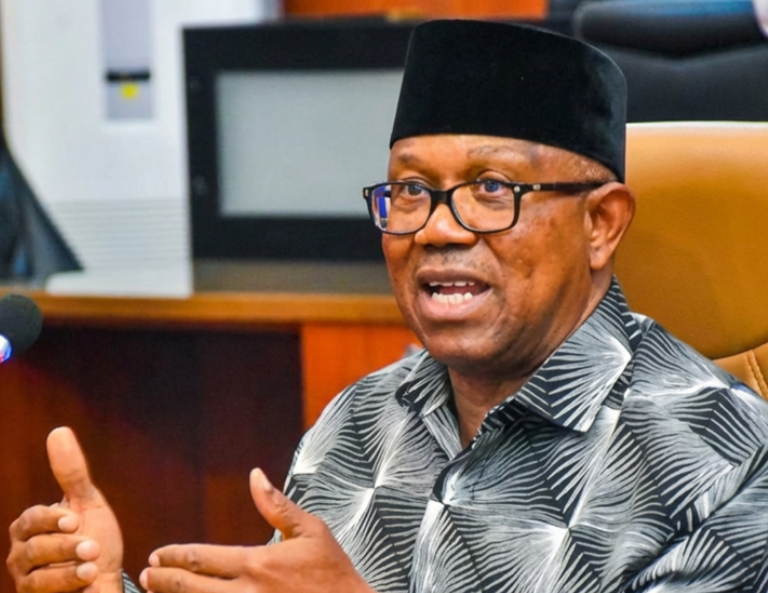
The Lagos State Commissioner for the Environment and Water Resources, Tokunbo Wahab, and the 2027 Lagos governorship candidate of the African Democratic Congress, Gbadebo Rhodes-Vivour, have disagreed over the state government’s management of waste and flooding. The disagreement followed Rhodes-Vivour’s appearance on Channels Television’s Politics Today on Tuesday, where he raised concerns about waste management and flooding in Lagos and described the state as “stinking.” Responding to the concerns, Wahab said while some of Rhodes-Vivour’s concerns were legitimate, it was misleading to suggest that the Lagos State Government had no plan beyond clearing refuse after it accumulated. Lagos generates an estimated 13,000 to 15,000 tonnes of municipal waste daily, Wahab said, adding that the Lagos Waste Management Authority and private sector participation operators evacuated approximately 418,500 tonnes of waste in May 2026 alone. He said this represented an average of about 13,200 tonnes daily. “These figures underscore the enormous scale of the responsibility. They do not suggest that every resident receives satisfactory service. “We acknowledge collection failures, underperforming PSP operators and operational bottlenecks. However, it is misleading to suggest that Lagos has no plan beyond clearing refuse after it accumulates,” Wahab said. The commissioner said waste management was an interconnected system, explaining that delays at disposal facilities could affect truck turnaround, disrupt collection schedules and eventually lead to refuse accumulation in neighbourhoods. “Waste management is an interconnected system. Delays at disposal facilities affect truck turnaround, disrupt collection schedules and eventually create refuse accumulation across neighbourhoods,” he said. Wahab said the rehabilitation of Road E and additional disposal platforms at the Olusosun landfill had improved operational efficiency. “Truck movements across disposal facilities rose to 1,866 in the week following the intervention, while Olusosun recorded an increase from 574 to 1,012 trips,” he said. Beyond emergency interventions, he said the state was investing in Modern Transfer Loading Stations, Material Recovery Facilities, recycling, composting and the Epe waste-to-energy project. “The objective is to transition from decades of pick-and-dump practices to a sustainable system where waste becomes a resource for energy and economic value,” Wahab said. On data collection, the commissioner said, “The principle is straightforward: a modern waste management system must measure what it manages.” He said the government was strengthening property enumeration, geocoded service locations, GPS tracking, weighbridge measurements, collection records and recovery data.See more Punch stories on Google.Add Punch on Google Wahab added that the government was also reforming the PSP system and would sanction or terminate operators where necessary. He said the state needed to ask questions about the effectiveness of its waste management system, including whether every household had an assigned waste collector, whether operators were adequately equipped and whether scheduled collection routes were completed. He also asked, “When residents complain, does anyone respond?” Other questions, according to the commissioner, included whether collected waste was properly treated, recovered or disposed of and why emergency evacuation should become a substitute for reliable daily collection. “These are questions government is answering with measurable performance, not political rhetoric,” he said. Wahab also rejected the idea that the monthly environmental sanitation exercise should be regarded as a substitute for regular waste collection. “The monthly environmental sanitation exercise is not a substitute for an effective waste management system. “Government must provide reliable services, while residents and businesses must equally stop indiscriminate dumping into drains, road medians and public spaces,” he said. He urged the public debate to move beyond descriptions of Lagos as “stinky” and focus on measurable outcomes. “The conversation should therefore move beyond describing Lagos as ‘stinky’ and focus on measurable outcomes: tonnes collected, routes completed, missed collections, complaint resolution, recurring blackspots and waste diverted from landfills,” Wahab said. Sanwo-Olu seeks stronger structures for Africa’s capital markets Hamzat, Sahara boss to headline Real Talk anniversary LSSTF equips 57 LGs, LCDAs for grassroots sports He acknowledged that the state still had work to do but said it was inaccurate to suggest that no action was being taken. “Lagos has significant work ahead, and we must acknowledge that honestly. But to suggest that nothing is being done ignores the investments, infrastructure and operational reforms already underway,” he said. On flooding, Wahab said Rhodes-Vivour’s criticism had to be considered against Lagos’ coastal geography, tidal locks and the growing impact of climate change. “As an architect, he should appreciate that even the most resilient drainage infrastructure cannot entirely eliminate flash flooding in a coastal megacity,” he said. According to Wahab, the state had invested in drainage infrastructure, pump stations, year-round maintenance and flood abatement operations, while also undertaking wetland preservation and removing structures on floodplains. He said the interventions had reportedly reduced flooding incidents by between 75 and 80 per cent statewide. “It is therefore misleading to suggest that flooding is being ignored or that no meaningful progress has been made. “While challenges remain, the evidence of sustained interventions must form part of the conversation,” Wahab said. He added, “Flooding is a global coastal challenge, not one peculiar to Lagos.” “The relevant question is not whether every flood can be prevented, but how effectively a city prepares, mitigates risks and protects its residents,” he said. FILE: ADC Lagos Governorship Candidate, Gbadebo Rhodes-Vivour. However, Rhodes-Vivour, in a response, criticised Wahab’s statement, saying it contained “lengthy explanations, with little by way of solutions.” “Plenty of prose, very little results,” the ADC candidate said. He argued that accumulated refuse was a major contributor to flooding, saying waste could be washed into drainage channels during rainfall even when residents did not deliberately dump it there. “It might not be obvious to you and your principals, but most Lagosians and even foreigners can see it clear as day – REFUSE! GARBAGE! WASTE! “If you’re not packing the refuse, it will stack up and be washed into the drainage by the rain. Citizens don’t even have to dump their refuse in the drains. The rain will do it for them,” Rhodes-Vivour said. Rhodes-Vivour also questioned the density of roads and drainage infrastructure in the state. “Do you have any idea how many roads (and therefore the accompanying drains) that Lagos State has per km² of land? I checked,” he said. He claimed Lagos had 1.3 kilometres of roads per square kilometre of land, compared with 13.6 kilometres in Singapore. “In case you’re wondering what this has to do with flooding – more drains means less water on the road surfaces,” he said. Rhodes-Vivour proposed that the government clear existing drains and major drainage channels of waste, build more roads and drains and develop boardwalks or embankments along lagoon and river shorelines. He also proposed the use of sluice gates and high-powered water pumps to regulate water levels inland of the gates. “I’m merely putting out this information because these are just some of the pragmatic, practical measures @GRVlagos and I will implement to alleviate the perennial flooding problem,” he said. Rhodes-Vivour also criticised the APC-led administration in Lagos, saying, “27 years of incompetence have shown us that your APC government is completely and unarguably incapable of implementing these simple measures.” He concluded by calling on Lagos residents to work with his political platform to “Make Èkó Great Again.” The exchange comes ahead of the 2027 Lagos governorship election, with waste management, flooding, traffic and other quality-of-life issues expected to feature prominently in the political campaign. Fawzi Kehinde Fawzi is a journalist and subeditor covering a wide range of beats including politics, metro, and international news, among others. He also optimises stories for digital audiences.
All rights reserved. This material, and other digital content on this website, may not be reproduced, published, broadcast, rewritten or redistributed in whole or in part without prior express written permission from PUNCH.
Stay informed and ahead of the curve! Follow The Punch Newspaper on WhatsApp for real-time updates, breaking news, and exclusive content. Don't miss a headline – join now!
Stay in the know—fast. Get instant alerts, breaking headlines, and exclusive stories with the Punch News App. Download now and never miss a beat.