
Luxury travel in private jets is expensive: Here's the climate cost
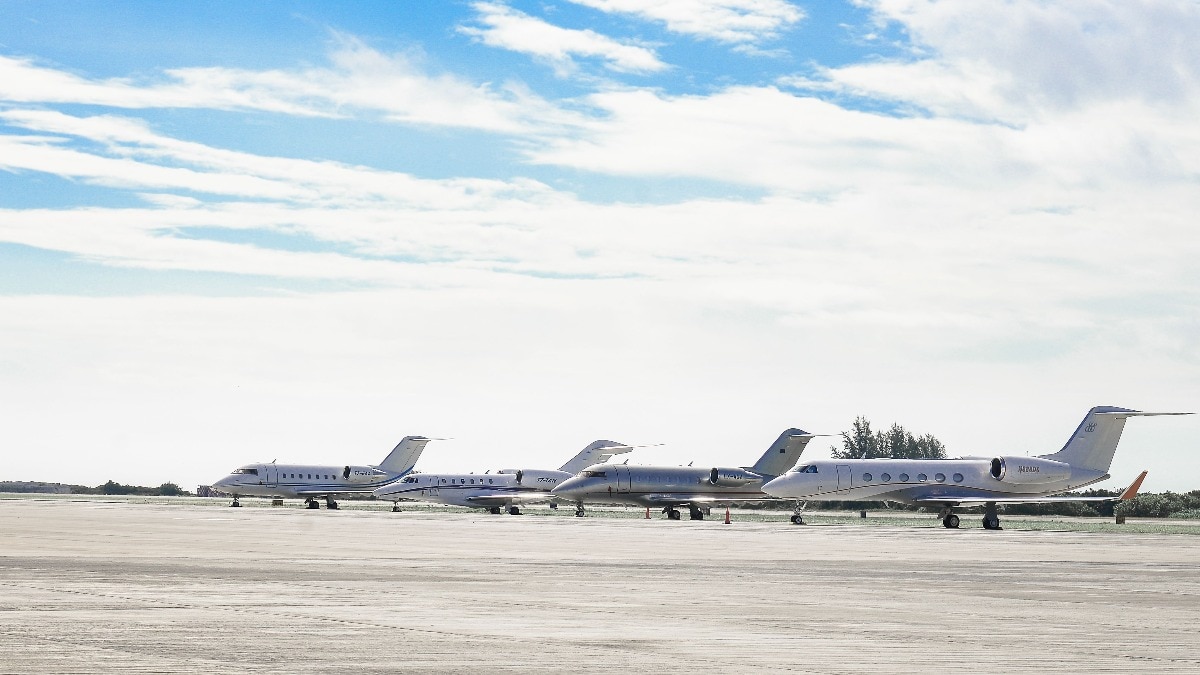
The world's wealthiest travellers are increasingly taking to the skies in private jets, and the climate cost of that luxury is becoming a matter of concern.
This damaging luxury is showing up in the expanding private aviation sector and its consequent climate footprint, even as countries try to cut emissions, a new report from the US-based Institute for Policy Studies (IPS) has highlighted. Private jets are seen parked inside a hangar in Paris. (Photo: Pexels)
The United States, the world's second-largest polluter, accounts for nearly 69% of the world's registered private jets, the report said.
“Most people wish they could fly private, especially with how degrading the experience of commercial travel is,” Chuck Collins, a co-author of the report, told news agency Reuters.
“But people don’t know that we subsidise commercial and private jet consumption here in the US and it’s the most polluting form of transportation,” he added. Activists use mobile billboards to highlight the disproportionate pollution caused by private jets. (Photo: AP) PRIVATE JETS'S LARGE CLIMATE FOOTPRINT
The problem is rather simple, it has to do with the fact that private jets burn fuel. They carry far fewer people than commercial aircraft, meaning emissions are spread across a much smaller number of passengers.
A 2025 analysis by the International Council on Clean Transportation estimated that private jets produced up to 19.5 million tonnes of greenhouse gases in 2023.
A separate scientific study found that private-aviation emissions rose 46% between 2019 and 2023.
The IPS report estimates that a private-jet passenger can be responsible for 10 to 14 times or more emissions than a passenger on a commercial flight and about 50 times those of someone travelling the same route by rail. A sleek private jet is seen parked on the tarmac. (Photo: Pexels)
Then there's the issue of private jets often flying at higher altitudes.
At such heights, aviation emissions can have additional warming effects beyond the carbon dioxide released from burning fuel.COST OF LUXURY HARD TO IGNORE
The IPS report noted that private jets are not used only for business.
In fact, at least half of private-jet operations are linked to recreation, holidays and personal luxury travel. Meanwhile, major global events can produce enormous bursts of private aviation as flocks of millionaires and billionaires fly to venues.
During the 2026 FIFA World Cup, more than 92,000 private-jet flights generated an estimated 1.5 lakh tonnes of excess emissions, according to the report. A front view of a private jet parked on the tarmac. (Photo: Unsplash)
Collins argued that reducing this footprint will require more than cleaner fuels.
“There are things," he told Reuters, "institutions can do to discourage private jets and invest in high-speed rail, stop short-haul flights and find real alternatives.”- EndsPublished By: Aryan Published On: Sep 19, 2026 12:30 IST


