MAGA Is BEE in Reverse: The United States Has No Business Lecturing South Africa on Race and Economic Preference - IOL
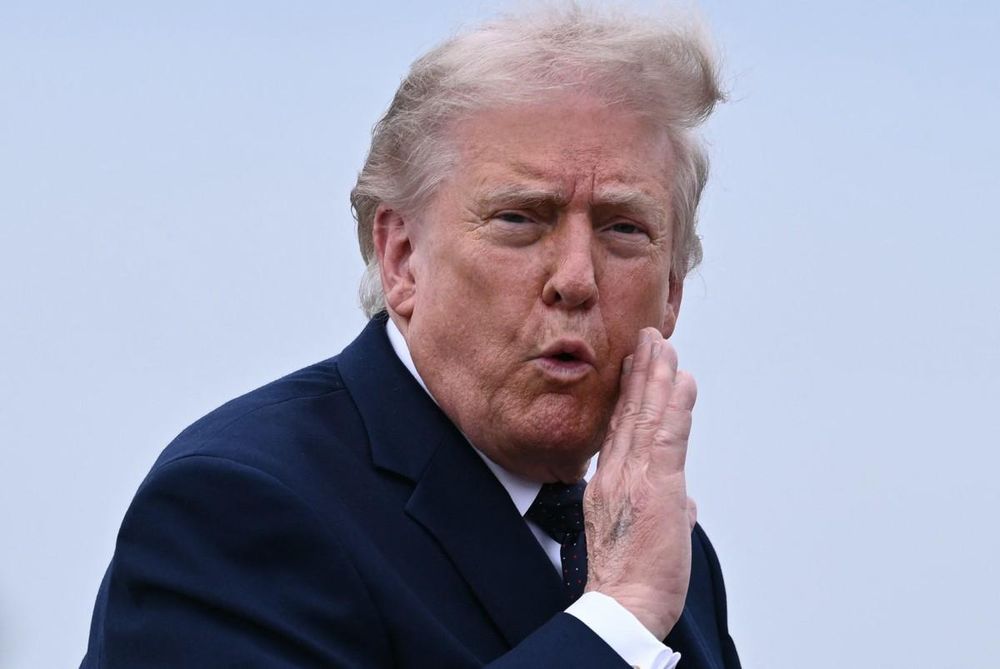
Shabodien Roomanay argues that Washington’s criticism of South Africa’s race-conscious economic policies is undermined by America’s own use of tariffs, industrial policy and “America First” economic nationalism.
There is something profoundly ironic about Washington lecturing South Africa on race, economic preference and the treatment of minorities.
The Trump administration accuses South Africa of racial discrimination against Afrikaners, condemns Black Economic Empowerment, attacks land-reform policy and has imposed fresh visa restrictions on South Africans whom it says support discriminatory policies. Washington has also warned that further measures may follow. Pretoria, for its part, has rejected the accusations as a distortion of South Africa’s post-apartheid transformation project and has insisted on its sovereign right to legislate for its own citizens.
The question Washington should first answer is deceptively simple: Is MAGA if not a form of economic nationalism designed to advantage Americans, American workers and American capital? And if the principle is that a government may deliberately use economic policy to favour its own historically disadvantaged or strategically important constituency, then MAGA and BEE have far more in common than a depleted Washington would care to admit.
MAGA = BEE, not literally, but in political method. BEE is built around a political proposition: South Africa’s economic order did not emerge from a neutral marketplace. It emerged from centuries of colonialism and apartheid. Consequently, simply declaring everyone equal before the law does not automatically produce equality of economic opportunity.
The Trump doctrine begins from a strikingly similar premise; although applied to a different historical experience.
The “America First” proposition says that the United States has been disadvantaged by globalisation, foreign competition, trade deficits, immigration and international institutions. The remedy is not simply to allow markets to operate neutrally. It is to intervene: impose tariffs, subsidise domestic production, restrict imports, favour domestic industry and use the enormous purchasing power of the American state to reshape economic outcomes. Or threaten extinction.
BEE says: policy must deliberately alter inherited economic outcomes.
MAGA says: policy must deliberately alter economic outcomes in favour of America.
Indeed, Trump’s tariff strategy makes the contradiction particularly obvious. A tariff deliberately makes foreign goods less competitive in the American market. It is a state-imposed preference for domestic production. Trump has repeatedly used tariffs as leverage to force other countries to change their behaviour and to encourage production inside the United States.
So there is a delicious question for Washington: If it is legitimate for America to use state power to favour American workers and American companies, why is it inherently illegitimate for South Africa to use state policy to broaden Black participation in an economy overwhelmingly shaped by white ownership inherited from apartheid?
One can criticise BEE. South Africans should, and have, particularly where it becomes bureaucratic, politically captured, corrupt or economically counterproductive. But criticism is not the same thing as imperial instruction.
Now, let’s consider the American racial account. Before Washington assumes the moral high ground, perhaps it should examine America’s own racial statistics. The comparison is glaringly uncomfortable.
That is not an argument that White Americans are personally responsible for these disparities. Nor does it prove that every American institution discriminates against Black citizens. It does, however, establish something that should be obvious: America itself remains a society in which race and economic position are strongly correlated. And therefore the spectacle of Washington presenting South Africa as though it has solved the problem of racial inequality is difficult to take seriously.
America has made genuine progress. The 119th Congress contains a record 66 Black members, representing about 12.2% of the voting membership. Black Americans constitute roughly 14% of the U.S. population, so Black representation in the House is now broadly proportional to population.
But the wider congressional picture remains disproportionately White.
Pew Research Centre found that 74% of Congress was non-Hispanic White, compared with 58% of the U.S. population. In other words, White Americans remain substantially overrepresented in the national legislature. This is important not because representation should mechanically mirror demographics, but because it exposes the absurdity of simplistic American lectures about racial preference. America has its own long and unfinished struggle with race. South Africa has another.
Here is where the MAGA-BEE comparison becomes particularly potent. South Africa is told that preferential economic policies distort markets. Yet Washington has spent years using tariffs precisely because it believes markets, left entirely to themselves, can produce outcomes contrary to national interests. Trump’s trade policy is explicitly interventionist. The administration has used tariffs as bargaining weapons, industrial policy as economic strategy and market access as diplomatic leverage. The United States has even threatened or imposed trade measures against friendly countries when they refuse to accommodate Washington’s preferences. So the difference is not that America believes in a pristine, colour-blind, hands-off market while South Africa believes in intervention. The difference is whose interests Washington believes deserve intervention.
America says: Protect our workers. In other words, “America First”.
South Africa says: Transform an economy still profoundly shaped by apartheid. USA calls this “racial discrimination”. That is a squint eyed double standard.
The most troubling element of the current dispute is not even the disagreement over BEE.
It is the manner in which Washington is conducting the disagreement. The United States is entitled to criticise South African policy. South Africa is equally entitled to criticise American policy. But an ambassador is a diplomat, not a colonial governor. When Washington threatens sanctions, visa restrictions and further punitive measures unless Pretoria changes domestic policies, the relationship begins to resemble conditional sovereignty: you remain sovereign, Washington says, provided you govern in ways acceptable to Washington. That is an extremely dangerous precedent.
The latest U.S. measures have explicitly targeted South African officials and others whom Washington associates with policies concerning racial discrimination and land reform. The Trump administration has also previously cut assistance to South Africa and excluded South African officials from G20 participation. This is not ordinary diplomatic disagreement. It is coercive diplomacy. And when an American ambassador, Bozell, or administration official effectively tells South Africa which domestic economic policies it should repeal, amend or abandon, South Africans are entitled to ask: When did Pretoria become a subordinate jurisdiction of Washington? South Africa is not an American state. It is not a former American colony. It is a sovereign constitutional democracy whose domestic policies may be criticised but cannot legitimately be dictated to by another government.
None of this requires denying that some Afrikaners experience crime, economic insecurity, political alienation or genuine anxiety about their future. Their concerns deserve to be investigated seriously. But there is a vast difference between acknowledging those concerns and accepting the sweeping claim that South Africa is conducting a campaign of “white genocide”. The latter requires evidence. Washington’s claims have repeatedly been challenged by the South African government and by independent reporting. Recent U.S. policy has nevertheless continued to elevate the Afrikaner issue into a central element of bilateral relations, including through a special refugee programme and now visa restrictions. A serious government should distinguish:
Clearly, USA foreign policy is being shaped by lobby groupings. AIPAC and AFRIFORUM. Is it necessary to consider the bona fides of these agencies?
Europe, too, has increasingly been forced to confront an uncomfortable question: can Washington still be relied upon as a predictable ally? Trump has threatened to withdraw American troops from European countries, attacked European allies over their support for U.S. policy during the Iran conflict and repeatedly questioned the assumptions underpinning NATO. A great power certainly has the right to demand more from its allies.
But alliances collapse when one partner assumes that loyalty is compulsory while reciprocity is optional. The result is predictable: Europe begins discussing alternatives.
That is precisely what happens when a hegemon becomes unpredictable.
The Iran issue is perhaps the clearest illustration of Trump’s bizarre and volatile foreign-policy style. Trump and his disciples have simultaneously presented themselves as a dealmakers and threatened Iran with annihilation if it does not accept American demands. In his September 2026 address to the United Nations, he again warned that Iran could be “annihilated” while simultaneously holding out the prospect of a future agreement. That is an extraordinary diplomatic posture: negotiate or be destroyed.
There is nothing inherently wrong with strength in foreign policy. Deterrence sometimes requires credible threats. But deterrence depends upon credibility, consistency and strategic clarity. When threats repeatedly escalate, recede, reappear and become intertwined with promises of negotiation, allies and adversaries alike begin asking whether they are witnessing strategy or improvisation. Iran’s resolute defence of its sovereignty has shown Trump that his bullying tactics are wearing thin. The first nation to stand up to and counter his verbal diarrhoea.
The issue is not whether Trump is “crazy”. It would be irresponsible to diagnose a political leader’s mental health from public behaviour. The more defensible criticism is political: Trump’s foreign policy increasingly appears erratic and personalised. He can threaten annihilation and offer negotiations. He can threaten allies with tariffs and then demand their loyalty. He can demand European support while questioning America’s commitment to Europe. He can denounce South Africa’s race-conscious policies while presiding over an American economic programme built around explicit preference for American workers and producers. The common thread is not madness. It is an infantile “mamma see what I am capable of” brandishing of power without domestic constraints. Largely to satisfy his own ego and pander to his capital driven support base.
The deepest problem in the Washington-Pretoria dispute therefore goes beyond BEE.
It is the assumption that because America is more powerful economically and militarily, it possesses a superior right to define the legitimate boundaries of South African policy.
That is precisely the mindset the post-colonial world spent decades trying to escape.
South Africa should absolutely reform BEE where it fails. It should confront corruption.
It should punish incompetence. It should accelerate investment. It should reform land policy where necessary. But these reforms must be made by South Africans, through South African institutions, for South African purposes. Not because an American administration has threatened visas. Not because Washington dislikes the governing coalition. And certainly not because an American ambassador believes Pretoria needs to be told how to govern itself. In fact, I have previously written that Bozell, given his history of pro-apartheid comments and activities should have been declared persona non grata before he landed here.
Before the United States lectures South Africa about racial preference, it should explain why America’s own government is entitled to say: America First.
Before Washington condemns economic transformation, it should explain why it is entitled to impose tariffs to protect American producers. Before Washington demands that Pretoria treat all citizens identically regardless of historical economic position, it should explain why American industrial policy is permitted to favour strategically important domestic constituencies. Before Washington claims the mantle of racial neutrality, it should look honestly at its own homicide, incarceration, unemployment, wealth and political-representation disparities. And before an American diplomat tells South Africa what policies it should adopt, Washington should remember a fundamental principle of international relations: South Africa is not America’s colony.
The irony is almost too perfect. America says it wants to make itself great again. South Africa says it wants to transform an economy created by colonialism and apartheid. Both projects involve governments deliberately using state power to alter economic outcomes.
Perhaps the real difference is not whether government should intervene. Perhaps the real difference is who gets to decide whose interests deserve protection. And that is precisely why South Africa should reject with absolute disdain the colonial call. While remaining perfectly willing to debate, reform and improve its own policies. Sovereignty does not mean that South Africa’s policies are beyond criticism. It means South Africans get the final say. Not Trump or anyone else.
Shabodien Roomanay argues that Washington’s criticism of South Africa’s race-conscious economic policies is undermined by America’s own use of tariffs, industrial policy and “America First” economic nationalism.
* Shabodien Roomanay is the board Chairman of Muslim Views Publication, a founding member of the Salt River Heritage Society, and a trustee of the SA Foundation for Islamic Art.
** The views expressed do not necessarily reflect the views of IOL.