Mammootty at 75: The man, the myth and the Malayalam cinema star - The Indian Express
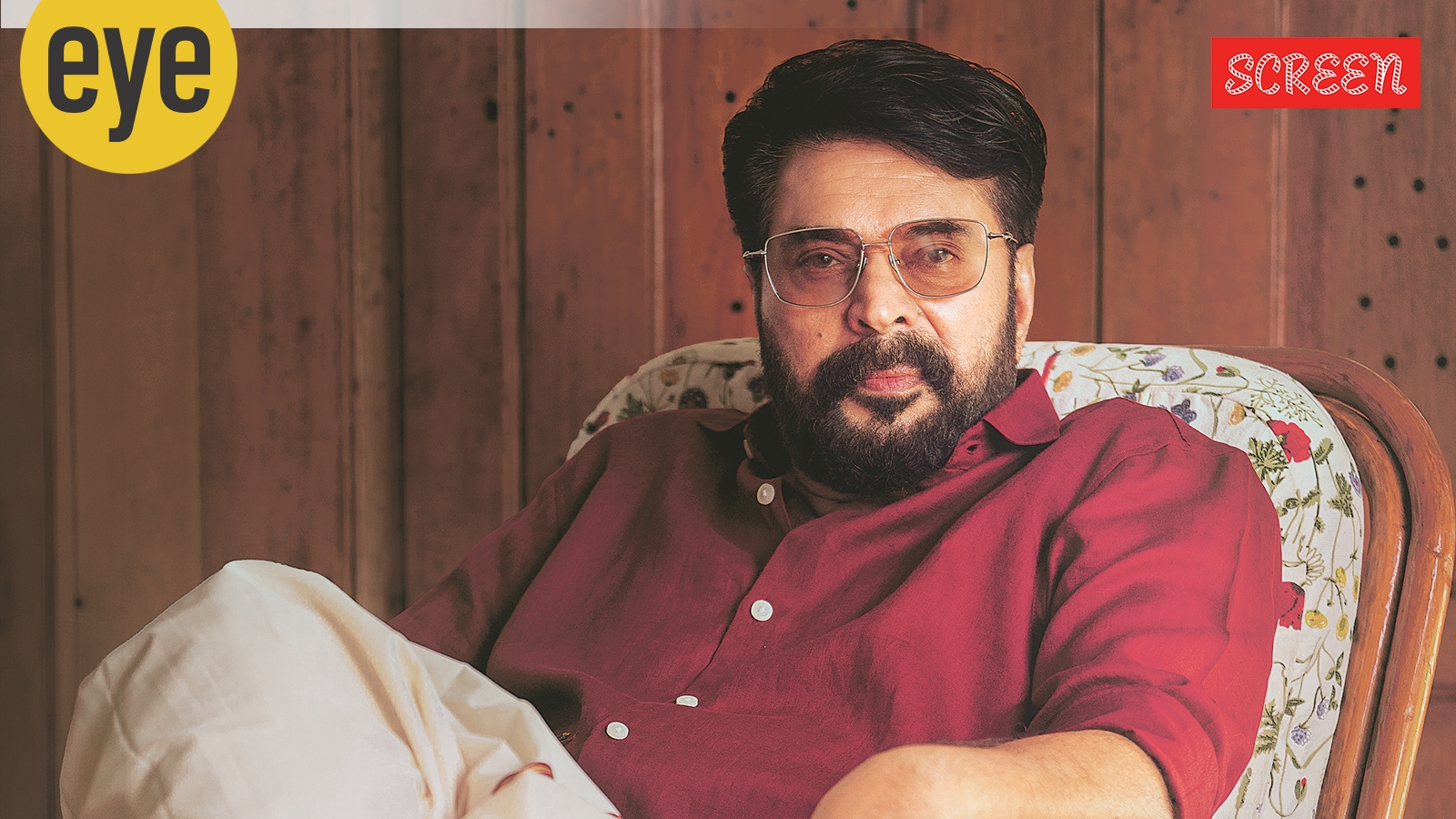
Rajasekharan Pillai, Thakazhi Rajasekharan to the film crowd, met him at a food counter. This was 2004, the first-class lounge at Singapore airport.
Rajasekharan was a McKinsey senior consultant then and flew often enough that the lounge staff knew him by face. They had him in a cubicle and were carrying his food across. A few feet away, a man stood at the counter looking lost, working out what he could eat. It was Mammootty.
Rajasekharan went over and introduced himself. It took the actor a moment, and then he had it, not the name so much as the story that came with it. Years earlier, fresh out of engineering college and a film diploma, Rajasekharan used to tip the waiters at Trivandrum hotels so they would tell him when a Padmarajan (filmmaker-screenwriter) or a Mammootty walked in. On one of those evenings he met Mammootty, long enough to pitch a film. That film was never made. But Mammootty remembered; he remembers pitches.
Since then, for the last 20 years, they have talked most days. The way you talk to that one friend you can call for nothing — from a car, from a set, from a lounge before a flight. On the phone, they are both Mr Perera, after an old Jose Prakash villain, so that whoever is standing next to the actor, and someone is always standing next to him, cannot tell who is on the line.
The measure of how close anyone is, is seen at Mammootty’s dining table. Only three people come to it uninvited. Rajasekharan, the businessman; Anto Joseph, who runs film matters and George, who runs the days.
While I tried multiple times to reach Mammootty for an interview in the days leading up to his birthday on September 7, and was snubbed, it left me with a strange kind of glee, like a child who had dared to ask his father for an ice cream knowing he will be promptly turned down.
The night before the birthday, Mammootty casually rang Rajasekharan who asked, “What plans for the birthday?”
“I’ll get up in the morning and dance with Sulu,” Mammootty told him. Sulfath Kutty, his wife of 47 years. “When Chaalu and Surumi get up, I’ll dance with them.” Dulquer Salmaan is Chaalu at home, Surumi is the daughter. “Pisharody and Anto at noon, another dance.” Ramesh Pisharody, comedian-actor who has lately drifted into politics, is one of the faces often photographed beside him. “At night, we will do a skit.”
Mammootty does not dance. Everyone in Kerala knows this. For most of his career he was the one who stood stiff through a song while Mohanlal in his films did it like drinking water. It was one of the few things the other M had over him that nobody bothered to argue over. His 2005 film Rajamanikyam was where Mammootty gave in, danced badly on purpose and let the hall laugh, and the hall laughed with him. So a birthday laid out as a full day of dancing was the man having a go at himself, delivered straight.
Nobody got to ask him how the day went. He does not like the season, has never liked it and does not give interviews in it.
Bipin Chandran, the screenwriter who has written three books about him, was once sent by a magazine to set up an Onam cover marking his 50 years in cinema. Mammootty would not have it. The film they were counting from, Anubhavangal Paalichakal (1971), has him in one shot, a pair of rolling eyes in a crowd. His real roles came only in the 1980s.
He cannot, therefore, simply walk into a tea stall or a Lulu Mall, so the world is brought to him. There are some in his circle who get photographed and ones who do not. On politics, he may be closer to John Brittas, the CPM’s Rajya Sabha man than anyone visible. On books, with writer VK Sreeraman. A dozen or so others in that circle hardly ever photographed. They might get a call from him on an ordinary day and it is not about cinema. It is about the news, the rain, what onions cost.
Mammootty often anchors the television awards of TV channel, Kairali — their Jwala award for women entrepreneurs, Kathir for farmers and Phoenix for inspirational life. From the stage, he tells each winner’s story. You sit there and hear your own life told back to you by Mammootty.
Krishna, who won a Jwala, runs a small brand called Suee. She gave him a shirt. He wore it that week, then ordered three more. The gesture of support stayed with her as did everything that preceded it, especially him knowing their story before they even reached the stage. “It took me a while to recover,” she says.
Chidambaram, one of the young directors he invited home recently (he does that with new talent), said sitting with him was like sitting with a karanavar, the old head of a tharavad (ancestral home). “No fear in the man, no insecurity, bring him any dare and he will take it.” So where does the karanavar go when he doesn’t want to be a karanavar? “He comes to people like me to live like a normal man,” says Rajasekharan.
Their stories are the kind you tell about a college friend. He came to Rajasekharan’s daughter’s arangetram (dance debut), sat through it like any other uncle in the hall. When Rajasekharan’s sister died, it was Mammootty who sat with him.
A few hours of being nobody in particular is what the Rajasekharans of the world are for. The other place he goes for that is the charity he mentors, The Care & Share International Foundation. For his last birthday, more than 40,000 people donated blood because Mammotty had asked.
Director-screenwriter Adoor Gopalakrishnan’s films have put the Malayali on the world’s greatest festivals. Together they made Anantaram (1987); Mathilukal (1990); Vidheyan (1994) and reunited for Padayaatra in 2026. Adoor says that in 40 years, they never once talked money. Instead, the last time Adoor called Mammootty, he even offered to produce the film, “Tell me what you need.” Perhaps why Adoor, who lets no actor read his script before it is a film, makes an exception for one. This last film needed a central jail setting. An additional chief secretary refused and kept refusing even after the chief minister’s office pushed. This was one of the rare instances anyone in Kerala said ‘no’ to Mammootty.
We’ll build one, Mammooty said. He brought in art director Shajie Naduvil and they put up an entire central jail set and Adoor felt it was better than the real thing. “Now I want to thank that officer in the credits,” says Adoor, “for making my film better.”
But then, why does Mammootty do what he does? Something changed after Covid. He was at home for 200-odd days and all he did was watch and read. What came out of it was Bheeshma Parvam (2022); Nanpakal Nerathu Mayakkam (2022); Kaathal – The Core (2023) and Bramayugam (2024).
A film takes longer now that he can do only four to six a year. For each one, he gets paid what a good overseas player gets for an entire IPL season. So he has to be choosy, and he can afford to be. “Fundamentally, from now on, I want to do something that genuinely touches me, something different from Mammootty. It doesn’t necessarily have to be commercially successful,” he told Rajasekharan.
The test for a risky script is whether any other producer in Kerala could carry it. If none can and he wants the part, Mammootty makes it himself.
Young directors who win awards at festivals abroad know they cannot raise that kind of budget but they also know that Mammootty is still available. Which is why, most of them have a screenplay for him. Stand outside a coffee bistro in Kakkanad or catch a short-film assistant moonlighting on a delivery bike in Panampilly Nagar or ask an indie maker like Don Palathara or even T Hariharan, past 80 and past 60 films, how their Mammootty script is coming along, they will have an answer.
Rahul Sadasivan is one of them. A London Film School graduate with an obsession with the horror genre and one decent film behind him (Bhoothakaalam, 2022), he walked into writer TD Ramakrishnan’s house with the germ of an idea and three things fixed. Horror. Black and white. The lead had to be Mammootty. That became Bramayugam, featuring him as a malevolent spirit of the old lore, hiding inside an old man’s frailty. TD, who wrote the dialogues, has a way of expressing what the actor can do: “A very savarna body the elite loves to look at, and in the same breath a vile fellow who preys on women, and for both, people say only Mammootty can do it.” He is Sethurama Iyer, the intelligent, unbribable Brahmin cop, and the man in Kalamkaval, who throttles a woman on a bed within the first 10 minutes of the film. For the audience, it was as if half of the movie was playing inside their head.
Perhaps because a lot of Kerala is in that body. For three generations, the ordinary Malayali man — dark, short, going bald, a paunch by 40 — has measured himself against Mammootty. And the state built its idea of the correct man partly out of what he played. If Mohanlal is the mask you put on to get out of Kerala, then Mammootty is the arrival, the Malayali who has already got to the place — modern, secular, in charge.
Academic J Devika recently called that Kerala a figment of an idea sold on green-covered tourism reels and home-delivered banana leaves sadhya, cut loose from the reality of a hillside in Wayanad that comes down in one night’s rain. He is that figment with a body. It is a lot to hang on a man.
Also Read – I discovered Mammootty late. Now I understand why he’s one of India’s greatest
None of this makes him the oracle the fans want. In the last 10 years, he has done a lot of films that sank. Rajasekharan equates it to how Sachin Tendulkar knew where the ball was going before it hit his bat. Sometimes, Tendulkar still got out. But when he middled one, the whole ground knew. Bramayugam was middled. It started a conversation outside Kerala and Mammootty will walk later this month to bag his fourth National Award, more than what any Malayalam actor holds.
But the man is not without flaws. He is known to flare up even over something small. Once for an interview, he expected to meet a senior editor but a lifestyle reporter was sent instead. Mammootty did the whole interview lying face down on a bench at the edge of the seat, only half listening to the questions the reporter had for him. Everybody has a story of him doing some version of that.
But through all of this and nearly 400 films, there has been one steady presence, and she came in before any of it. It was 1979. Mammootty was then a lawyer with no cases and a marriage was being arranged. He told his family to hold on. They would not. He knew he was good looking, and he was afraid she would marry the face and get short-changed for the rest of her life. So he purposely grew a beard for two weeks and went to see her at his worst. She took him anyway.
Forty-seven years later, she has the first dance on his birthday.
Cocky, arrogant and stylish. This is a sample of peak commercial-hero Mammootty as a swaggering IAS officer taking down a corrupt politician. It is three hours of quotable dialogue and full-throttle machismo. Place this in a wave of near-identical cop/officer thrillers built entirely around him for years before and after, and it offers a study in what star presence means, how someone commands a frame purely through bearing, walk, and voice, with almost no interiority required. It also explains how he popularised the expected norms of macho manhood in his prime, as the manly man who pummelled the bad guys, rescued the girl child and means business.
As times changed, being macho became a regressive trait. So if Mammootty is not macho, is he still Mammootty? The man who once carried the suitcase and rescued the girl child now sits on the floor, jobless, and, running out of options, bathes his teenage daughter. She has cerebral palsy and on top of it, her sexuality is waking up. The man in him, like his macho past, has no clue how to handle this woman. But he feeds her, cleans her, makes faces so she laughs, even dances for her. There is no triumph in the climax. He cries, more than once, and it lands harder because for 30 years he was built as the man who does not.
The beauty of this role shows better when you know who he was when he took it. A year before, he played a generous, self-sacrificing elder brother in a sentimental family hit, the kind that keeps a star sanguine at the peak of his stardom. Then he chooses this, a feudal tyrant who terrorises women and eventually destroys his own servant’s wife, in an arthouse film with no music. Nothing to like about the man. Yet his star body, the one built over a decade of playing heroes, is made to walk differently, spit, sit with contempt, wear his mundu like a man who owns everyone around him. He wears the tyrant like a costume over the star, and the discomfort of watching that is the whole point.
Bad movie, worth including precisely because of it. A wealthy, brooding widower in London falls for a much younger woman, in a glossy foreign-shot romance that was almost universally panned as hollow and dramatically inert. Even a performer this accomplished can misjudge material, and no amount of screen presence rescues an empty script. Useful as a corrective to his hagiography as a script oracle; he has had his share of real misfires, not only triumphs.
Maybe one of his most watched films in recent times, but worth watching again to notice this: Kodumon Potti, the sorcerous feudal lord in his crumbling mansion, never states a want, doesn’t get a scene where he’s shown scheming or afraid. He’s barely any demonstrable dramatic tension, internal or external, unlike the other two captive men in the house. He just sits there for nearly two hours, radiating menace, until the very end reveals him. And yet he owns every frame he’s in, through stillness, voice, and sheer unsettling portrayal of control. Not to mention the star in him embracing a boundary-pushing gothic horror venture instead of opting for a safe, familiar character in his seventies.