Map Reveals How Ukraine Scored Front Line Breakthrough With Exploding APCs - Newsweek
Ukraine's military has converted armored personnel carriers (APCs) into improvised explosive devices to make breakthroughs on the front in the Donetsk oblast, one of Kyiv's commanders has said.
"To break through the enemy's defenses, the Third Army Corps employed its own invention—Soviet BTR-60s converted into robotic kamikaze complexes," said Third Army Corps commander Brigadier General Andriy Biletsky.
A map shows some of the progress that the use of these APCs has allowed Kyiv's troops to make in the Lyman sector during a counteroffensive in which Ukraine has touted its use of unmanned vehicles and drones.
Code-named Operation Vivaldi, the operation has thwarted Russian attempts to capture Ukraine's "Fortress Belt" of fortified cities that are critical to retaining the Donbas region.
Newsweek has contacted the Russian defense ministry for comment.
Over the last week, Biletsky has revealed details of Operation Vivaldi ,which had been ongoing over the summer.
He said Ukrainian troops feinted from Shandryholove, northwest of Lyman, toward Zelena Dolyna. This distracted Russia from Ukraine’s main tactical objective of Nove on the northern flank of the Russian forces, as the ISW map above shows.
"The enemy was convinced that the main direction of the strike was Shandryholove—Zelena Dolyna," Biletsky said in a statement on the Third Army Corps X channel. "This forced it to senselessly burn through its reserves in counterattacks precisely in that direction. The Russians missed the real strike, which was focused on capturing Nove."
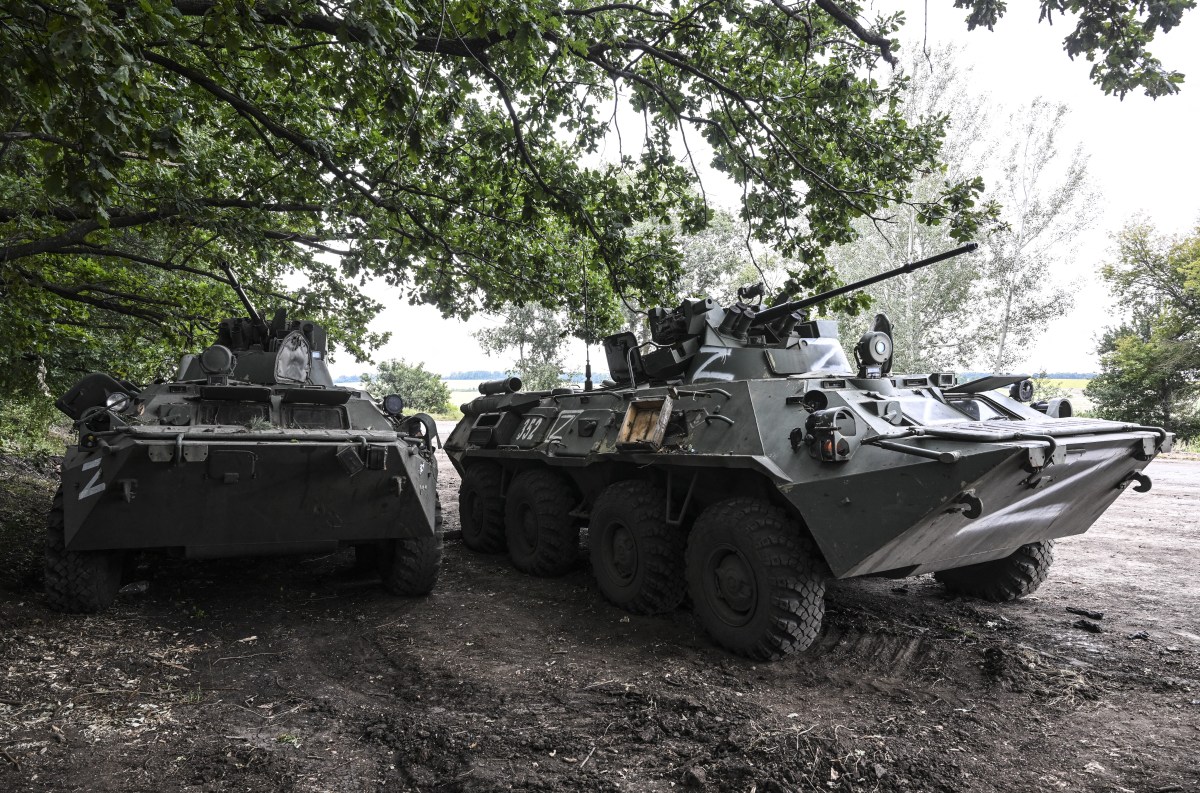
Biletsky attributed the success partly to Ukraine's use of the BTR-60 APCs, which were first developed in the 1950s, and which Russian forces also use, in their original role as troop transporters.
They had been converted into vehicle-borne improvised explosive devices (VBIEDs) and allowed Ukraine's troops to break through Russian defenses and destroy their heavy fortifications, he said.
"They were used to demolish the enemy's strongest fortifications," he said. "Russians surrendered in entire subunits, along with officers, pilots, and artillerymen."
Bilyetsky added that Ukrainian forces had liberated 19 square miles in the third phase of Operation Vivaldi for a total recapture of 67 square miles for the entire operation.
Analysts have said that Ukraine's success in the operation has been helped by the element of surprise after strict operational security and counter-drone operations degraded Russian forces' operational awareness.
Major Maksym Zhorin, the 3rd Army Corps deputy commander, had said in September that Ukrainian forces had kept their advances secret via a "protective drone" system of electronic warfare systems.
However, Russian military bloggers have not acknowledged the success of Operation Vivaldi. They claimed Moscow's forces have retained their positions and Ukrainian troops have not cut off the Russian salient north of Lyman.
Ukrainian military observer Yuriy Butusov said on Wednesday that pro-Moscow milblogger channels were pushing doctored footage and false information to conceal Russian losses.
However, other Russian sources have criticized the defense ministry in Moscow for not acknowledging Operation Vivaldi nor where the true front line is.
The ISW said Wednesday Ukrainian forces control both Nove and Shandryholove, with the closest Russian positions at least 10 miles away from the latter and five miles from the former.
Contact Newsweek editors on this story: Matthew Robinson and Tony Phillips.