Map Shows Where El Niño Poses Greatest Risk of Death
A powerful, potentially historic El Niño could contribute to hundreds of thousands of additional heat-related deaths across the globe, according to a new report from researchers at the University of Chicago’s Climate Impact Lab.
The report also suggested that the unusually warm conditions associated with the event could serve as a window into the temperatures climate change may deliver in the decades to come.
“We commonly associate heat-related deaths with heat waves, when communities are exposed to periods of extreme temperatures for a few days at a time and deaths during those events garner significant attention,” Emily Grover-Kopec, one of the report’s authors, told Newsweek.
“While those weather patterns are certainly part of this story, we are also getting a view into the number of lives lost as average temperatures move higher by ~1-2°C over a season.
“That consistent exposure to elevated heat cumulatively affects human health and our work here paints how that materializes in terms of a significant, and often hidden, number of lives lost.”
El Niño is a naturally recurring Pacific climate pattern, known to influence temperature and rainfall patterns worldwide.
Federal forecasters said earlier this month that El Niño was strengthening, with a greater than 90 percent chance of a very strong event during the Northern Hemisphere fall and winter. A 75 percent chance of a historic event, exceeding the strength of all previous El Niños since 1950, was also possible during October-December, according to the National Oceanic and Atmospheric Administration’s Climate Prediction Center.
The World Meteorological Organization (WMO) has warned that the event could have significant impacts on rainfall and temperature patterns and associated risks of floods, drought and extreme heat.
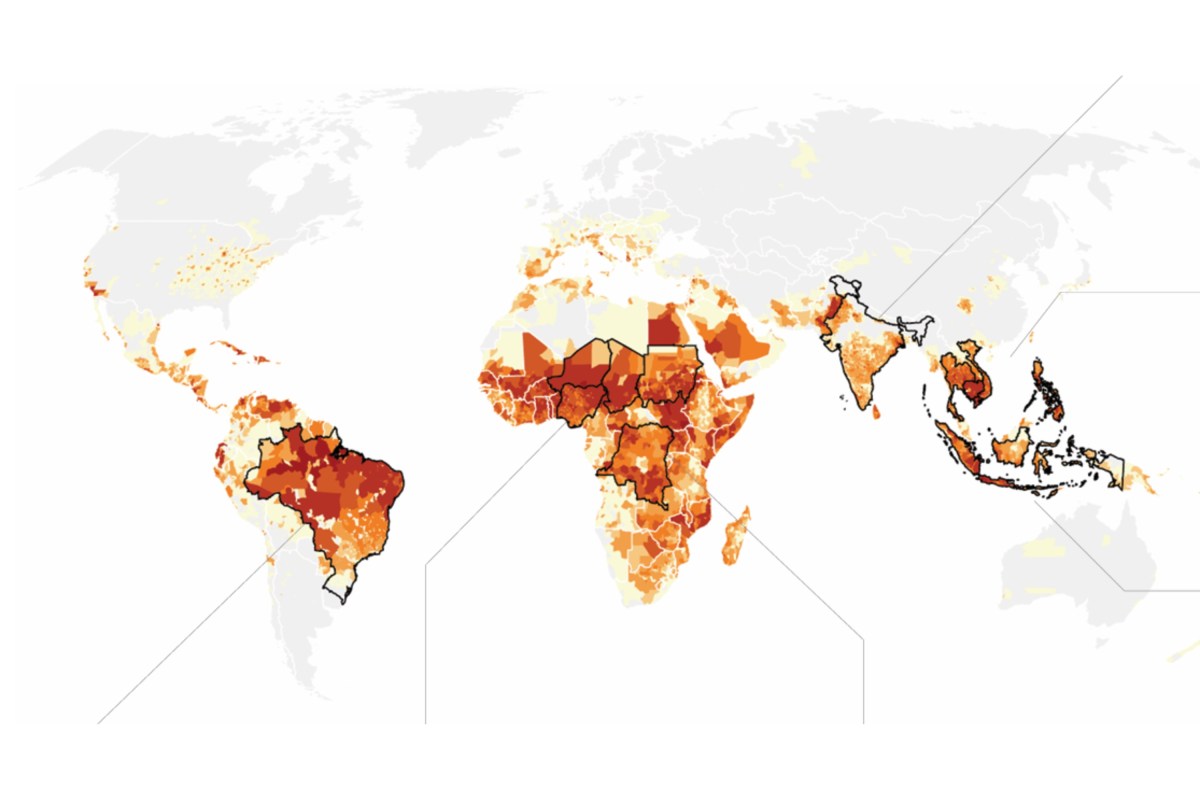
The researchers projected 451,000 additional heat-related deaths during the first half of the ongoing El Niño event, compared with the average year. Approximately 239,000 are projected to occur during the next six months, according to the report.
“With current forecasts suggesting El Niño will remain in place through spring 2027, we expect all of these numbers to grow even higher,” the report cautioned.
The report noted that global land temperatures are forecast to be around 1.2 degrees Celsius (2.1 degrees Fahrenheit) above normal in the coming months, largely due to El Niño—conditions that the researchers said will resemble the temperatures that climate change is expected to deliver in 20 years’ time, leading to 44 percent more “extremely hot” days than might be expected during a typical year.
The report said that the largest increases in projected deaths over the coming months will be centered overwhelmingly in the Global South. It forecast around 66,800 deaths across the Sahel region of Africa, including 31,400 in Nigeria alone. Sudan could record around 17,500 additional deaths, while Niger and Chad could see 10,000 and 8,000, respectively.
In Southeast Asia, an additional 19,400 could die across the Philippines, Vietnam, Thailand and Cambodia, while Indonesia is projected to see 19,300.
Brazil, India, and the Democratic Republic of Congo could record 13,300, 15,800, and 10,000, respectively, according to the report.
“This report allows decisionmakers to see exactly where emergency actions can be taken now to save tens of thousands of lives in the coming months,” Michael Greenstone, a Climate Impact Lab co-founder and University of Chicago professor, said in an accompanying release.
The report said heat warnings, cooling centers, hydration stations, outreach to vulnerable people, worker protections and additional health-system capacity could help people cope with extreme temperatures.
“Increasing emergency response and better targeting our efforts can save many lives this year,” co-author Tamma Carleton said in the release.
“But 20 years from now, once today’s extreme temperatures become the new normal, we don’t want to be in a constant state of emergency,” Carleton, faculty head of research for the Climate Impact Lab and University of California, Berkeley assistant professor, added.
“We need to mobilize resources now to design, deploy, and evaluate the preparation and planning tools that will save lives in the years ahead.”