Map Shows Where Nor’easter To Slam US With Hurricane-Force Winds, Flooding - Newsweek
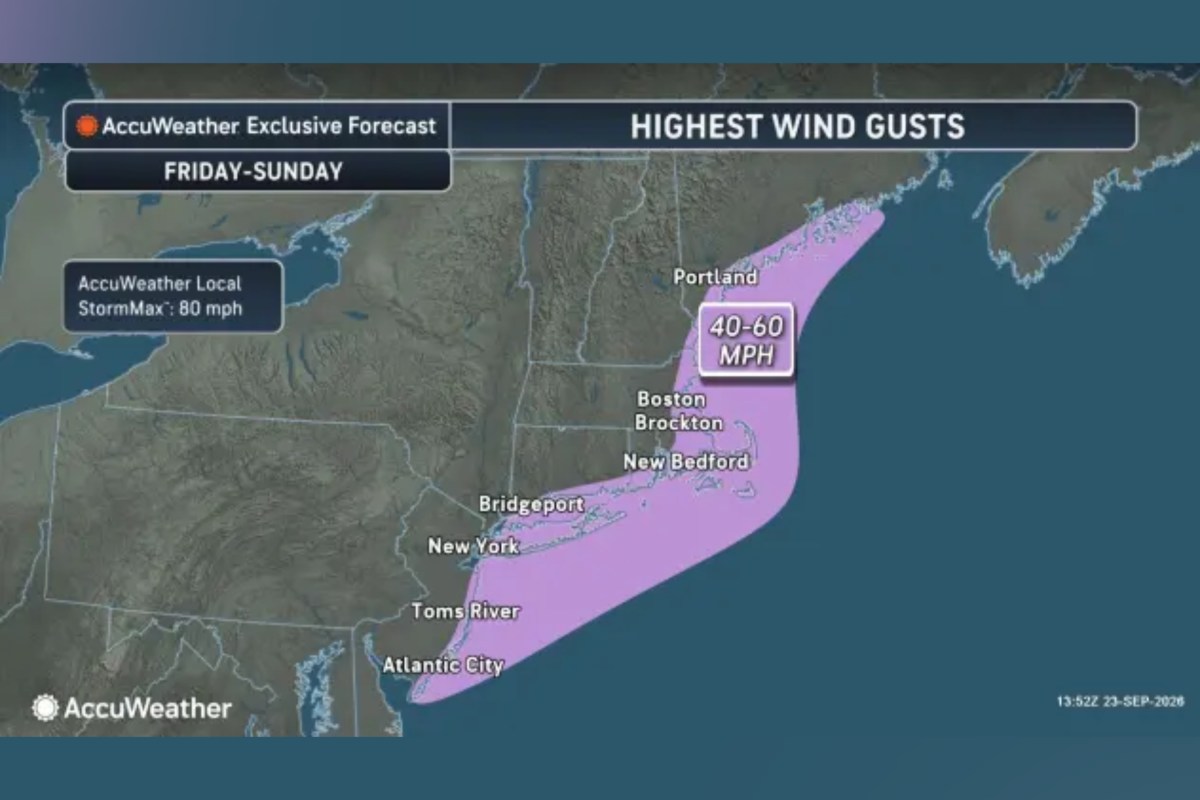
A nor’easter storm could bring hurricane-force gusts, heavy rain, and flooding impacts to portions of the East Coast this weekend, according to forecasters.
“The top-end gusts with the nor'easter will be 40-60 miles per hour along the Mid-Atlantic and Northeast coast this weekend,” AccuWeather meteorologist Chad Merrill told Newsweek on Thursday.
“There will be some offshore buoys off the Northeast coast that see gusts to 74 mph, which is the equivalent of a Category 1 hurricane,” Merrill said.
The National Weather Service (NWS) explains that a nor'easter is a storm along the East Coast of North America where winds over coastal regions usually come from the northeast. These storms can form at any time of year but are most common and powerful between September and April.
Such systems “nearly always” bring heavy rain or snow, as well as gale-force winds, rough seas and occasional coastal flooding, according to the agency.
A nor'easter is named such because that is the direction the winds typically come from, according to information from the National Oceanic and Atmospheric Administration (NOAA).
"Some well known Nor’easters include the notorious Blizzard of 1888, the “Ash Wednesday” storm of March 1962, the New England Blizzard of February 1978, the March 1993 'Superstorm' and the recent Boston snowstorms of January and February 2015," NOAA said on the webpage about the weather phenomenon. "Past Nor’easters have been responsible for billions of dollars in damage, severe economic, transportation and human disruption, and in some cases, disastrous coastal flooding. Damage from the worst storms can exceed a billion dollars."
Meanwhile, a hurricane is tropical in nature, forming over very warm tropical waters. Hurricanes also have distinct eyes and eyewalls, components that are not present in a nor’easter.
Another difference is where the storms source their energy. Hurricanes get energy from warm waters, whereas nor’easters source energy from temperature contrasts in the atmosphere.
However, despite their differences, both storms can bring significant impacts. A nor’easter can cause heavy rain, strong winds, snow, and coastal flooding. A hurricane often brings strong winds, heavy rain, and storm surge to impacted areas.
The system could bring coastal flooding, damaging winds and power outages to parts of the East Coast, with some of its most severe effects expected in New England this weekend, according to an AccuWeather forecast.
The forecaster said southeastern New England would be affected from Friday and into Sunday, with the strongest winds and heaviest rainfall anticipated between Friday night and Saturday night. Rhode Island, central and eastern Massachusetts, eastern Connecticut, southeastern New Hampshire and Maine’s southern coast are expected to experience the worst winds and rain, it said.
AccuWeather warned that the potentially hurricane-force winds could raise the possibility of downed trees and power disruptions.
The outlet forecast general rainfall totals of one to two inches from northeastern New Jersey to coastal Maine, with higher amounts in parts of southeastern New England. Between four and eight inches could fall from central Massachusetts to Cape Cod, Nantucket and Martha’s Vineyard, it said.
The storm is also expected to push Atlantic water toward the shoreline, leading to water accumulations in bays, sounds, harbors and inlets from Long Island to Maine, AccuWeather said, adding that low-lying coastal areas could flood, while periods of heavy rain may inundate streets and small streams and disrupt travel across southeastern New England.
Farther south, coastal flooding was forecast by AccuWeather from North Carolina to New York through Friday. The outlet said southeastern Virginia could experience the worst conditions, while some locations could see water levels approaching six feet above the average monthly tide level.
As of Thursday morning, gale warnings from the NWS span much of the East Coast. Flood-related alerts also spanned several East Coast states, including Virginia, Delaware, Maryland, and New Jersey.
The NWS Mount Holly/Philadelphia forecast office said on X, Thursday that coastal flooding in its forecast area was expected to worsen with each passing high tide through at least Friday night.
“Some of the work done this past summer to replenish the beaches in Ocean City, N.J., that were eroded by a combination of Hurricane Erin last year in August, a coastal storm in October of 2025 and the blizzard in February of this year will likely need more work for restoration following this weekend's nor'easter,” Merrill told Newsweek.
“There will likely be some replenishment projects needed for a few other northeast-facing beaches along the Mid-Atlantic and Northeast coast following this weekend's storm due to the persistence of the gusty northeast wind pushing lots of ocean water into these areas,” the meteorologist said.
The last notable nor’easter to hit the East Coast was this past February, when a storm brought record-breaking snowfall to the Northeast, including as much as nearly 38 inches in Rhode Island.
The Atlantic hurricane season runs from June 1 through November 30, although it is possible for tropical storms or hurricanes to form outside of those dates. So far this year, the Atlantic basin has not seen a hurricane, which meteorologists have attributed in part to the strengthening El Niño, which can increase wind shear in the basin and can eviscerate storm systems before they can form.
Newsweek’s reporters and editors used Martyn, our AI assistant, to produce this story. Learn more about Martyn here. Contact Newsweek editors on this story: Matthew Robinson, Emma Lee-Sang, Gray R. Thomas.