
Maria Salazar’s Democratic Rival Won’t Let Her Create Distance From Trump - Newsweek
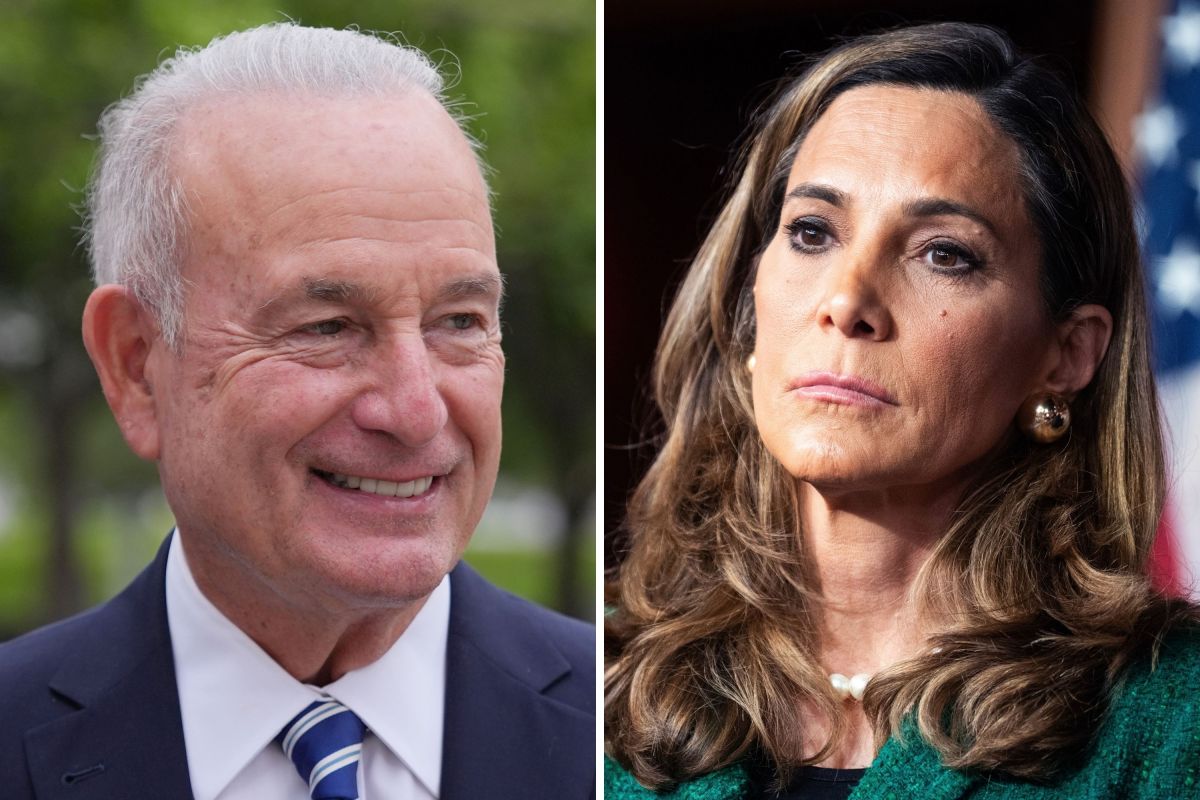
A longtime South Florida broadcaster who retired from CBS News Miami, Rodriguez launched his campaign in March for Florida’s 27th Congressional District, where he is seeking to unseat Republican U.S. Representative María Elvira Salazar, who has held the seat since 2021.
"What I considered was how I felt about what’s going on in this country. And I thought that if I don’t run, if I don’t do this, if I don’t take this opportunity to flip this seat, I may be angry, I may be depressed, I may be cursing at the television," Rodriguez told Newsweek in an exclusive interview.
Florida's 27th District has drawn national attention in recent weeks after Salazar released an ad, filmed outside the White House, criticizing President Donald Trump's immigration policies. "Mr. President, some of your immigration enforcement efforts have gone too far," she said in the ad.
Trump responded personally. Over the weekend, in a social media spree, he shared 13 posts on Truth Social criticizing Salazar, including calls for her to be primaried and replaced by another Republican.
For Rodriguez, the whole episode shows that the race in the district, which is made up of parts of the city of Miami, Coral Gables, Kendall, Key Biscayne and Pinecrest, is wide open just weeks before the November election.
"The polling shows that I can beat Maria Elvira Salazar. So, I said, yeah, I'll do it. So here I am. And it's going well, and I think we're going to win," he said.
Salazar's tenure in Congress has been characterized by extreme loyalty to Trump and his policies. The Cuban American former anchor was comfortably carrying the district earlier this year, but a series of missteps has put her at odds not only with Trump but also with her own voters.
Her position toward immigration enforcement has been the most damaging one. Salazar herself said some of Trump's efforts "have gone too far," but the policy has hit hard in a district that is majority Hispanic. It also has a large Venezuelan population, many of whom have felt the White House's actions firsthand over the past year, from the end of Temporary Protected Status to ICE arrests.
"When I first saw the ad that she put out, I was surprised. I was wondering what is going on? Why would she do that? But then when you think about it, it indicates to me one thing, that they're scared. She's scared of losing. They've looked at the polls, Rodriguez said.
Three months ago, forecasters treated Florida's 27th District as a formality for the GOP. Then came a September poll from Tulchin Research, commissioned by Rodriguez's campaign, that put Salazar ahead by just one point, well within the margin of error.
The Cook Political Report, widely considered the industry standard for nonpartisan race ratings, still expects Salazar to hold the seat, but it has moved the race two categories, from Solid Republican in May to Lean Republican. The polling and Salazar's recent break from Trump have left Rodriguez and national Democrats smelling blood.
"I think she did this obviously to distance herself from Donald Trump's policies, terrible policies that people here in Miami are against. They've seen it, they're horrified by it," Rodriguez said. He added that her move has led more Republicans to step back from Trump, which, he argued, is why the president lashed out at her.
"Welcome to Hotel MAGA. You can check in, but you can never leave," Rodriguez told Newsweek. "He is bringing them back into the fold, saying, 'Wait a minute, you cannot stray too far from daddy Trump.' So he's calling her back into the fold… because she votes with him 100% of the time."
Trump won the 2024 election with important support from Hispanic voters, many of whom crossed party lines to back the Republican. The GOP's grip on South Florida has also been historically strong, but Trump's national polling among Hispanics has turned sour, and Floridians have been no exception.
Much of that souring stems from the immigration crackdown. ICE's Miami field office, which covers Florida, Puerto Rico and the U.S. Virgin Islands, has made more than 41,300 arrests since Trump returned to office, more than any other field office in the country. Miami, Doral, Hialeah, Coral Gables and Homestead have all signed agreements to assist ICE, and advocacy groups are advising immigrants not to travel unless necessary.
Even Cubans, once given priority by Washington, have not been spared from deportations, which have hurt Salazar's standing with her own community.
"Cubans are being sent to Africa. Cuban families are being torn apart. Cubans are being picked up just like everybody else," said Rodriguez, the son of Cuban immigrants. "It's no longer [something] happening to somebody else. It's happening to people here: Cubans, Venezuelans, Haitians, Central Americans, South Americans. And it's wrong."
Yet Salazar's biggest challenge has been navigating the Trump administration's shifting Venezuela policy. Doral is home to one of the country's densest concentrations of Venezuelans. The city was a staunch Trump stronghold during the campaign, but many residents have soured on the end of Temporary Protected Status, whose last protections lapse October 2, and on the White House's renewed ties with Venezuela's interim president, Delcy Rodríguez.
"The Venezuelan community was led to believe that the United States wanted to fight for democracy in Venezuela. And that's not what it's about. It turns out it was all about Donald Trump seizing the Venezuelan oil and enriching himself and his cronies," he said.
While Salazar has criticized parts of the immigration crackdown and Trump's oil deal, and has directed that criticism at the Venezuelan regime, Rodriguez, argues the damage is already done and wants Salazar to answer for her votes.
"Stand on your record. Talk about your record. Why did you vote for the big, beautiful bill? Why did you cut thousands of people off their health care subsidies in this district? Why were you quiet when we had Alligator Alcatraz? Why have you not said anything about the war in Iran that has caused gasoline to go so high? Why haven't you said anything about the tariffs?"
Rodriguez has also gone after the Dignity Act, Salazar's immigration bill in Congress. It would give undocumented immigrants with no criminal record who pay taxes a renewable legal work status, and it has drawn heavy criticism from the MAGA coalition as well. Rodriguez calls it the "Indignity Act."
“She brings it [the Dignity Act] every time there’s an election or every time she wants to make it seem like she’s a champion of immigrants,” he said. Applicants would have to pay fines and back taxes, he said, questioning what they would receive in return. “What status do they get? It’s almost like you’re becoming an indentured servant. What voters want is immigration reform.”
Five weeks from Election Day, Rodriguez said his plan is to talk to as many voters as possible, with a focus on Republicans and independents. He is doing it with far less money. As of July 29, the date of the most recent Federal Election Commission filing, Salazar had raised $1,999,399 and had $2,259,547 in cash on hand. Rodriguez had raised $661,173 and had $325,097 on hand.
"My plan moving forward is to talk to as many voters as possible, especially Republicans and independents. Those are the people that are going to decide this race, the independents, the no party affiliates who are right in the middle who are not necessarily happy with the Democratic Party or the Republican Party." And they tell me the same thing: this is not what I voted for, Rodriguez said.
Cost of living, and housing in particular, is at the center of his pitch. Rodriguez said his own daughters, sons-in-law and grandchildren left Miami because they could not afford to buy a home, while tech billionaires "buy up waterfront mansions and luxury condos." The goal, he said, is "so that people stop moving away, so that the working people are no longer pushed out of South Florida."
The path to victory is tough. Polls in South Florida have often missed on Election Day, and the district has leaned Republican in recent elections. Trump won it by 49.9 percent to 49.6 percent in 2020 and by 57 percent to 42 percent in 2024. Republicans also won every statewide race there in 2022, with at least 57 percent of the vote, and Senator Rick Scott won it 56 percent to 42 percent in 2024. If Rodriguez wins, he would be the first Democrat to win a race in the district since 2018.
Salazar's vulnerability, many analysts say, has opened an opportunity for Democrats in a seat that is now up for grabs. The Cook Political Report said Salazar's "significant fundraising advantage" gives her the edge, but that the race "now looks clearly competitive." Eduardo Gamarra, a political scientist at Florida International University, told Newsweek the seat looked as vulnerable as he "could remember."
Rodriguez also picked up an endorsement last week from the Miami Herald Editorial Board, and Salazar responded on X by attacking the paper. "The Miami Herald Editorial Board endorsement has become the kiss of death for candidates who get it, making it fitting that my opponent received it," she wrote.
Ballots are already in voters' hands, and the window for the candidates to make their case side by side is closing. Rodriguez said his campaign offered Salazar three debates, two in English and one in Spanish, and was told she was not interested.
Newsweek’s reporters and editors used Martyn, our AI assistant, to produce this story. Learn more about Martyn here. Contact Newsweek editors on this story: Edward T. Cummins


