Mashaba’s Johannesburg comeback bid faces test of coalition instability - IOL
Johannesburg residents are heading into the 2026 local government elections as the city faces mounting pressure, from deteriorating infrastructure and service-delivery challenges to crime, hijacked buildings, and repeated changes in political leadership.
Since 2021, the city has seen several changes in its executive mayoral office as political alliances shifted, motions of no confidence were tabled, and coalition arrangements were renegotiated. The revolving door has raised questions about political stability, administrative continuity, and the municipality’s ability to sustain long-term plans.
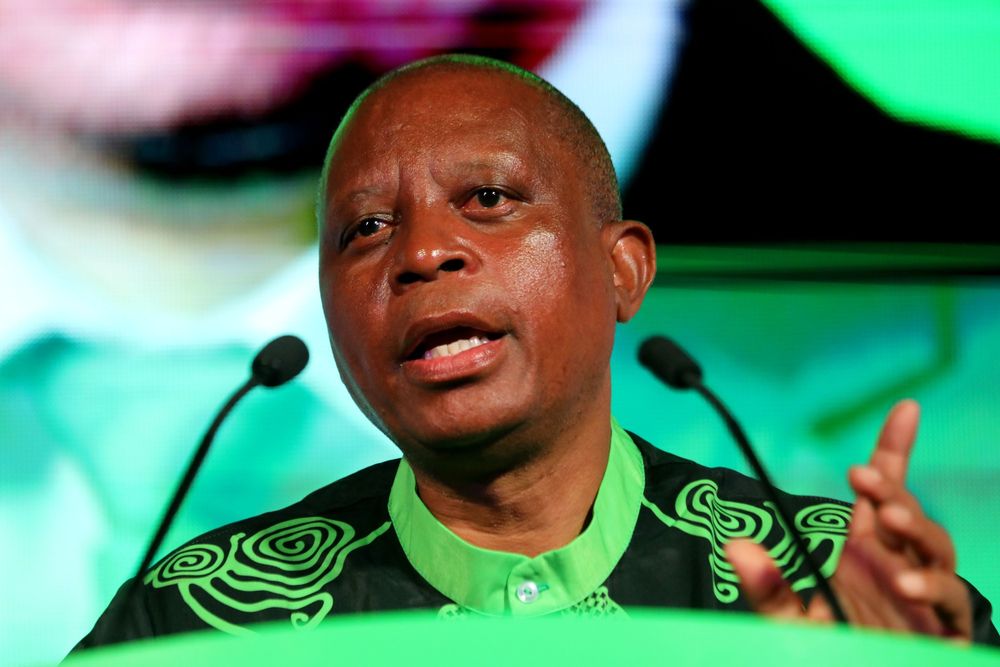
Former mayor Herman Mashaba is seeking a return to the city’s top political office, promising to restore stability, revive stalled projects, and rebuild confidence in the municipality.
Mashaba, who served as Johannesburg’s executive mayor from 2016 to 2019, is ActionSA’s mayoral candidate for the November 4 elections.
His central pitch is that his experience of running a multi-party administration provides a model for managing the coalition politics that have shaped Johannesburg’s recent governance.
“I managed a multi-party coalition during my tenure as the mayor of Johannesburg. This comprised the DA, COPE, IFP, FF Plus, UDM, and ACDP. The EFF gave us their support by voting on an issue-based basis in Council,” Mashaba said.
“The success of this stable arrangement was based on my commitment to always engage my coalition partners on all developments involving executive decisions. I had monthly formal engagements with all coalition partners, with EFF separate ones as they were not official coalition partners. I will follow the same model I applied between 2016 and 2019 during my tenure as mayor of the City of Joburg.”
Mashaba said his first 100 days would focus on the Inner-City Rejuvenation Policy Plan, municipal enforcement, and professionalising the administration.
He said the city also needed to address political interference in its administration through a skills audit of municipal employees.
“A professional public service is critical to the functioning of our public institutions. The City of Johannesburg is no different.
“Which is why my immediate priority is to clear out the rot that destabilises the city. There are far too many officials who are in the city based on their political connection instead of their professional skills and credentials.”
To restore business confidence, Mashaba said Johannesburg needed to professionalise the public service, deal decisively with corruption, and invest in policing.
“Businesses cannot thrive in an environment of lawlessness and chaos,” he said.
Mashaba said ActionSA is seeking an outright majority but has identified conditions should coalition negotiations become necessary, including public services for all residents and a zero-tolerance approach to corruption.
But questions remain over whether changes in political leadership can resolve problems that have become entrenched in the municipality’s institutional and coalition arrangements.
Siseko Maposa, director of Surgetower Associates Management Consultancy, said Johannesburg’s governance problems could not be separated from instability at the political level.
Maposa cited Surgetower’s 2026 data showing an average metro by-election turnout of 17.62%, which he said pointed to political disengagement in Johannesburg.
He said repeated leadership changes had consequences beyond the mayoral office, affecting continuity within the municipal administration.
“Political expediency overrides administrative duty, leaving behind a paralysed bureaucracy staffed by temporary personnel who are here today, gone by the next confidence motion,” Maposa said.
He said the disruption affected long-term planning, fiscal oversight, and basic service delivery, arguing that structural measures were needed to protect the administration from repeated political shifts.
“Addressing this governance weakness requires structurally insulating the civil service from partisan shifts,” Maposa said.
Political analyst Sandile Swana also links Johannesburg’s leadership instability to its coalition politics.
Swana said the ANC and DA, as the city’s two largest political parties, had been central to the political shifts that followed the 2021 elections.
“The two biggest parties in the City of Joburg have been front and centre in allowing, in starting the instability and in maintaining the instability,” he said.
He said the consequences of the political contest had ultimately been felt by residents, businesses, and taxpayers.
“The interests of the actual citizens and residents, as well as the taxpayers of the City of Johannesburg, are left unattended,” Swana said.