‘Matter of survival’: MISA demands fuel levy cut as petrol breaks R30 barrier - IOL
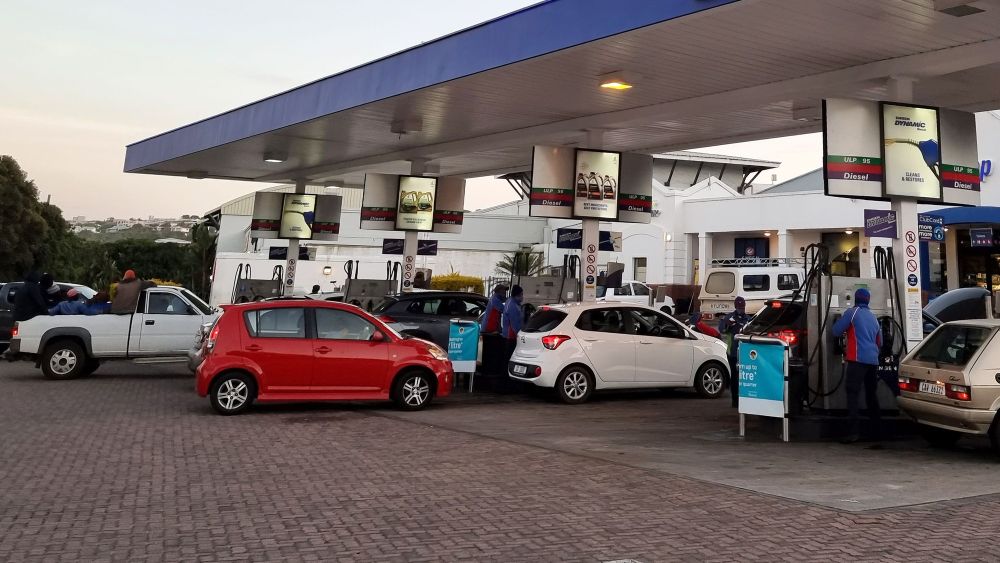
MISA is calling for an urgent fuel levy cut as petrol prices break the R30-a-litre barrier, warning that rising transport costs are putting further pressure on already stretched households.
The Motor Industry Staff Association (MISA) is calling on the government to urgently reinstate a temporary fuel levy reduction as petrol prices rise above R30 a litre in Gauteng for the first time.
The call comes as the latest fuel price increases take effect on Wednesday, October 7, pushing 95 Unleaded petrol to R30.25 a litre inland and R29.38 at the coast. The price of 93 Unleaded petrol, available in inland regions, rises to R29.88.
Diesel prices are also reaching record levels, with 50ppm diesel increasing by R3.24 a litre and 500ppm by R2.84. At wholesale level, 50ppm diesel will cost R32.80 in Gauteng, before retail margins are added.
The latest increases follow a sharp rise in international oil prices, driven largely by heightened tensions in the Middle East. MISA says the impact will be particularly severe for workers already struggling to cover basic household expenses.
“Fuel relief is not optional, it is a matter of survival,” said Martlé Keyter, MISA’s chief executive officer: Operations.
“Workers cannot pay R30 a litre to get to work while the state takes more than R4 of every litre. We are asking government to do again what it has already shown it can do.”
MISA is calling for a temporary reduction of at least R3 per litre in the General Fuel Levy on both petrol and diesel while international oil prices remain elevated.
It is also calling for targeted relief for households that rely on illuminating paraffin, as well as urgent engagement through the National Economic Development and Labour Council (NEDLAC) on the levies and margins included in the fuel-price structure.
The association points out that government introduced temporary fuel levy relief in April after organised labour pushed for intervention through NEDLAC. The General Fuel Levy was cut by R3 a litre for two months, while the diesel levy was reduced to zero during that period.
That relief has since expired, leaving the current General Fuel Levy at R4.10 a litre on petrol and R3.93 on diesel.
Mineral and Petroleum Resources Minister Gwede Mantashe has previously said there are no immediate plans for another intervention, citing volatility in petroleum product prices. His department is, however, reviewing the fuel-pricing structure, with that process due to be completed in March 2027.
The latest increase is not limited to motorists.
South Africa’s minibus-taxi industry is already under pressure from higher fuel and other operating costs. The South African National Taxi Council (SANTACO) said this week that it was too early to confirm whether taxi fares would rise again, with decisions ultimately left to individual taxi associations following consultation with commuters.
SANTACO said taxi associations had implemented only one fare increase since fuel prices began rising in March, while operators were also facing higher maintenance, administrative and other business costs. IOL has previously reported that taxi commuters have already faced increases of around R3 to R6 on some city routes and R10 to R30 on some long-distance journeys this year.
The impact also extends to the freight sector, where diesel accounts for an estimated 35% to 55% of operating costs for road-freight companies.
MISA said workers were already under severe financial pressure before the latest fuel increase.
It cited figures from the Pietermaritzburg Economic Justice and Dignity Group showing that transport and electricity consumed 65.8% of a minimum wage before food costs were taken into account.
“Workers are being crushed between fuel, electricity, and food costs,” MISA said.
The association said government should act before the latest fuel shock places further pressure on household budgets and transport costs.
It also wants the government to provide relief to households dependent on paraffin, which it says were excluded from the fuel-relief measures introduced in April.
“Government has already proven that fuel levy relief is possible, and the conditions that justified it in April are worse today,” Keyter said.