Mchunu’s paid special leave costs taxpayers R3.16m, Parliament told - IOL
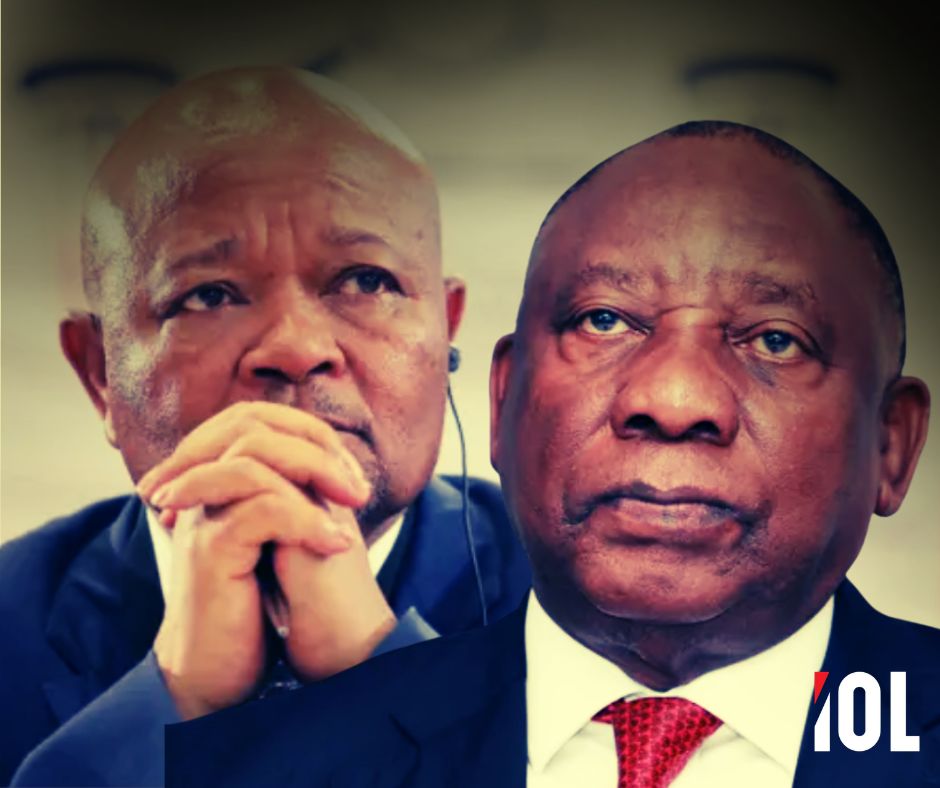
President Cyril Ramaphosa has been accused of protecting suspended Police Minister Senzo Mchunu and misusing public funds, following a parliamentary disclosure which revealed that Mchunu has been paid R3,16 million since he was placed on special leave.
President Cyril Ramaphosa has been accused of allowing taxpayers’ money to be spent improperly for political survival.
These accusations come after Acting Police Minister Firoz Cachalia this week told Parliament that suspended Police Minister Senzo Mchunu received R3.16 million in taxpayer-funded remuneration while on special leave.
According to a parliamentary disclosure, this money represents Mchunu’s standard ministerial salary and benefits paid out over a 13-month period, between July 2025 and August 2026, while he was placed on special leave of absence by Ramaphosa.
Mchunu has been on special leave since July 13, 2025.
The ActionSA said Ramaphosa was allowing public money to be wasted for the sake of political considerations.
“ActionSA is carefully considering how we will approach the upcoming Medium-Term Budget Policy Statement in relation to the South African Police Service’s budget. We are not prepared to continue permitting the outrageous waste of public money, particularly when those resources are desperately needed to strengthen policing and keep South Africans safe,” said the party.
Ramaphosa’s spokesperson Vincent Magwenya did not respond.
However, Magwenya previously confirmed that while Ramaphosa had accepted interim recommendations from Madlanga Commission, Mchunu’s long-term fate remains on hold until the full judicial commission concludes its work and delivers its final findings.
Mchunu, a long-standing political ally of Ramaphosa, was placed on special leave following serious allegations of corruption, fraud, and political interference in policing.
This was after KwaZulu-Natal Police Commissioner Lt-General Nhlanhla Mkhwanazi publicly accused Mchunu of meddling in operations.
This included the highly controversial disbandment of the Political Killings Task Team (PKTT) after 2022.
Mchunu was also accused of working with criminal syndicates, including claims linking him to the “Big 5 Cartel” and other underworld figures.
He was accused of leveraging his political power and state resources to manipulate decision-making with the SAPS.
Mchunu has strongly denied all allegations, calling them baseless during his appearance before the Madlanga Commission in December 2025.
Originally aligned with former President Jacob Zuma, Mchunu shifted his political allegiance to Ramaphosa around 2016 and became a core lieutenant within the CR22 faction, playing an instrumental role in securing Ramaphosa’s initial ANC presidency in 2017.
He served as a key strategist and influential regional figure in helping Ramaphosa build support within KwaZulu-Natal, and was heavily punted by the President’s inner circle for top leadership positions, including ANC deputy president. He was also tipped as a potential candidate for ANC president.
Build One South Africa (Bosa) also argued that the endless paid leave arrangement is neither transparent nor sustainable, adding that Ramaphosa should make a clear decision and account for it publicly.
However, Bosa’s leader Mmusi Maimane said an inquiry cannot become an excuse for indefinite political limbo, adding the public deserves a clear process, clear timelines and accountability for whoever is responsible for policing.
“Bosa will use Parliament's oversight and budget processes to demand a full accounting of this expenditure and challenge whether it remains justifiable. Money being spent on an indefinite political arrangement cannot be ignored while policing resources are stretched,” he said.
Cachalia also revealed that he was paid R3,024,834.58 for performing the ministerial duties during the same period.
In total, South African taxpayers spent R6,187,364.48 between July 2025 and August 2026 to cover the remuneration packages of both officials for a single ministerial portfolio.
Mchunu earns a base annual salary of approximately R2.69m (roughly R224,166.67 per month) and R3,16m figure represents total comprehensive remuneration, which includes standard executive perks and allowances rather than just a flat base salary.
According to analysis and civil society groups, the amount of R2.69m can cover the annual salary of approximately 11 to 15 entry-level police officers (constables) in South Africa, depending on their exact rank and pay scale.
The Organisation Undoing Tax Abuse (Outa) said there is no reason why Ramaphosa should not have made a decision to remove Mchunu as he has removed ministers and deputy ministers for much less offensive conduct in the past.
The organisation said this inconsistency and inability to make decisions, particularly in this regard, send a clear message of weak leadership.
“We imagine he continues to receive all the perks, possibly aside from security personnel. Nonetheless, while this is a cost issue, it’s more a matter of principle,” said CEO Duvenhage, adding that the President has every right to terminate Mchunu as a Minister, especially with enough information of irregularities received to date.
Duvenhage also added that the funds allocated to Mchunu’s salary could have gone much further in other security-related initiatives.
Political analyst Zakhele Ndlovu said Ramaphosa was acting recklessly with taxpayers’ money, adding that his decision to delay action was a political stalling tactic to buy time and resuscitate Mchunu's wobbly political career and ambitions to become president of the ANC.
“Ramaphosa needs to account for protecting his close political ally. By now, the Madlanga Commission should have produced a report on the fitness of Mchunu to serve as Police Minister. It doesn't make sense to wait for the commission to wrap up its work,” he said.
Mchunu has since resumed his duties as a member of the ANC after he temporarily stepped away from his roles on the National Executive Committee (NEC) and National Working Committee (NWC) in November 2025, following allegations made by Mkhwanazi.