Minister Ndabeni signals shift toward outcomes-based support for MSMEs at GEC+Africa 2026 - IOL
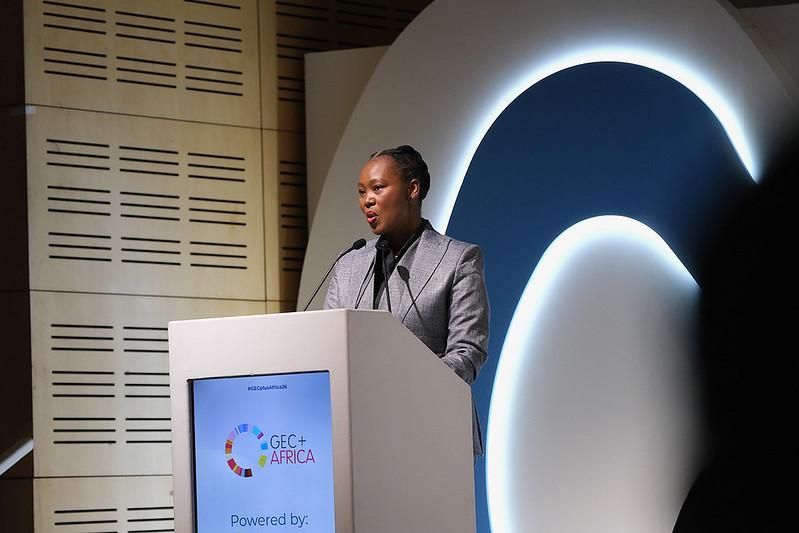
Minister of Small Business Development Stella Ndabeni delivered the keynote address at the GEC+Africa 2026 on Thursday.
South African Minister of Small Business Development Stella Ndabeni outlined a strategic pivot in government policy toward measuring real-world economic outcomes for Micro, Small, and Medium Enterprises (MSMEs) rather than mere administrative output.
She was addressing delegates during her keynote address at the Global Entrepreneurship Congress Africa (GEC+Africa) 2026 at the Cape Town International Convention Centre on Thursday.
The theme for this year’s congress is: “Connecting Africa”, reflecting the importance of stronger connections between entrepreneurs, markets, capital, policymakers, corporates and ecosystem support organisations in unlocking Africa’s economic potential.
Speaking against a backdrop of global economic headwinds, including trade disruptions and rising commodity costs linked to Middle East instability, Ndabeni emphasised Africa’s economic resilience, pointing to a projected continent-wide growth rate of 4.3% in 2026.
Africa holds nearly one-third of the world’s proven critical mineral reserves. As the world transitions, global demand for these minerals is set to more than double by the year 2040.
“The world needs what Africa has. But our greatest asset is not what lies beneath our soil; it is our people. Africa possesses the youngest and fastest-growing population on the planet. By the middle of this century, 2.5 billion of the world’s 10 billion people will be African. We are the workforce, the consumers, and the innovators who will sustain future global growth,” the Minister said.
“And technology, if it is managed properly, will open doors to finance and global markets for millions of Africans previously confined to the margins of survivalism,” she said.
According to Ndabeni, Africa stands on the precipice of an entrepreneurial revolution. But, she said, only if African governments step up.
“Invest in entrepreneurship and innovation, establish smart, enabling regulatory frameworks, and partner with others in the ecosystem, including the private sector, universities, and various other entrepreneurship support organisations.
This is what we are trying to do in South Africa,” Ndabeni said.
The Department of Small Business Development was established with a clear mandate.
She said it was their responsibility to create an enabling environment where MSMEs, cooperatives, and township and rural businesses can start, grow, and create jobs.
“We exist because small businesses are not small contributors to our economy. They are the backbone of our economy. They create opportunities where few exist, stimulate local production, contribute to the resilience of township and rural economies and help keep economic value circulating within communities,” Ndabeni said.
In her address, Ndabeni challenged the public sector's traditional approach to assessing small business interventions, calling for a transition from tracking simple operational metrics to evaluating tangible business survival and market expansion.
“As Government, we have become good at counting activity. How many businesses were funded? How many people were trained? How much money was disbursed? But driving economic renewal demands that we measure different indicators. Did the business survive? Did it grow? Did it enter a market? Was it able to sustain this market share? Did it create jobs? Did the entrepreneur become less dependent on government support?”
The Minister said the support provided should be tailored to the actual challenges entrepreneurs face.
Ndabeni said the challenge for most entrepreneurs is not a lack of ambition. It is the lack of access to the right tools, networks, knowledge, and institutional support.
“Our challenge is not the absence of entrepreneurial potential. It is the concentrated nature of our markets. It is the design of our financial ecosystem. It is the fragmented nature of our support ecosystem. Over the past few years, we have been driving several policy reforms to address these systemic challenges,” Ndabeni said.
The Minister noted that the Department of Small Business Development (DSBD) portfolio remains on target regarding its Seventh Administration commitment to support one million MSMEs and cooperatives. During the previous financial year, 288,123 enterprises received assistance across the portfolio, comprising:
Highlighting the critical role of digital adoption, the Minister called for stronger collaboration across African borders to fully leverage the African Continental Free Trade Area (AfCFTA) agreement, ensuring small enterprises, youth-led ventures, and informal traders can actively participate in regional supply chains.