More power, E100 compatible: This is what Suzuki's future engines could be like
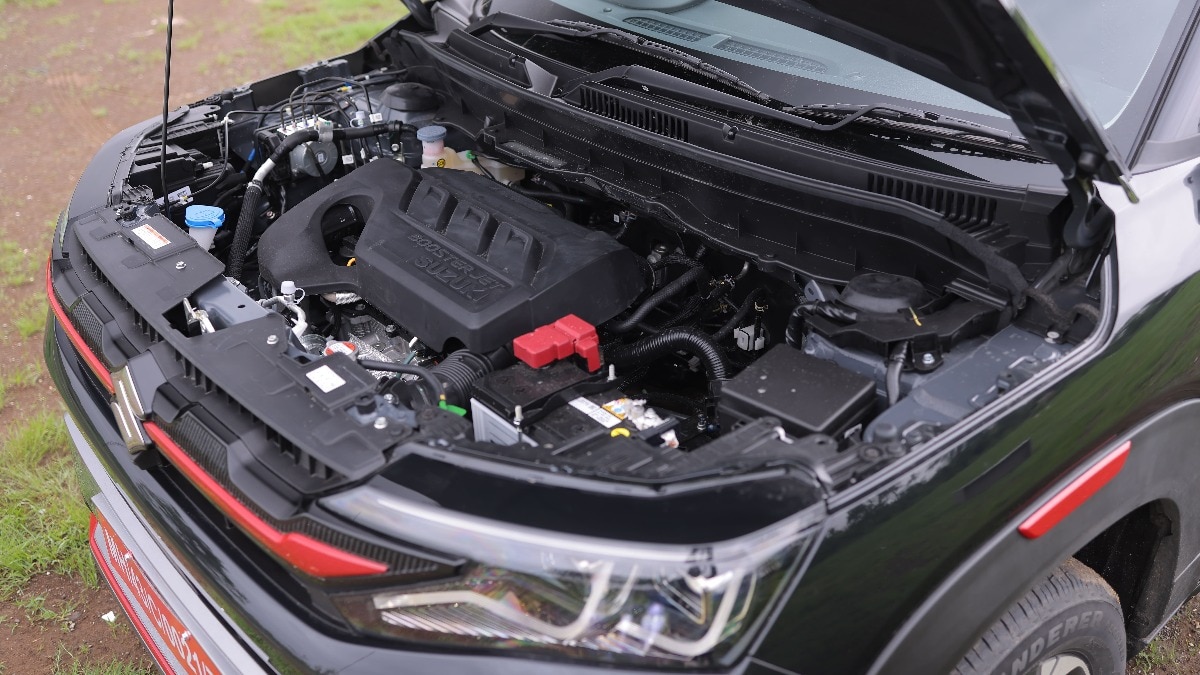
Suzuki’s Technology Strategy Briefing 2026 in Japan has details about the company’s upcoming future engines, including a new 1.2-litre three-cylinder turbo petrol engine and a larger 1.5-litre four-cylinder turbo. Both engines point towards Suzuki pursuing higher performance without moving away from its long-standing focus on efficiency.
The developments are particularly relevant for India, which Suzuki has identified as one of the growth markets for its next-generation direct-injection turbo technology.advertisement❮❯ Read Full Story1.2-litre turbo could make 125bhp and 230Nm The smaller of the two engines is a 1.2-litre direct-injection turbo petrol unit, internally referred to as DITC. Based on Suzuki’s three-cylinder Z12E architecture, the engine is rated at 93kW, or around 125bhp, with 230Nm of torque.
It uses a variable-geometry turbocharger and a water-cooled intercooler. Suzuki says the intercooler has been developed with hot operating conditions such as those encountered in India in mind.
The engine is also being engineered for high thermal efficiency, with Suzuki targeting more than 40% initially. The company says it ultimately wants to approach 50% by systematically reducing cooling, exhaust, mechanical and pumping losses.
Suzuki Motor Corporation President Toshihiro Suzuki said, “We are also developing DITC, a next-generation direct-injection turbo engine that combines high efficiency with powerful driving, for growth markets such as India.”
While Suzuki has not announced which Indian models will use the DITC engine, the Brezza is an obvious possibility given its position in Maruti Suzuki's line-up as well as the Fronx.
The current Brezza uses a 1.0-litre Boosterjet turbo petrol engine in some markets, producing around 110bhp and 170Nm. If the new 1.2-litre engine were introduced with its displayed 125bhp and 230Nm output.
That would also give Maruti Suzuki a considerably stronger turbo-petrol powertrain for the compact SUV segment. The Tata Nexon’s 1.2-litre turbo petrol makes around 118bhp and 170Nm, while the 1.0-litre turbo engines in the Hyundai Venue and Kia Sonet produce around 118bhp and 172Nm.E100, CNG and CBG compatibility
Power is only one part of Suzuki’s development programme. The new engine is also being designed to operate with petrol containing ethanol concentrations up to E100, as well as CNG and compressed biogas (CBG).
That gives the engine potential relevance for India as the country gradually moves beyond E20 petrol and explores higher ethanol blends and flex-fuel technology.
The CNG and CBG compatibility is equally significant for Maruti Suzuki, which already has one of India's largest CNG passenger-vehicle portfolios. CBG could provide another fuel pathway as domestic production of renewable gas expands.Suzuki is also developing a 1.5-litre turbo
The 1.2-litre DITC isn't the only new turbocharged petrol engine in development. Suzuki has also shown a 1.5-litre, four-cylinder direct-injection turbo engine.
The larger engine is rated at 118kW, equivalent to around 158bhp, and produces 280Nm. Compared with the 1.2-litre three-cylinder DITC, it adds around 33bhp and 50Nm.
Its positioning suggests that Suzuki is developing different turbocharged engine sizes for different vehicle classes, although the company has not disclosed specific production applications.
The 1.5-litre unit could potentially be relevant to larger Suzuki models like the Grand Vitara and the Victoris.Suzuki's future powertrains go beyond turbo petrol
The turbo engines form only one part of a much wider powertrain strategy. Suzuki has also outlined several hybrid configurations based around its 1.2-litre Z12E engine.
One of them is a series hybrid for compact cars. It combines the 1.2-litre engine with a generator and a 65kW traction motor, with a small 0.6kWh battery. Here, the engine primarily produces electricity while the electric motor drives the wheels.
A system of this type could potentially find relevance in cars such as the Swift, Dzire and Baleno, although Suzuki has not confirmed Indian applications.
Suzuki says the compact-car series-hybrid configuration could deliver around 29% lower CO2 emissions compared with its stated 2022 baseline.
There is also a REEV Light version, which adds external charging to the series-hybrid concept. Its system output is in the 85kW class, or around 114bhp.
At the other end of the spectrum is a 1.2-litre direct-injection turbo-based series-parallel plug-in hybrid with a system output of around 130kW, equivalent to approximately 174bhp. Unlike a pure series hybrid, this setup can use the engine and electric motor to drive the vehicle through different operating modes.The bigger picture for Maruti Suzuki
Suzuki's latest technology roadmap suggests that its future powertrain strategy will not be built around a single technology. Turbocharged petrol engines, higher-ethanol fuels, CNG, CBG, hybrids, plug-in hybrids and range-extender-type systems are all being developed in parallel.
For India, the 1.2-litre DITC could be particularly significant because it combines three elements that are increasingly important in the market: more torque, turbocharged performance and compatibility with multiple fuels.
The bigger 1.5-litre turbo, meanwhile, opens the possibility of Suzuki having a more powerful petrol engine for larger vehicles.
Working as a Senior Sub-Editor at India Today, I cover everything that runs on wheels. When not working, I can be found plucking the strings of a bass guitar and writing songs.