Must my truth make yours wrong? - IOL
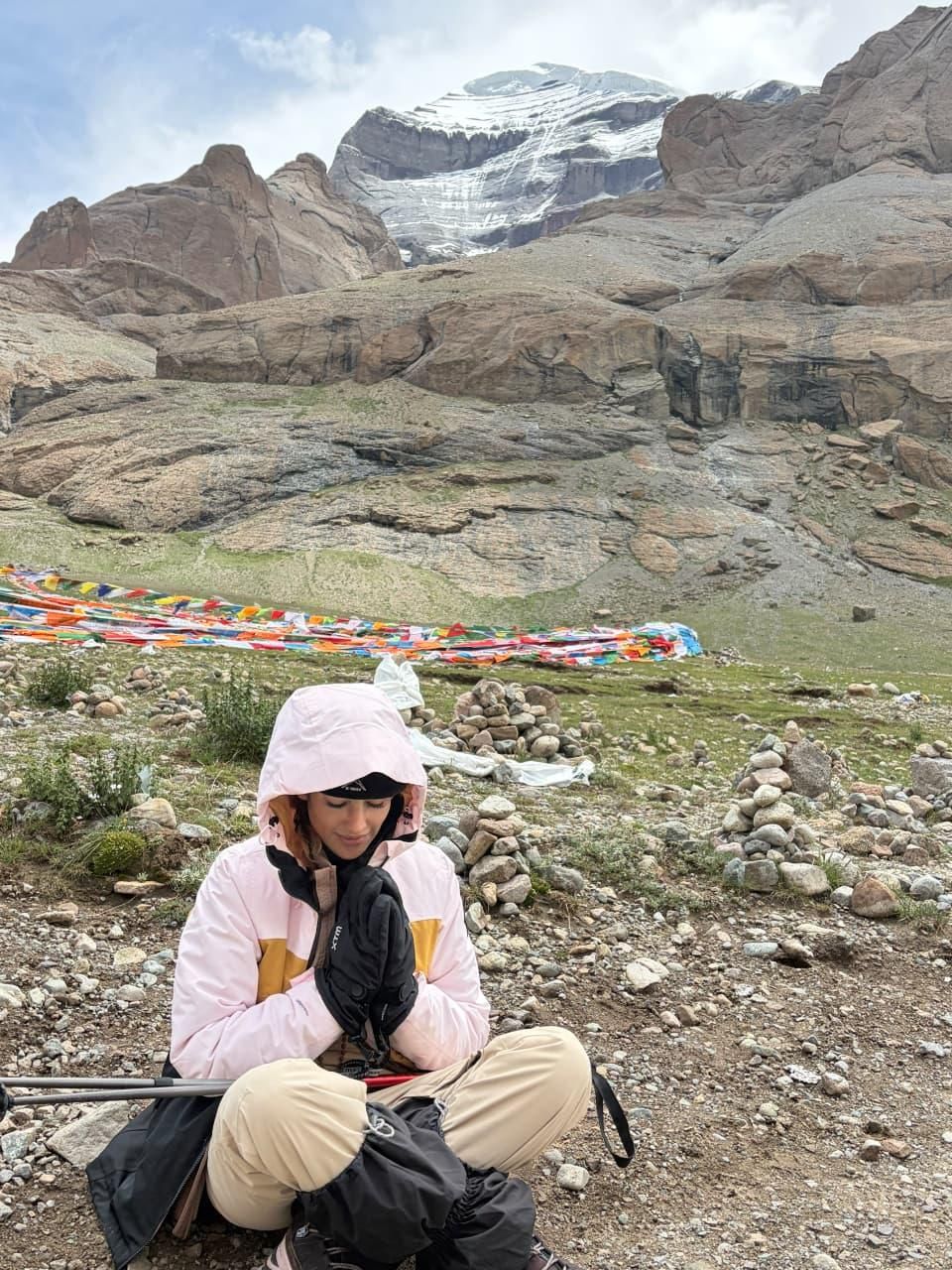
Dr Kajal Lutchminarian's recent Kailash Kora pilgrimage in August prompted deeper reflection on faith, science and the meaning attached to experiences that cannot always be explained.
I was reading the comments beneath what seemed to be a benign social media post about a cloud above a religious mountain and found myself lingering there far longer than I intended.
What caught my attention was the hostility - over differing beliefs.
People from other religious groups had entered the conversation to challenge or ridicule what was being expressed. But equally interesting were some of the reactions from people of the same faith. Those belonging to the religion being discussed became defensive, sometimes responding with misinformation of their own.
There were declarations about whose God was right, whose beliefs were wrong and, inevitably, comments suggesting that believing in something spiritual was somehow evidence of being poorly educated.
It left me wondering: what actually divides us?
And perhaps the harder question: can we coexist peacefully while holding profoundly different beliefs?
These questions have become more personal to me recently because of how my own relationship with faith has evolved.
I am a plastic surgeon, and I am also a person of faith.
Much of my adult life has been spent within the world of science, where medicine teaches us to look for evidence, understand physiology and question what we cannot explain. I value that way of thinking enormously, while recognising that faith occupies another important part of how I experience and understand the world.
This July, I completed the Kailash Kora.
The same pilgrimage was later affected by devastating floods. I had originally planned to travel during August, but a gut instinct led me to bring my journey forward at the last minute. It was surreal watching videos of the Nepal-Tibet border and other places where I had so recently been, washed away.
Walking there gave me considerable time to think about the relationship between the scientific and spiritual parts of myself.
There were things I experienced that I understood scientifically. At altitude, I knew what was happening physiologically to my body. I knew that the mountain before me could be understood through geology and the forces that shaped it over millions of years.
And yet there were other experiences that were harder for me to define.
There were feelings, intuitions and coincidences that seemed extraordinarily meaningful. Carl Jung used the term synchronicity to describe meaningful coincidences without an apparent causal connection. Whether we understand such experiences psychologically, spiritually, statistically or simply as things we cannot yet explain, I have become increasingly comfortable admitting: I don't know.
I don't believe that experiencing something I cannot explain automatically makes it divine. But neither do I believe that being unable to explain something makes the experience meaningless.
Perhaps that is why the comments suggesting that religious people were somehow less educated bothered me.
Why have we decided that science and spirituality must occupy opposite sides of the room?
Standing before Kailash, I could understand that geological processes explain the formation of a mountain while simultaneously experiencing something deeply spiritual in being there. Those thoughts did not fight one another inside me.
One explained something about the mountain.
The other explained something about me.
Perhaps this is where education should make us more humble rather than less so.
A person can understand science and still experience wonder. Another can look at precisely the same mountain and feel nothing spiritual whatsoever. Neither response makes one person more intelligent than the other.
There are things I know. There are things I believe. And there are things I have experienced.
I am learning not to confuse the three.
Religion, however, goes far beyond private spiritual experience. For many people, it carries family, ancestry, culture, childhood, morality, community and tradition. It accompanies birth, marriage, grief and death. It influences how people make sense of suffering, purpose and mortality.
Perhaps this is why religious disagreement can become so intensely personal.
When we criticise someone's religion, we may think we are challenging an idea.
They may experience it as an attack on something deeply connected to who they are.
History has shown how dangerous this can become when religious identity intersects with politics, territory, ethnicity, colonialism and power. Human beings have fought and died under religious banners for centuries. Yet many so-called religious conflicts have also been struggles for land, resources and political control. Religion can be both a genuine source of conviction and a powerful banner beneath which other human conflicts are fought.
Social media did not create tribalism, but it may have created one of the most efficient ways of amplifying it.
Algorithms reward engagement, and outrage engages.
Increasingly, we encounter other religions through short videos, memes and inflammatory posts rather than through their practitioners, scholars, texts or communities.
Misinformation travels in every direction.
It can come from people attacking religions they barely understand. But it can equally come from believers defending their own traditions with claims they themselves have never examined.
Perhaps social media's great religious problem is that everyone has been given a microphone, while very few of us have been taught the responsibility that should accompany one.
Ignorance is not new. What is new is the speed at which ignorance can now reproduce itself.
Which brings me back to that comments section.
Why does another person's expression of faith bother us so much?
Why enter the comments beneath somebody else's devotional post simply to tell them that their God, scripture, ritual or understanding of the universe is wrong?
There is an important distinction between criticism and contempt.
Religious ideas should be open to scrutiny.
History should be examined honestly.
Harmful practices should be challenged, and religious institutions, like every institution created and run by human beings, should be accountable.
Respecting religion does not require abandoning critical thinking.
But questioning an idea and humiliating the human being who believes it are very different things.
Perhaps education should teach us precisely that distinction. If education merely gives us more sophisticated language with which to belittle people whose worldview differs from ours, perhaps we have acquired knowledge without acquiring wisdom.
Being educated should include intellectual humility: recognising what we do not know, remaining curious about why another person thinks differently, and respecting what another person holds sacred without necessarily believing it ourselves.
Perhaps genuine coexistence begins there.
I do not need another person to believe what I believe. Nor do I need to believe what they believe.
The Christian, Hindu, Muslim, Jew, Buddhist, atheist and agnostic do not need to arrive at the same conclusion about existence in order to share the same society with dignity.
Maybe coexistence requires something much harder than agreement: The ability to hold our own convictions deeply without experiencing somebody else's convictions as a threat.
My journey around Kailash certainly didn't give me answers to humanity's religious questions. If anything, it left me with more questions.
But perhaps becoming comfortable with questions is part of the point.
I can tell you what I know. I can tell you what I believe. I can tell you what I have experienced.
But I cannot claim that my experience gives me the authority to dictate somebody else's truth.
And perhaps that humility is something our online conversations desperately need.
We are unlikely ever to agree about God.
The more important question is whether, despite those differences, we can remain curious about one another rather than contemptuous of each another.
Can we learn to disagree about heaven without creating hell for one another here on Earth?
Dr Kajal Lutchminarian is a Specialist Plastic, Reconstructive and Aesthetic Surgeon, entrepreneur, actress, writer and philanthropist. A former Miss India South Africa and Miss India Worldwide, she is the founder of Klutch™ Plastic Surgery & MediSpa and The Klutch™ Foundation. Her journey bridges medicine, artistry and purpose, with passions spanning storytelling, creativity, spirituality and humanitarian service. Through both her professional and creative work, she strives to inspire, empower and create meaningful impact in the lives of others.
** The views expressed do not necessarily reflect the views of IOL or post.co.za