National Engineers’ Day 2026: Why is it celebrated on September 15? - The Indian Express
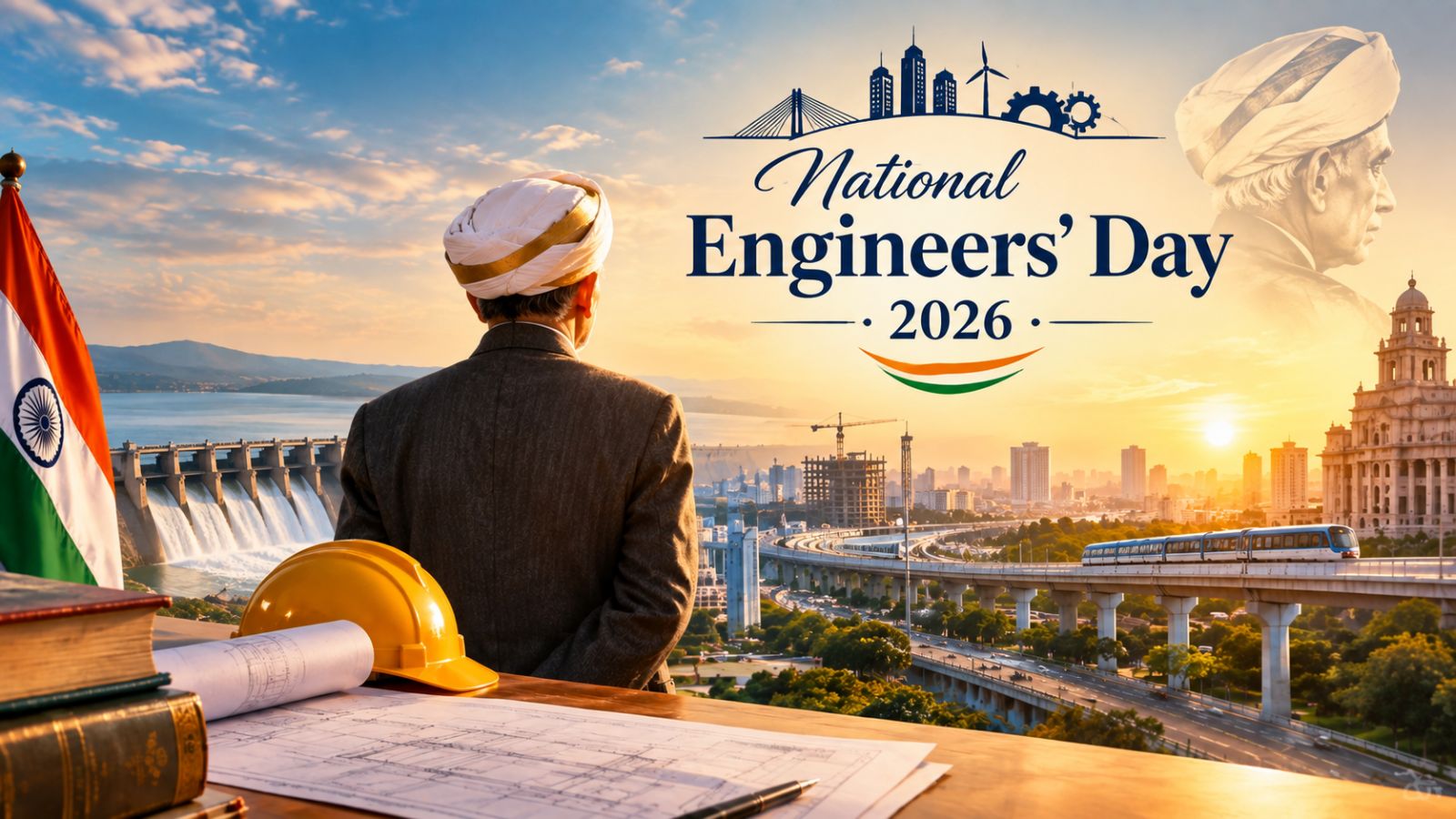
Engineers Day 2026: Every year on September 15, India observes National Engineers’ Day to mark the birth anniversary of Mokshagundam Visvesvaraya, an engineer, economist, statesman and writer.
Visvesvaraya is remembered for his contributions to engineering, including designs, planning and practical solutions that continue to be used in India.
Visvesvaraya was born in 1861 in Muddenahalli village in Karnataka. He moved to Chennai for higher education and completed a BA from the University of Madras. He later shifted to science and studied civil engineering at the College of Science in Pune.
Visvesvaraya served as the Diwan of Mysore from 1912 to 1918, overseeing multiple infrastructure and development projects. His work in the princely state led to him being described as the “Father of Modern Mysore”.
M Visvesvaraya is known for his work in flood management, irrigation and engineering.
After the 1908 Musi river floods, he designed reservoirs such as Osman Sagar and Himayat Sagar and introduced flood-control measures. He also contributed to protecting Visakhapatnam port from sea erosion.
As Chief Engineer of Mysore, he played a key role in the construction of the Krishna Raja Sagara (KRS) Dam, which supported irrigation and agriculture in the region. He also introduced automatic sluice gates to improve water regulation.
He also authored several books, including “Planned Economy for India”, which discussed industrialization and infrastructure; “Reconstructing India”, which focused on education and governance; and “Memoirs of My Working Life”.
In recognition of his contributions to industry and public works, the Government of India conferred the Bharat Ratna, the country’s highest civilian award, on him in 1955.
According to PIB, India produces around 1.5 million engineering graduates every year. Engineers contribute to the country’s development across infrastructure, strategic technologies and digital systems. They work on highways, bridges, metro networks, dams and power systems, and also support sectors such as defence, space, nuclear energy, artificial intelligence and robotics. Digital platforms such as Aadhaar, UPI and DigiLocker were built and are maintained with significant engineering input, affecting everyday services for citizens.
As of 2026, India has 23 Indian Institutes of Technology (IITs), 31 National Institutes of Technology (NITs) and 26 Indian Institutes of Information Technology (IIITs), which form a core part of the country’s engineering and technical education system.
As global technology shifts towards AI, semiconductors, quantum computing, renewable energy and deep tech, Indian engineers are expected to play a significant role in supporting India’s long-term development goals, including the vision of Viksit Bharat by 2047.